Deals
MrBeast Strikes Deal With Starbucks For Beast Games Season 2

After announcing a joint partnership in December, Starbucks has launched their collaboration with MrBeast’s for Beast Games Season 2, using the coffee giant as a core element of his franchise, from promotional material and signature drinks, to incorporation in the series itself. The deal was structured less like a one-time sponsorship and more like a brand-franchise extension. For Beast Games Season 2, MrBeast and Starbucks have turned the coffee chain into a narrative prop and retail spin-off of one of the internet’s biggest creator franchises.
Beast Games, MrBeast’s reality competition series produced with Amazon, returned to Prime Video this January, with 200 contestants and a 5 million dollar prize. Season 2 builds off of a viewership in the tens of millions from the first season. MrBeast’s deal with Amazon Prime has helped him solidify his production house, Beast Studios, and cements his leap from YouTube spectacle to global television.

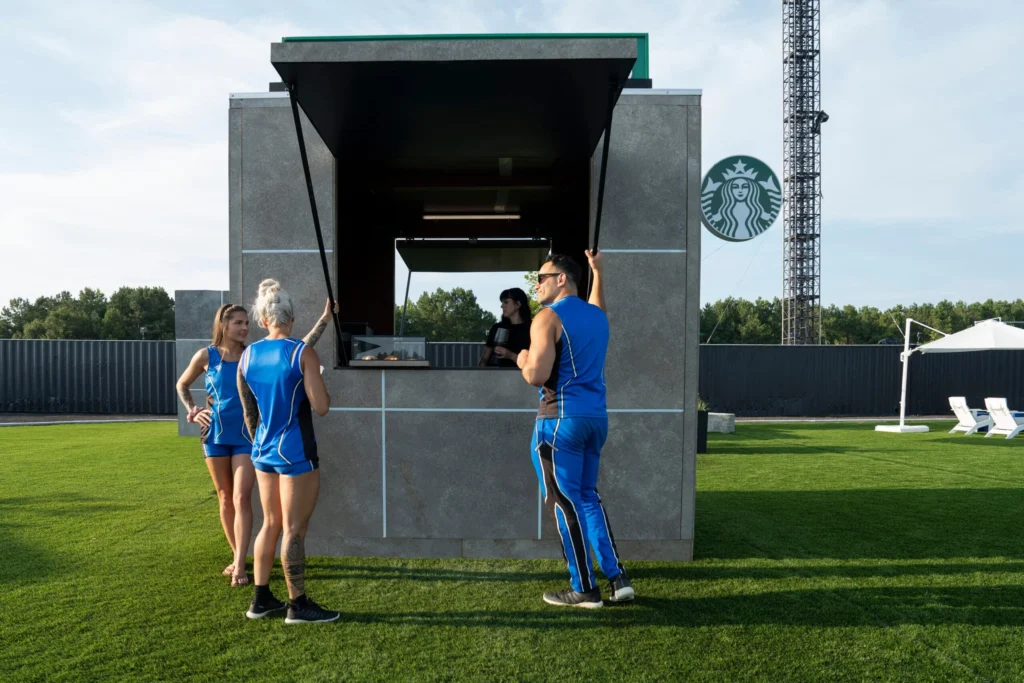
For the new season, Starbucks has signed on to power the show by installing a full Starbucks presence inside Beast City, the custom-built compound where contestants live and compete, with 24/7 access to drinks and food during filming. Competitors also receive surprise rewards from the chain built into specific challenges, which adds Starbucks moments directly into the story beats of the series.
The centerpiece of the collaboration is the Cannon Ball Drink, a limited time Starbucks Refreshers lemonade drink with Strawberry Açai and Mango Dragon Fruit flavors, inspired by and created on set. Featuring multiple players of flavor and color, the drink appears in a Cannon Ball challenge during a crossover episode with Survivor. The Cannon Ball Drink launched at Starbucks stores across the U.S., giving viewers a way to participate in the show.
Beyond the show itself, Starbucks is leaning into cross-platform activations. MrBeast has posted content about the collaboration across social media, including a cameo from Starbucks Global Creator Josiah. Starbucks launched their Global Coffee Creator program in 2025. For the collaboration with MrBeast, the brand is treating their deal as part of a broader turnaround strategy to entice younger customers, with content across TikTok, YouTube and Instagram, in addition to the show.

This partnership shows how creator-led intellectual property is now mature enough to support sponsorship structures that resemble sports leagues or major entertainment properties. Beast Games is backed by a large production budget, offers substantial prize money, and streams in many territories through Prime Video, which gives Starbucks global reach and repeat exposure over a full season instead of a single viral upload.
The Starbucks and MrBeast alignment also shows how brands are treating creators as media owners with distinct demographic reach, not only as on screen talent. Beast Games’ audience skews under 30, overlapping with Starbucks’ priority Gen Z and Gen Alpha segments, and the show’s digital promotion complements the chain’s existing advertising spend without the constraints of traditional television. This partnership fits into a broader pattern in MrBeast’s business strategy as Beast Industries grows into a multi vertical company. From snack brand launches to platform exclusive series, the organization structures partnerships around control of intellectual property, data, and distribution, with brand partners plugging into that ecosystem instead of owning it outright.
If Beast Games delivers on its second season ambitions, the Starbucks collaboration is likely to become a recurring feature rather than a one time experiment. Strong performance would validate the idea that major food and beverage brands can treat creator-led formats as anchor properties for seasonal limited time offers, loyalty programs, and in store storytelling. As more creator franchises reach multi season, multi platform scale, the Starbucks and MrBeast blueprint, with deep in world integration, co-developed product, global streaming distribution, and persistent social content, offers a playbook for negotiating deals that look less like sponsored segments and more like co-produced entertainment businesses.

