Deals
Starbucks Teams With MrBeast for Beast Games Season 2
Starbucks x MrBeast is official: the coffee giant is “powering” Beast Games Season 2


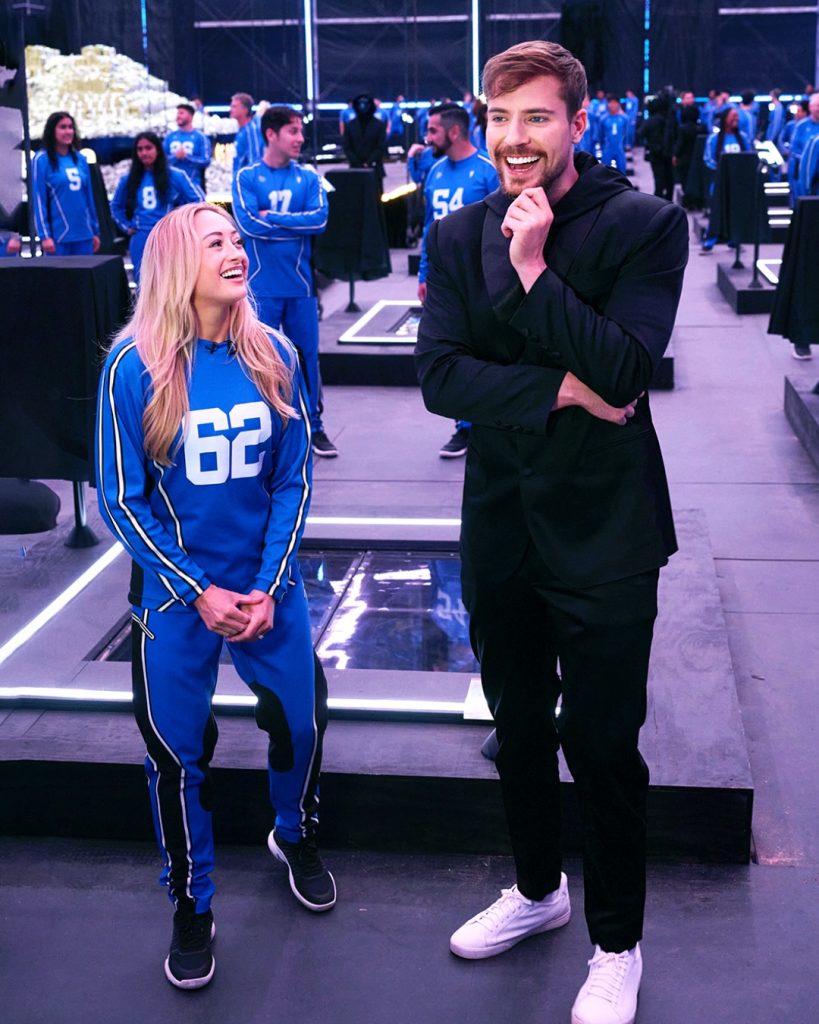
Starbucks just locked in one of the cleanest “creator mainstream” brand plays we’ve seen this year: a multi-surface partnership with MrBeast tied to Season 2 of Beast Games: Strong vs. Smart, premiering on Prime Video on Jan. 7, 2026.
Financial terms weren’t disclosed, but the structure is clear: on-screen integration + in-store activation + creator-channel amplification—the full flywheel.
What the Starbucks x MrBeast deal includes
1) Starbucks inside “Beast City” — 24/7
Starbucks will have a physical presence inside Beast City, the contestants’ living quarters, where competitors get complimentary 24/7 access to Starbucks drinks and food.
2) Surprise prizes during the competition
Starbucks is also baking rewards into the show itself with surprise prizes for contestants throughout the season.
3) A limited-time “Cannon Ball” drink in U.S. stores
Starbucks is launching a new Starbucks Refreshers drink called the Cannon Ball, described as a lemonade-based mix of Strawberry Açaí + Mango Dragonfruit Refreshers, topped with fruit inclusions. It hits Starbucks stores in the U.S. for a limited time starting Jan. 14, 2026.
4) The drink is tied to an on-screen challenge
The Cannon Ball drink is not just “inspired by” the show—it’s connected to a specific on-screen moment: it’s featured in the “Cannon Ball Challenge” in Episode 204, debuting Jan. 14 (same day the drink launches).
5) A MrBeast YouTube integration
Starbucks also appears outside the show via MrBeast’s YouTube, including a Starbucks moment in his “30 Days in the Sky” challenge video (released Dec. 20).
Why this deal matters
This isn’t a typical influencer post or limited collab cup. It’s Starbucks treating MrBeast like prime-time entertainment, because that’s what he is now.
Marketing Dive framed the strategy as Starbucks tapping MrBeast’s younger fanbase through season-long show presence + a limited-edition menu item—the kind of integrated play that turns a partnership into a cultural moment instead of a one-day ad.
And Starbucks is positioning it exactly that way. Starbucks’ global chief brand officer Tressie Lieberman said the goal was to make Starbucks feel like “home” on set and bring fans into the experience via the Cannon Ball drink. On the Beast Industries side, SVP Beau Avril described Starbucks as “powering the competition” and helping contestants recharge.
Quick Beast Games Season 2 context
- Series: Beast Games: Strong vs. Smart
- Premiere: Jan. 7, 2026 on Prime Video (3 episodes at launch)
- Finale: Feb. 25, 2026
- Prize (per Starbucks release): $5,000,000







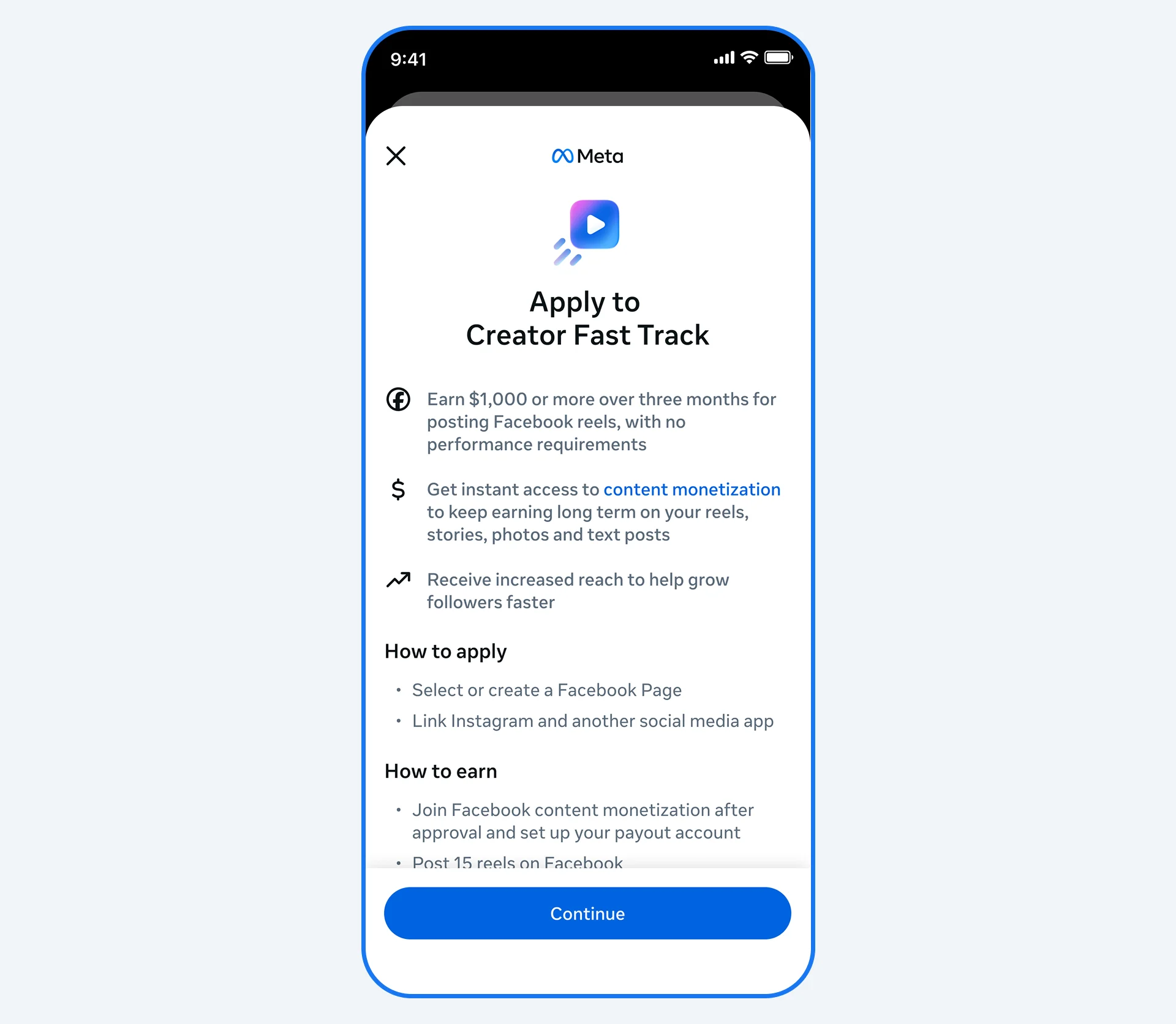
Meta has announced the start of a new invite-only, three-month program for creators on Facebook. The “Creator Fast Track” program is offering eligible content creators with at least 100,000 followers on TikTok, YouTube or Instagram $1,000 a month for three months for posting content on Facebook. According to Meta, the program promises payment up to $3,000 a month for three months for accounts with over one million followers. The program comes just after news of significant layoffs as well as reports of Meta winding down large aspects of its investments in the metaverse. In a press release, Meta said that enrollment in the program also gives accounts access to Facebook’s “Content Monetization Program”, enacted in 2024. The older “Content Monetization Program” allows members the option to make money on their content after the “Fast Track” program ends. Here’s how the new “Creator Fast Track” program works and who is able to apply.
“Creator Fast Track” is invite-only and seems to be limited to accounts with 100,000 followers or more, but creators who are curious about the program can fill out an interest form by navigating to Content monetization in the Monetization tab of the Professional Dashboard on the Facebook mobile app. The program comes with three new metrics for creators to view and understand how they’re getting paid from content. “Qualified Views” tells you the number of views of your content that could be eligible to earn money from. “Earnings Rate” is a simple measurement of your earnings per 1000 views. Finally, “Non-Qualified Views” breaks down why some views don’t qualify for payment. According to Meta, creators can earn from short-form Reels, longer videos as well as photo and text post, but creators have to post at least 15 eligible reels a month to receive payment, on 10 separate days a month. Program members with at least 20,000 followers but less than 100,000 can expect between $100–$450 dollars a month, while those with over 100,000 followers can earn the advertised $1,000 a month and creators with over a million getting $3,000 a month. Program members must have a recent Facebook account (at least 30 days old) and at least 30,000 views on videos in the past two months.
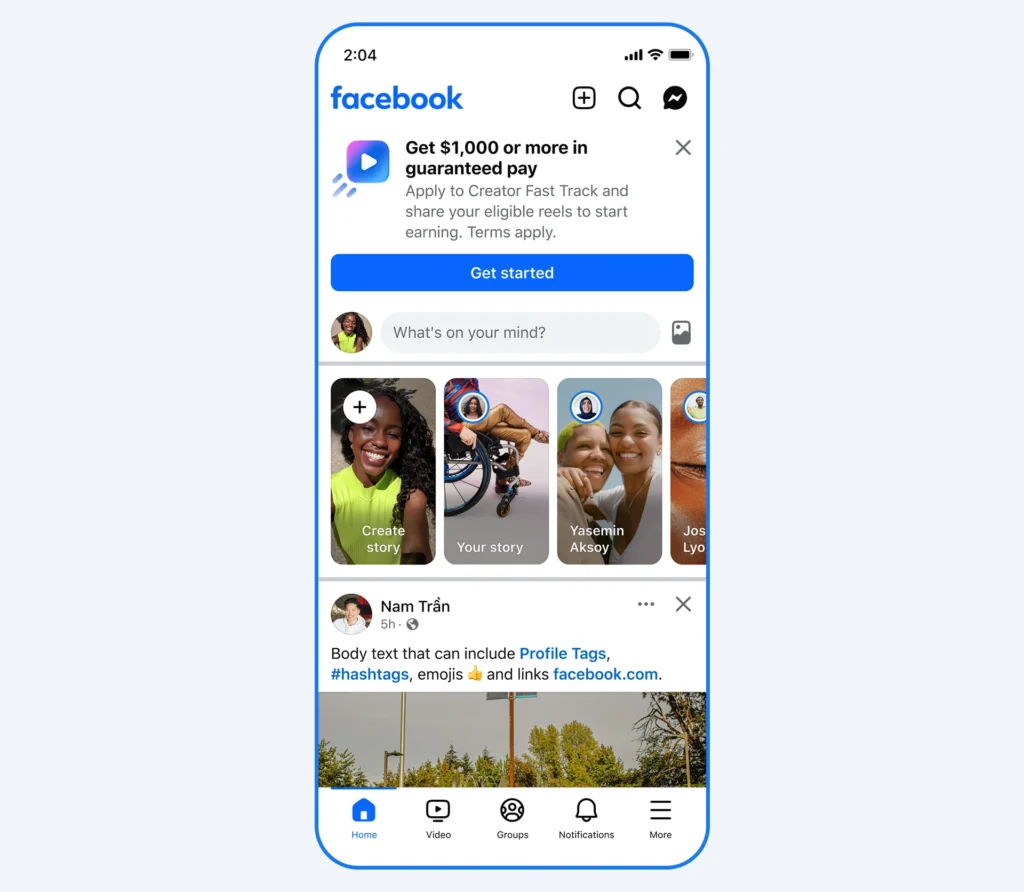
The platform says it wants to reward original content with the “Creator Fast Track” Program. In Meta’s press release, the company touted a “35% increase” in payments to content creators in 2025, totalling nearly $3 billion, the highest annual total the platform has paid to creators ever. Additionally, Meta says that “creators earning more than $10,000 annually on Facebook have grown by over 30%” annually”, although they did not provide a full time-frame. Despite the promised focus on original material, it seems that creators can reuse content posted on other platforms as long as it’s their material, hasn’t been posted on Facebook before, and meets the platform’s community guidelines.
It’s unclear what will happen after the three-month program ends, or how long the promotion will last. The program is a part of Facebook’s bigger push to gain back users lost to other social media platforms. Meta stopped breaking down daily user data by platform in 2024. Overall, social media usage peaked in 2022, and has declined since, likely related to pandemic lockdowns and time spent indoors. Facebook has seen a significant overall decline in usage for years, as newer social media platforms came along, and the app was perceived as dated. Despite this decline, a recent social media analysis by media engagement company Buffer, reported by tech news platform BetaNews, showed a slight increase in users on the platform, alongside other previously declining platforms like X (formerly Twitter). If the program pays off, maybe Facebook will have an even greater resurgence as a social media platform, especially as many content creators already cross-post most of their material.

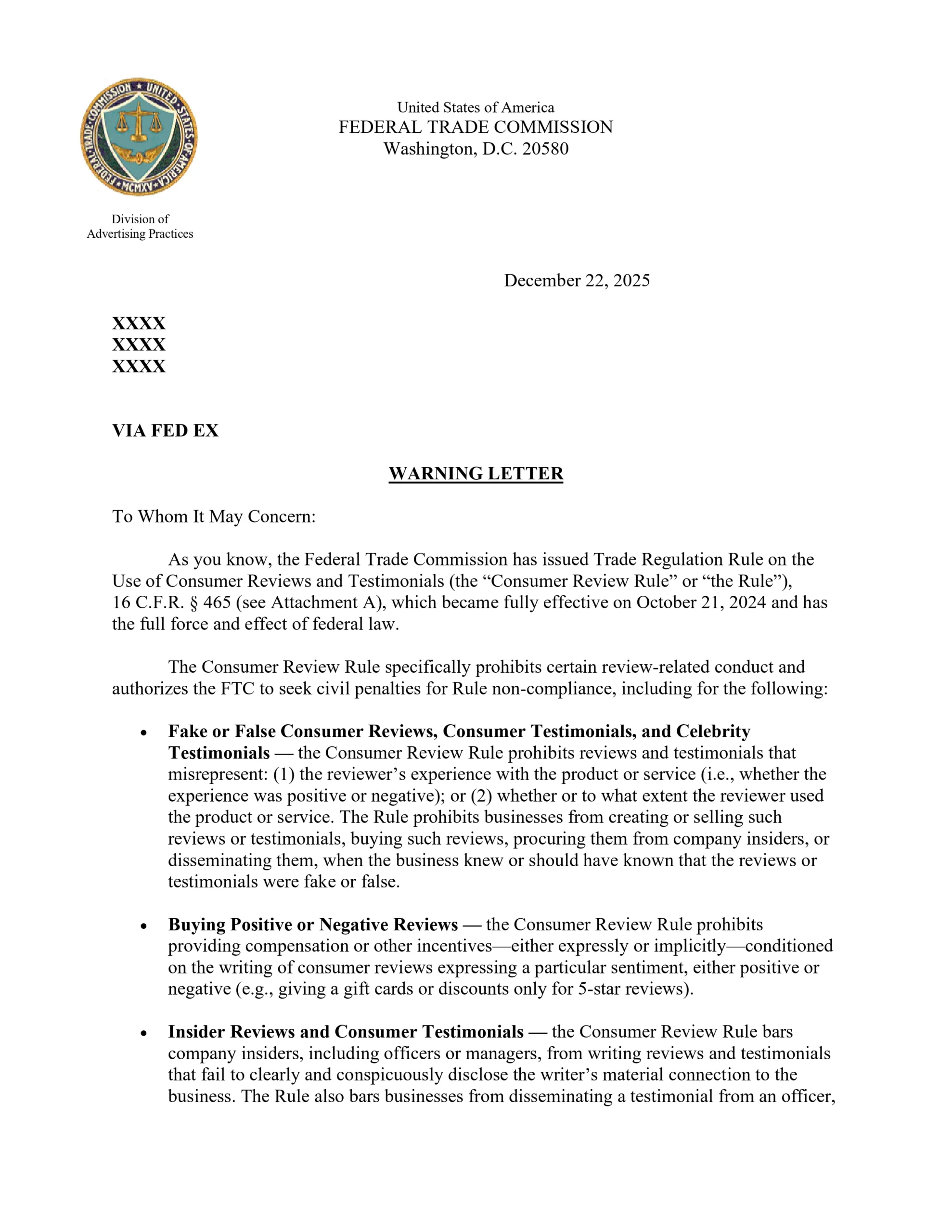
The Federal Trade Commission has set its sights on influencers once again. Starting in December, expanding on their new round of disclosure guidelines from 2023. The guidelines went into effect in 2024 and the FTC has put out a series of letters, press releases and blog posts, attempting to tighten the standard for what has to be disclosed for sponsored social media posts. This comes after years of controversies related to content creators and brand partnerships, cryptocurrency endorsements and unregulated blank on platforms like Instagram and TikTok. So what do these new guidelines mean for influencers in the U.S.?
Federal regulators have sent a clear message to brands and creators: disclosure rules in influencer marketing are not optional. On December 22nd, the FTC announced that it had sent warning letters to 10 companies regarding potential violations related to the agency’s new Consumer Review Rule, related to potentially “fake or false consumer reviews, consumer testimonials, or celebrity testimonials.” Fines could be up to $53,088 per violation. Legal analysis by the law news publication The National Law Review earlier this month emphasized that disclosures in social media remain a central enforcement focus, particularly as content moves fluidly across feeds, stories, and short-form video. Essentially the FTC wants someone to be able to tell if a post is sponsored or an ad when they scroll past it.
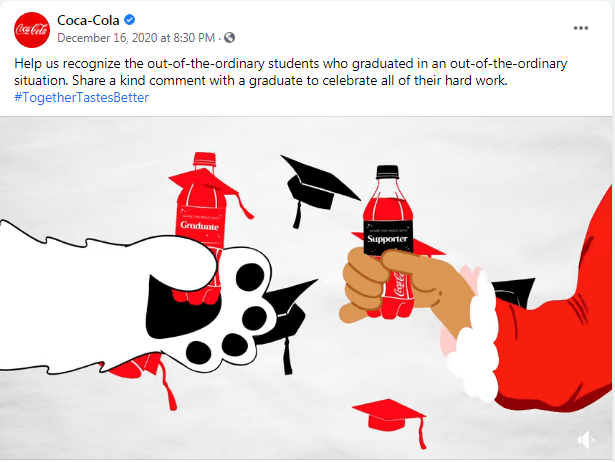
For years, many creators relied on brand tags, brief in-content references or hashtags blended into a long caption to signify a sponsored or partnered post. Regulators are signalling that they are increasingly skeptical of those approaches, especially when those notices are easy to miss and easy to potentially misinterpret. Platforms are also responding, with YouTube, Instagram and TikTok labeling branded or promotional content in the past few years. Additional layers to sponsorship exist as well. An article by daily Legal news outlet JD Supra made clear that disclosure is not limited to obvious ad reads with scripts provided by a brand. A creator who casually praises a product while participating in a broader paid partnership may still need to disclose that relationship. The focus is on context that would matter to viewers, not on how formal the arrangement looks behind the scenes.
The placement of where you disclose that a post has been sponsored is also an issue. With shorts on social media, a disclosure that appears only in the description field can easily go unseen, especially when videos are reposted or embedded elsewhere. Regulators have signaled that disclosures should appear within the content itself in a way that stands out, whether spoken in the video or displayed as readable on-screen text. If viewers are unlikely to see it, it is unlikely to satisfy the standard. A related, recent study on tobacco marketing found that influencers were one of the main groups who failed to disclose business relationships with tobacco companies, noting that “influencer-related posts lacked proper FTC-mandated disclosures of financial relationships”.
Livestreaming adds another layer of complexity. Audiences join and leave at different points, and many viewers skip the opening minutes of a broadcast. A single disclosure at the beginning of a two-hour stream may not reach a significant portion of the audience. Recent guidance suggests that repeating disclosures during the stream, or maintaining a visible on-screen notice, is a more reliable approach. The expectation reflects how live content is actually consumed rather than how it might look on paper.
The practical effect of these developments is easy to understand. For creators, when money, free products, or commissions are involved, being straightforward is a legal requirement, even if the post is styled as a casual recommendation. The current round of warnings suggests regulators are less concerned with punishing technical mistakes and more focused on patterns that make paid influence look organic. If sponsorship is part of the business model, it has to be visible in the content itself.
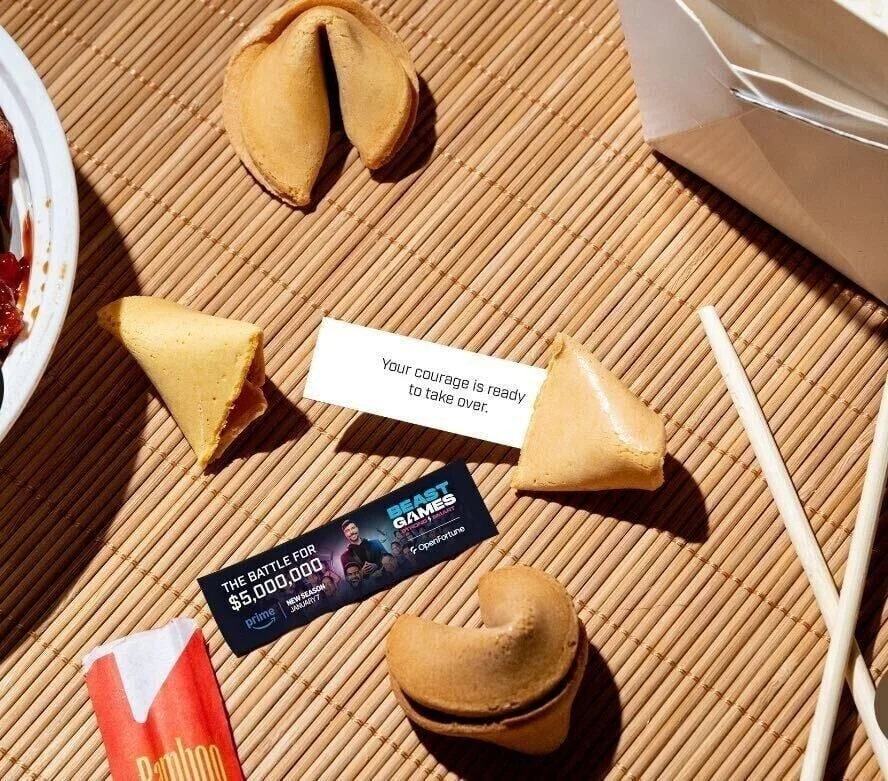
Fortune cookies, a staple of Westernized Chinese food, are normally a message contained within a small fried cookie. Aside from an actual “fortune”, the message within the cookie may have a Chinese phrase, a saying or proverb and lucky numbers. But soon, the cookie from your Chinese take-out order may display a different message. Starting January 13, 2026, millions of fortune cookies distributed across Chinese restaurants and food delivery services in the United States and Europe began carrying custom messages promoting Beast Games Season 2: Strong vs. Smart, the Amazon Prime Video competition series created by Jimmy Donaldson, better known as MrBeast.
Campaign partner OpenFortune sells advertising inside fortune cookies. According to their research, roughly 2.5 million cookies were circulated as part of the advertising campaign, making it one of the largest physical media drops attached to a streaming series in recent memory. So, why fortune cookies? When speaking to Fortune Magazine (I swear I’m not doing this on purpose), OpenFortune’s cofounder Shawn Porat said – “The fortune cookie is one of the last truly shared media moments people still slow down for, read out loud, and share.” “It’s intimate, social, and culturally ingrained—everything advertising often isn’t anymore.”
OpenFortune’s internal data suggests that almost every fortune cookie is opened and read. In contrast to digital impressions that may last fractions of a second, the fortune cookie creates a shared moment that naturally invites reaction and discussion. In an era of advertising overload (and many options to block digital advertisements), a company that can orchestrate marketing campaigns that offer high visibility and brand recall is quite the rarity. For Beast Games, a series structured around anticipation, reveal and audience participation, that kind of exposure is important. Contestants make choices without knowing outcomes. Viewers watch tension build before results are shown. The fortune cookie mirrors the action of the series.
Jeff Housenbold, CEO of Beast Industries, described the campaign as an attempt to reach audiences “outside the feed” by embedding the show into everyday rituals rather than interrupting online behavior. Beyond placement and scale, the campaign also included targeted distribution in specific regions to maximize reach. OpenFortune worked with local restaurants and delivery networks to ensure cookies reached major cities and suburban areas alike. While the vast majority of messages promoted the series, a small percentage contained numbered messages written by MrBeast himself. Fans who discovered these rare cookies began sharing images and videos on social media, creating organic buzz that extended the campaign beyond the initial offline distribution.
The integration of physical media into a digital-first franchise reflects a growing trend among content creators. Streaming platforms and social media feeds are increasingly crowded, making audience attention more difficult to capture. By leveraging an offline channel, the campaign offered a high-visibility opportunity that could not be skipped or muted. Analysts note that for creators with established followings, physical activations like this provide a measurable way to supplement online promotion while reaching new audiences.
Early social media tracking suggests that the campaign generated engagement in multiple forms. Photos of the cookies appeared on Instagram, TikTok, and Twitter, with users highlighting the numbered messages or sharing the standard promotional lines. The offline interaction created a secondary wave of online content, effectively turning the fortune cookie into a hybrid touchpoint linking physical and digital marketing. The Beast Games Season 2 campaign was not without naysayers however, as some social media users have complained that the advertisement and similar marketing campaigns had taken away from the fun of fortune cookies.
Beast Industries emphasized that the campaign was designed to complement traditional digital promotion rather than replace it. By embedding the series into a familiar ritual—dining—the initiative aimed to reinforce awareness among both casual viewers and the franchise’s existing fanbase. The campaign also demonstrates how large-scale entertainment properties are experimenting with unconventional placements to maintain visibility in a competitive media environment.
Overall, the fortune cookie campaign illustrates how creators are expanding the boundaries of marketing beyond digital feeds and algorithmic targeting. By situating content in a physical medium that is widely distributed, shareable, and difficult to ignore, MrBeast and his team created a multi-layered promotional strategy that engages audiences on multiple levels. It highlights the potential for hybrid campaigns in which offline and online experiences reinforce one another, and it underscores a broader trend in entertainment marketing: attention is increasingly earned not only through reach but through strategic placement and context.