Entertainment
The Sidemen’s Media Empire: How 7 Friends Built a Content Conglomerate

What began as seven friends recording themselves playing FIFA has now become a hugely successful entertainment and commerce company. The Sidemen (KSI, Zerkaa, Miniminter, TBJZL, Behzinga, Vikkstar123, and Wroetoshaw) have turned a decade of internet clout into a diversified, nine‑figure business. Their output looks less like a creator channel and more like a small network that programs different formats for different levels of engagement. That structure gives them both the attention and the operational footprint of a lean digital studio with its own product

The Sidemen operate a compact media built around a flagship YouTube channel for larger videos, auxiliary channels for gaming, behind‑the‑scenes, and reaction content, and their premium streaming service Side+, as a subscription tier for the most invested fans. Together, they reach tens of millions of subscribers and deliver a consistent baseline of content that also helps them mark their brands. Their calendar leans on set pieces such as long‑form challenges and charity football matches that play more like live events than standard uploads, with weekly videos and shorts filling in the gaps between those spikes. Their latest charity match filled a Premier League stadium, attracted millions of live viewers, and raised a multi‑million‑pound total for U.K. charities, showing how a creator‑led match can now move audience and capital at the scale of a mid‑tier sports property.
The group’s first meaningful business move outside of content creation was Sidemen Clothing, positioned from the outset as a standalone apparel line rather than a basic merch shelf. The brand has shifted toward seasonal drops and collaborations that sit closer to streetwear than fan gear and gave the group a direct‑to‑consumer revenue stream with higher margins than standard ads. From there, the playbook expanded into category‑specific brands that could stand on their own. Sides, their fast‑food concept, uses ghost kitchens and franchise partners to serve customers across multiple markets, with reporting that the business has reached seven‑figure weekly revenue as it scales locations and delivery volume. XIX Vodka, their move into spirits, lets the Sidemen monetize an aging core audience through a premium product that can live in retail, nightlife, and events where creators usually appear as short‑term endorsers rather than long‑term owners.
Analysts and business press now estimate that the broader Sidemen ecosystem is worth nine‑figures when adding up channels, brands, and IP, with most of the upside sitting in assets they control. Ads across their channels are estimated to generate millions of dollars per year on their own, but the more material story is how that attention converts into subscriptions, food orders, alcohol sales, and apparel purchases where the group participates as equity holders. Internally, equal revenue splits and a shared company structure keep all seven members aligned, which reduces the incentive to peel off for individual deals and helps explain why the group has stayed intact through multiple growth phases. That alignment also supports slower, more capital‑intensive bets such as brick‑and‑mortar Sides locations and in‑house production infrastructure that would be hard to justify inside a looser collective.

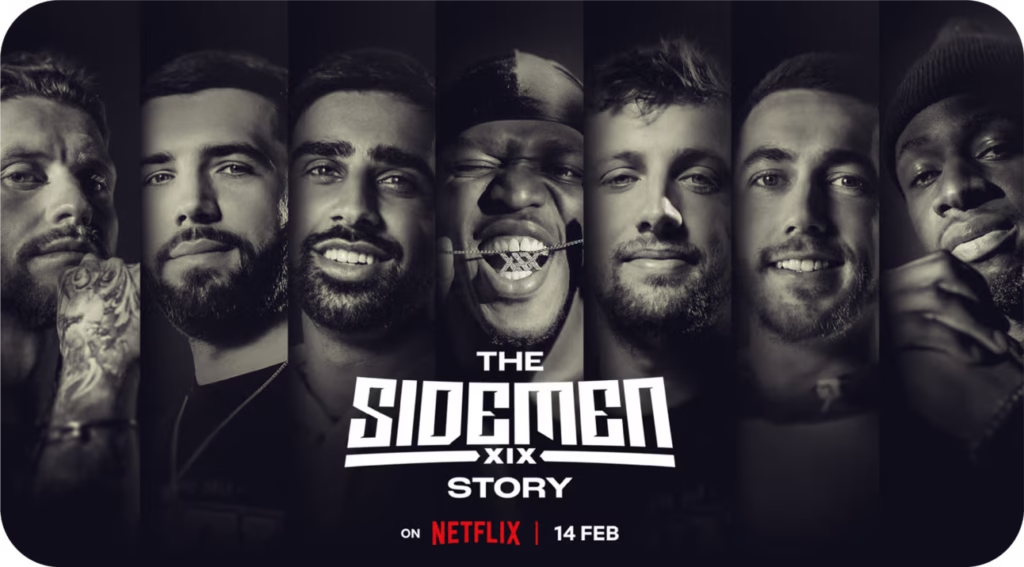
Their latest phase is about turning a decade of uploaded content into catalog and licensing opportunities. The Sidemen Story, their documentary distributed on Netflix, moves part of the business away from platform‑dependent content toward a film‑length asset that can live across territories and windows and sit alongside traditional entertainment IP. For a company built on weekly releases, that type of project functions as a hedge against changes in recommendation systems and ad markets and puts them on the radar of partners who do not normally transact at the YouTube channel level. Around that core, the group continues to run live events, recurring charity matches, and new product launches in food, beverage, and merchandise that do not rely on a single platform to succeed. The result is a creator business that now looks less like an influencer collective and more like a self‑financed entertainment and consumer brand portfolio with seven founders still on screen to market what they own.

