Money
MrBeast’s Conglomerate Play: Products Fund Media
MrBeast has redefined the meaning of content creator turned mogul.

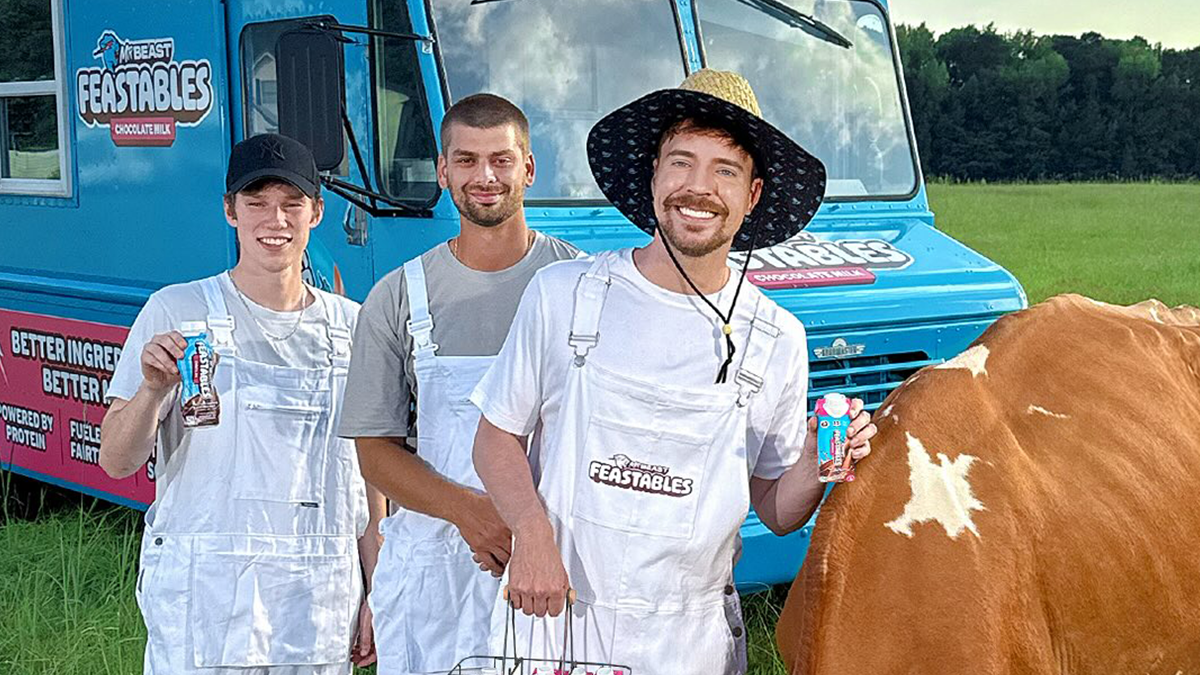
Beast Industries is turning the “creator business” model into something way closer to a conglomerate: big media as the growth engine, consumer products as the profit engine, and new verticals stacked on top once distribution is locked.
The headline: the business is already doing hundreds of millions in annual revenue—but reporting also suggests it’s been unprofitable because the media arm is expensive and aggressively reinvested.
By the numbers (reported)
Because Beast Industries is private, most concrete figures come from investor documents and major reporting:
- Business Insider, citing a February pitch deck, reported Beast Industries generated $473M in revenue in 2024 and forecast $899M in 2025.
- Bloomberg reported Feastables generated about $250M in sales and $20M+ in profit, while the media business lost almost $80M over a similar period.
- Business Insider also reported Beast Industries generated over $400M in revenue in 2024, but wasn’t profitable due to high media costs.
- The Guardian reported MrBeast was exploring raising capital at a valuation around $5B, with the overall empire generating $400M+ in sales the prior year.
Translation: the company is already operating at serious scale, but the core tension is revenue vs. profitability—and the media arm is where the burn happens.
Feastables is the profit engine
If you’re wondering why investors care so much: chocolate is boring in the best way—repeat purchases, retail distribution, predictable margins compared to unpredictable content economics.
Bloomberg’s reporting describes Feastables as the real moneymaker: $250M-ish sales and $20M+ profit (per investor documents).
That’s the blueprint: use internet-scale reach to launch durable products that don’t depend on algorithms for every dollar.
Media is expensive — and it’s being treated like marketing
The other half of the story is that Beast’s media business is famously expensive to produce.
Business Insider reported that in 2024, Beast Industries’ media arm brought in $224M in revenue but incurred $344M in costs—a gap that helps explain why the overall company can be huge and still not profitable.
Bloomberg similarly reported the media side produced comparable sales to Feastables but ran a major loss.
MrBeast has also acknowledged that large-scale media swings like Beast Games were financially painful (even if they were culturally massive).
Key strategic point: this isn’t “media as the business.” It’s increasingly media as the marketing engine—the thing that fuels product launches, retail expansion, and new ventures.
The “creator conglomerate” strategy (what they’re building)
Beast Industries isn’t just stacking random side hustles. The reported strategy looks like this:
1) Keep the attention machine running
YouTube + tentpole entertainment projects create unmatched distribution.
2) Convert attention into product revenue
Feastables is the proof-case that the funnel works at scale.
3) Add “infrastructure” businesses
Business Insider reported the pitch deck includes a creator marketplace concept designed to help other creators replicate the model (connecting creators to marketers, launching products, tools, etc.).
4) Expand into new verticals once distribution is secured
Business Insider also reported Beast Industries is exploring additional expansions (including financial services concepts mentioned publicly by leadership).
This is the play: not “a creator with brands,” but a creator-led holding company where each new line can launch on top of a built-in audience.
Why this matters (bigger than MrBeast)
This is the next evolution of mainstream celebrity business:
- Old model: celebrity endorsement → occasional brand collab
- New model: creator distribution → owned products + owned platforms + owned pipelines
If Beast Industries can consistently make products profitable while dialing back media losses, it becomes a case study that creators can build real companies—not just “influence.”








Addison Rae’s career now draws revenue from beauty, fragrance, fashion collaborations and a growing music business, beyond her TikTok origins. She has turned early online momentum into owned assets and co-created products, positioning herself as an entertainment and consumer goods powerhouse. Here’s how she turned her social media presence into a fully-fledged entertainment career, a makeup company, and multiple partnerships.
Beauty and Fragrance Foundations
Starting off on TikTok in 2019, Rae rocketed to fame and briefly joined the Hype House TikTok collective. Her first major step outside social content arrived in 2020 with Item Beauty, a clean makeup and skincare line she co-founded with Madeby Collective, a beauty brand incubator. The vegan, cruelty-free brand launched at Sephora stores in 2021, proving that Rae’s audience would buy into categories where she held credibility. Though Item Beauty ended in 2023 amid shifting Gen Z beauty trends, the move highlighted the value of brand ownership over sponsorships alone. Rae applied the same approach to fragrance in 2021 through a partnership with Hampton Beauty, releasing Addison Rae Fragrance, a line of alcohol-free, mood-based scents built on green chemistry and upcycled materials.

Music as Core Business
Music now ranks as one of Rae’s steadiest growth areas, shifting her image from TikTok personality to artist with a real catalog. Early efforts like the 2021 single “Obsessed” missed the mark, but leaked tracks and the 2023 EP AR refined her sound for pop and club trends. By 2024 and 2025, releases such as “Aquamarine,” “High Fashion” and “Headphones On” came with professional videos and teams, building to a full album framed as a pop milestone rather than a side project. This setup supports touring, merchandise and licensing, creating lasting commercial value from a once-viral platform.
A Podcast, Hollywood Roles and Brand Partnerships
Rae and her mother, Sheri Nicole partnered with Spotify in 2020 for Mama Knows Best, a mother-daughter podcast that touched on Rae’s upbringing. Although the show didn’t last, it helped further her entertainment career. Rae’s acting credits and partnerships form a parallel portfolio, delivering fees and mainstream credibility. She led Netflix’s He’s All That in 2021, followed by roles in Thanksgiving and its sequel, plus upcoming projects like Animal Friends. These build her presence in entertainment pipelines. Brand work has evolved from TikTok sponsorships to campaigns with Adidas, Fashion Nova and Pandora, plus appearances for Saint Laurent and Ssense labels. Such deals keep her in fashion and lifestyle circles, fueling tie-ins with music tours or product launches.
Fashion Moves and the Future
Rae’s fashion efforts now look like an ongoing pipeline, not one-offs. In August 2025, she teamed with Lucky Brand on a collection of low-rise jeans tied to Y2K aesthetics that match her style. These test her influence in apparel and prepare for repeats, such as tour merchandise or a beauty relaunch shaped by past lessons. Social content still drives reach, but owned IP, products and entertainment assets ensure earnings hold up against platform shifts. Her path shows creators how to funnel attention into diversified businesses, operating as a founder who starts with fame but builds beyond it.


Chris “Lethal Shooter” Matthews over the past several years has solidified himself as one of the most notable sports figures online. He’s branded himself through his attention grabbing 3 point shooting scenarios and his signature “I get it now” catch phrase. Though his skills maybe be shocking, they are legit. His shocking precision turned him into one of the most valuable trainers in the world of basketball.
A few weeks ago, Matthews appeared in a new MrBeast video centered around shooting challenges and elite performance. On the surface, it looks like another viral sports crossover. Underneath, it’s a case study in how one of basketball’s most respected coaches built a premium business by monetizing trust, scarcity, and social media credibility.
What Happened
MrBeast, the most powerful creator on YouTube, invited Lethal Shooter to train him and team him the art of precision shooting . The video immediately exposed Matthews to millions of new viewers and added to his already established credibility. His brand was built through results: training Steph Curry, Kevin Durant, Klay Thompson, Giannis Antetokounmpo, and dozens of other elite players.
Why It Matters
What makes Lethal Shooter’s business model different is what he refuses to monetize.
In past interviews, Matthews has explained that he intentionally limits how many NBA players he trains, often working with only one or two per day. He avoids large group sessions, refuses “two-for-one” workouts, and even turns away players if he feels the relationship could damage his brand.
That scarcity is the foundation of his pricing power.
Instead of scaling through volume, Matthews scales through prestige. Each successful client becomes marketing. Each shooting record, like his viral 23-for-25 three-point streak becomes proof of concept. Each social clip functions as both content and credential.
From there, he built multiple revenue streams:
- Premium private training with NBA and pro-level athletes
- Selective youth camps with small group sizes and high ticket prices
- Brand partnerships with Nike, Jordan Brand, NBA 2K, and Red Bull
- Media projects, including his documentary and now high-profile creator collaborations
The MrBeast video amplifies all of it. It places Matthews in front of a mainstream audience that doesn’t just follow basketball.

Lethal Shooter recently collaborated with viral fitness influencer, Ashton Hall, for similarly the same reason. These crossovers expands his funnel far beyond gyms and leagues. Ashton’s audience especially is global. One of the things that stands out about Ashton’s content is that there are very few words which allows it be globally consumable. You don’t need to understand english to completely relate to the video which gives it global appeal.
You don’t have to be the star athlete to build a massive business in sports media. You can be a coach. You can be a trainer like Chris Brickley or a technician. If your expertise is rare and your results are visible, social media becomes your growth engine.
This collaboration also reflects a bigger creator-economy trend: top YouTubers are increasingly partnering with domain experts to add credibility and depth to their content. For MrBeast, featuring the world’s most famous shooting coach raises the stakes. For Matthews, it opens the door to more brand deals, speaking opportunities, digital products, and future media formats.
What’s Next
Matthews has already teased upcoming projects with new influencers. With the MrBeast appearance now part of his portfolio, his positioning shifts from “elite trainer” to “sports creator entrepreneur.”
For trainers, coaches, and niche experts watching from the sidelines, the lesson is clear: in today’s economy, mastery plus media beats scale alone.
Lethal Shooter built his empire through picking his spots right.
He built it by training the right people, and letting the internet do the rest.


Kai Cenat shook the internet this week after releasing a 23-minute YouTube video titled “I Quit,”. While many were shocked Kai used the moment to open up about self-doubt, mental health, creative purpose and to officially announce his new clothing brand, Vivet.
The video opens with Kai reflecting on identity, pressure, and growth.
“I feel like sometimes, people need to self-reflect and take a step back from the broad perspective of what their life has been,” he says. “There is more to the world that is much greater than myself… That’s why I quit.”
At first, it sounds like he’s ready to walk away from streaming altogether but the message was deeper. He’s decided to quit letting fear stop him from his creativity and genuine curiosity.
“I quit overthinking. I quit staying in my head about the goals I have,” he continues. “I want to push limits to see what I can truly create in life.”
A Real Conversation About Mental Health
Kai opens up in a grounded conversation with his mother, admitting he’s been dealing with doubt despite massive success.
“I’ve achieved so much… but in my head it’s a lot of self-doubt. I’m not depressed, I’m not sad. I’m just having a lot of self-doubt.”
This moment connects directly to recent statements Kai made online, admitting that constant streaming made him feel disconnected from reality and distant from loved ones. He didn’t frame himself as broken but afraid. His mom affirmed that this is what comes with success.
The Fashion Pivot: Introducing Vivet
Kai shows the behind the scenes of what’s been going on in his life these last few months. He travels to Italy, walks through fabric rooms and shows some footage of his design team. He also shares a clip of a conversation he had with legendary fashion stylist, Law Roach, on how he should roll out his brand. Law encouraged him to master one thing and grow from there.
This is where he officially unveils his fashion brand:
Vivet
The clip positions Vivet not as merch, but as a genuine design endeavor rooted in craft, storytelling, and independence. Kai shows his process, his curiosity, and why fashion feels like the next evolution of his creativity.
For viewers who’ve been paying attention, this didn’t come out of nowhere. He’s quietly been experimenting with fashion content for months on his “secret” channel, Kai’s Mind.
Why This Matters
There are two big takeaways here.
First, Kai’s “I Quit” isn’t an exit. It’s a declaration of control. He’s rejecting the idea that creators must remain in one box forever, and he’s choosing to grow while fans are watching.
Second, Vivet isn’t just a brand it’s a statement. We’re watching one of the biggest creators in the world move with intention, craftsmanship, and taking the longer route to build his brand identity.
He’s betting on his passion rather than what’s been proven to work. Creativity over routine. Evolution over stagnation.
And if history is any indication, when Kai commits to something, the internet follows.