Sports
When IShowSpeed Went Head-to-Head With Africa’s Strongest Woman


What happens when popular streamer IShowSpeed goes head-to-head with Africa’s strongest woman? Well, the competition was less about battling and more about shedding a new light on the African continent, something Speed has tried to do across his whirlwind “Speed Does Africa” tour. The 20-year-old American streamer, known for his antics and fast pace (it’s in the name after all), turned heads when he trained with Chido Maenzanise, a native Zimbabwean who was crowned “Africa’s Strongest Woman” and holds 10 gold medals from strongwoman competitions.
The “Speed Does Africa” tour blends the streamer’s amped-up antics with regional sights and culture. Speed, born Darren Watkins, Jr, used this same formula on his tours of Australia and New Zealand in 2024 and South America in 2025. His energetic style creates a distinct form of travel content that blurs the line between spectacle and participation, turning local customs and attractions into moments of shared celebration rather than detached observation. In Zimbabwe, that approach shifted the focus away from Speed himself and toward the people and traditions shaping the moment.
In Context
This part of the tour continues Speed’s competitive streak, just after he raced a cheetah in South Africa. The YouTube phenomenon also raced American sprinter Noah Lyles, the reigning Olympic 100-meter gold medalist, in 2024 for a charity event coordinated by MrBeast. The feats of strength took place in Harare, Zimbabwe’s capital. Speed and Maenzanise lifted tires and pulled cars at an underpass at Trabablas Interchange, Zimbabwe’s largest roadway, which was recently redeveloped under a controversial infrastructure project by President Emmerson Mnangagwa (according to the Africa Report). Over 40 million people watched the stream live. Zimbabwe was the third stop on the “Speed Does Africa” tour, continuing the streamer’s journey in the southern part of the continent, after visiting Angola, South Africa, Mozambique, Eswatini and Botswana, before moving onto Zambia.
Speed’s decision to spotlight an internationally recognized strongwoman for a global audience reflects his broader approach to blending entertainment with visibility, particularly as women’s strength sports continue to gain wider recognition. The visually striking image of a professional strongwoman pulling a car alongside him transformed the challenge into a collaborative spectacle, one that translated naturally to a livestream format without reducing the athlete to a prop.
Large crowds were drawn to witness the spectacle, which culminated with IShowSpeed and Maenzanise racing while pulling cars and Zimbabwe’s strongest man Arnold Zikhali pulling a truck with Speed sitting on top of it. Zimbabwe carries a long history shaped by colonial extraction, political instability, and decades of economic hardship, factors that have often defined how the country is portrayed to outside audiences. Those narratives tend to flatten a place better understood through its people, communities, and everyday expressions of pride and skill. Moments like Speed’s training session and competition with Maenzanise and Zikhali offer a different entry point, one rooted in local talent rather than inherited assumptions.
Zooming Out
Africa is the world’s youngest continent and is poised to become its fastest-growing region both economically and by population, a shift that could see it overtake Asia as early as 2026, according to the Financial Times’ David Pilling. That growth, paired with a predominantly mobile-first media landscape, has made the continent increasingly important to the global content economy. While many Africans push back against being grouped into a single narrative, given the region’s vast diversity in culture, history, and scale, creators have continued to engage audiences across the continent in more localized ways. IShowSpeed carried that approach forward with the next stop on his “Speed Does Africa” tour, broadcasting an “IRL stream” from Zambia.




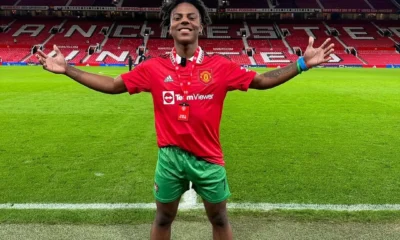


The Sidemen Charity Match 2026 is scheduled for April 18 at Wembley Stadium in London. The event pits “Sidemen FC” against a team branded “the YouTube Allstars”, with proceeds directed to Bright Side and BBC Children in Need. Ticket sales began on February 2 at 9 AM, with standard admission expected to fall between £12 and £29, mirroring the pricing range used for the 2025 match. Tickets sold out but the match will be streamed globally on the Sidemen’s YouTube channel, continuing a model that has attracted millions of online viewers in previous years. Here’s what to expect from the match this year.
The YouTube channels of the seven Sidemen, Zerkaa, Miniminter, TBJZL, KSI, Behzinga, Vikkstar123 and W2S combined exceed 155 million subscribers, giving the charity match a built‑in audience . Since the inaugural football game in 2016, the event has grown from a casual kickabout among friends to a structured fixture that blends entertainment with fundraising. Past editions have featured guests ranging from athletes to musicians, and the 2025 line‑up included notable figures such as IShowSpeed, Logan Paul and Mark Rober.
For 2026, the Sidemen have altered the team format. Instead of placing all seven core members on Sidemen FC, the group has distributed its players across both sides. This change aims to create a more balanced contest and to showcase a wider variety of creator talent. The Sidemen FC roster announced so far includes Zerkaa, W2S, Vikkstar, Deji, TBJZL, plus notable additions xQc, Lazarbeam, Jynxzi and Niko Omilana . One mystery player remains undisclosed, preserving an element of surprise for fans. The YouTube Allstars side features a mix of streamers and YouTubers who have not been part of the Sidemen core, though specific names have not been fully detailed in public announcements.

The match’s charitable beneficiaries were selected to reflect the organizers’ focus on youth and mental health. Bright Side provides online mental‑health resources and support articles aimed at young people, while BBC Children in Need funds grassroots projects that assist disadvantaged children across the United Kingdom . By aligning the event with these causes, the Sidemen continue a tradition of using their platform to direct attention and funds toward social issues . In 2025 the match raised several hundred thousand pounds, and organizers expect a similar or greater total for 2026 given the expanded international roster.
Logistics for the day include a pre‑match program that typically features music performances, sponsor activations and fan zones within London’s Wembley Stadium . The kick‑off time has not been finalized, but previous matches have started in the early evening local time to accommodate both UK‑based viewers and overseas audiences watching via livestream . The stadium’s capacity of 90,000 allows for a substantial in‑person attendance, though a significant portion of the audience experiences the event through the online broadcast . The Sidemen have emphasized that the livestream will remain free to access, reinforcing the event’s accessibility.
Reactions to the revealed line‑up have been varied across fan communities. Some commentators praise the inclusion of high‑profile streamers such as xQc and IShowSpeed, noting that their participation brings additional visibility to the charity aspect . Others express curiosity about the undisclosed mystery player and speculate on how the split‑team approach will affect on‑field dynamics . The Sidemen have addressed these discussions by confirming that further announcements will arrive in the weeks leading up to the match, maintaining a steady flow of information without revealing all details at once.
Overall, the Sidemen Charity Match 2026 represents a continuation of a yearly tradition that blends digital creator culture with traditional sport and philanthropy. By adjusting team composition, expanding the roster to include diverse online personalities and directing funds to established charities, the event seeks to retain its entertainment value while strengthening its social impact . The approaching date will likely bring additional updates on ticketing, match‑day schedules and the final list of participants, keeping the audience engaged until the kickoff whistle.
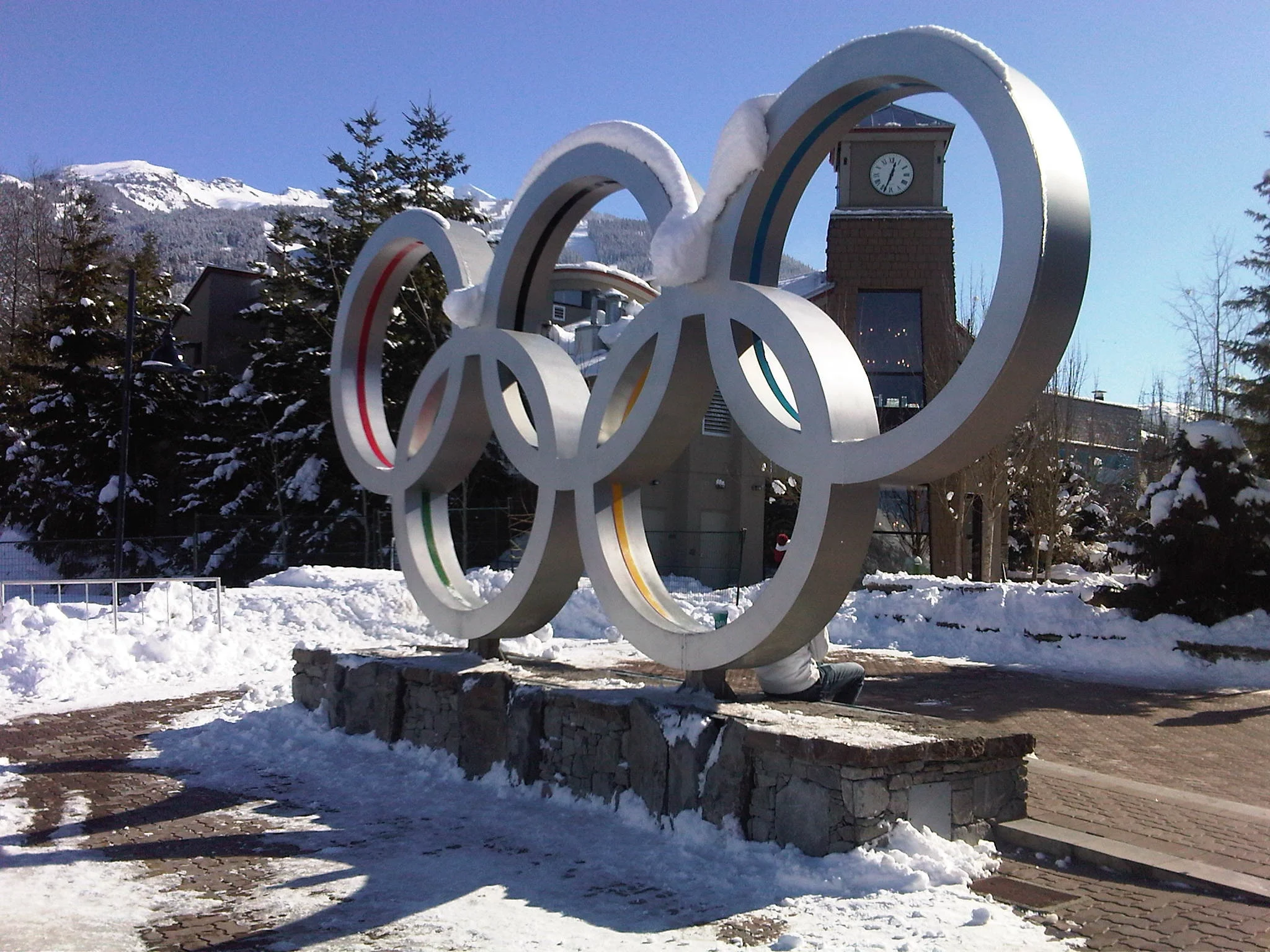
As an addendum to my recent articles about the rise of athlete influencers and coverage of the Super Bowl and upcoming FIFA World Cup by content creators, I thought I would talk about how streamers, content creators and influencer Olympians are changing the coverage of the 2026 Milan Cortina Winter Olympics in northern Italy. In a Winter Olympics that has had no shortage of viral moments, many content creators have flocked to the event for coverage and commentary, and athletes themselves have begun to pivot to content, offering a unique view of sporting events from the inside.
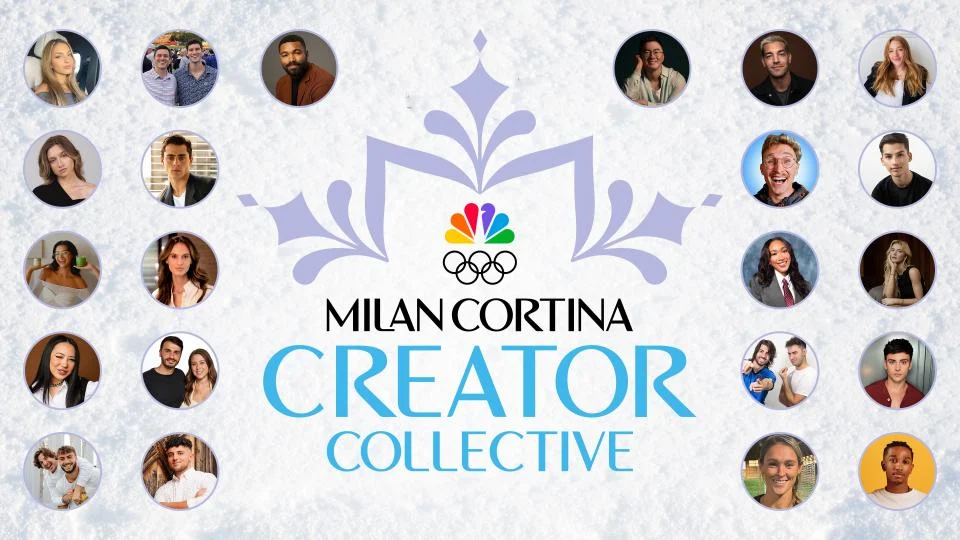
NBCUniversal has taken what used to be an informal swarm and given it a badge and a schedule. In announcing its Milan Cortina Creator Collective, NBCUniversal’s program with YouTube, Meta, and TikTok that would “empower over 25 creators” with on-the-ground access in Milan and Cortina, and it positioned the effort as a sequel to its Paris Creator Collective, which it says amassed nearly 300 million views. The Collective functions as a kind of auxiliary newsroom, except influencers are covering events, not reporters.
The athletes, meanwhile, are posting too, carrying a personal archive that extends past this Olympic season. Norway’s Johannes Høsflot Klæbo, who recently grabbed a gold medal in cross country skiing, is someone who has been chronicling life as an elite cross-country skier on social media since 2017. His YouTube channel blends lifestyle, training techniques, travel experiences, and partnerships, which places cross-country skiing inside a broader self-portrait instead of a results-only narrative. If you are used to Olympic coverage that treats athletes as intermittent guests in someone else’s programming, Klæbo’s long-running channel suggests a different hierarchy, where the athlete’s season is the main text and the broadcast is a powerful annotation.
Speed skating supplies a sharper, brighter version of the same phenomenon. Dutch speed skater Jutta Leerdam, called a “social media queen” by Reuters, reports she has over six million followers on Instagram, and quotes her describing social media as a tool to motivate young girls to take up speed skating. Outlets were criticized when articles about Leerdam’s gold medal had headlines that focused more on her relationship with her boyfriend, boxer and influencer Jake Paul, than her own athletic achievements. Leerdam won the women’s 1,000 meters in Olympic record time of 1:12.31 and added a silver medal in the 500 meters.
Eileen Gu remains the cleanest financial diagram for why athletes behave this way, even when the content itself looks casual. According to Forbes, Gu earned $100,000 from her sport last year while making $23 million through endorsements and social media influencer work. When talking to Northeastern Global News, marketing professor Amy Pei described the phenomenon; “Social media shifts athlete marketing from rare, brand-controlled visibility to continuous, athlete-controlled storytelling. In the past, brands decided who was visible by hiring them as endorsers. Now, athletes can build audiences first and attract partnership deals later.”
Not all creators at the Winter Olympics have press passes. The travel creator The Traveling ZAM posted a video from Cortina that is explicitly structured around moving through the Olympic setting, describing attendance at curling and luge events, time spent exploring venues, and the atmosphere of the alpine host town during the Games. The details in the video description are ordinary by design, and that ordinariness is the point: it is coverage built from transit, signage, queues, and the feeling of entering an arena rather than the moment of winning it. On TikTok, creator Desi Johnson posted a video titled “Discover the Olympic Village for Milan-Cortina 2026,” allowing viewers to explore the Village virtually for themselves.
For streaming, Samsung’s Galaxy S25 Ultra devices, supported by OBS, were embedded within the Opening Ceremony to capture “dynamic perspectives” alongside traditional broadcast cameras. Milano Cortina is hosting multiple authors at once, each with a different contract with the audience. NBC formalizes a creator lane, athletes like Klæbo arrive with years of self-documentation. When the Winter Games are experienced through these parallel feeds, the public record becomes less singular, more like a stack of drafts, and the draft that circulates farthest is usually the one that already fits the viewer’s habits.
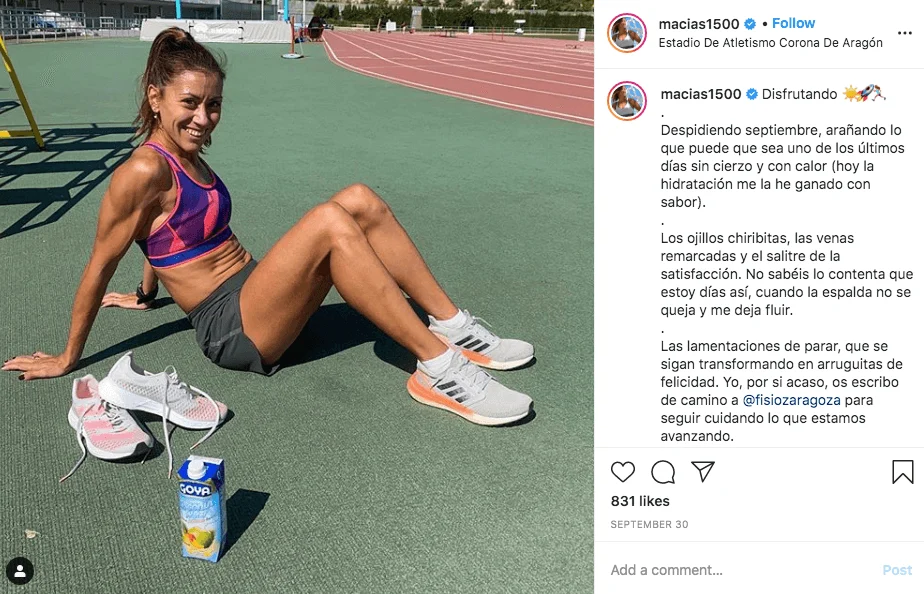
The largest advertising company in the world, Publicis Groupe, just announced a new offering to connect brands with sports influencers. Influential Sport is a combination of the French company’s flagship Publicis Sports and their recent acquisition Influential, a talent agency for influencers. The announcement is one of many signals that a shift is happening in sports media. The traditional sports broadcast model still drives the biggest live games, but more of the day-to-day sports audience and advertising value is now being captured through athlete and creator channels on social platforms. That change shows up in how colleges, brands, and media companies are organizing around athletes as publishers, not just performers.
A clear inflection point in the U.S. came after the NCAA changed name, image and likeness rules in 2021, allowing college athletes to earn money from things like endorsements and their own personal brands, ways that had previously been strictly forbidden. The New York Times reported on a University of North Carolina at Chapel Hill backed-initiative designed to help all of its 850 student-athletes participate in influencer-style content and brand work, with the school framing it as beneficial for recruiting, fan engagement, and revenue. The same reporting described brands paying student-athletes for routine content such as “game-day outfits” and “daily routines,” illustrating that NIL income is not limited to highlight-reel stars when a creator can consistently produce sponsor-friendly posts.
The economic context is no longer speculative because influencer marketing budgets are tracked and forecast like other ad channels. Jay Pattisall, vice president and senior agency analyst at research and advisory firm Forrester, told Digiday – “Sports are the last and most consistent shared experience for U.S. consumers…Marketers are keen to take advantage of the mass interest.” Influencer campaign marketplace Collabstr’s 2025 Influencer Marketing Report projects global influencer marketing will reach $22.2 billion in 2025 and estimates the broader creator economy will grow from $191 billion in 2025 to $528.39 billion by 2030, with high audience intensity in Athletes and Sports. Additionally, college athlete-influencers average a reported 10–15% engagement, significantly higher than standard content creators.
USC Annenberg’s Norman Lear Center studied athlete-owned media, identifying over 30 athlete-owned production companies, focusing on building direct-to-fan revenue streams rather than relying on traditional media distributors. Sports leagues are also working with non-athlete sports creators when the goal is reach and format innovation. The revenue structure for most sports influencers is not a single endorsement contract. Brands increasingly want integrated packages that follow athletes across channels, which pushes the market toward bundles that include creator-led social distribution rather than treating it as a side add-on. YouTuber Jesser has a number of collaborations with the NBA, extending the league’s presence to audiences that may not consume traditional broadcasts.
Traditional media companies have responded by repositioning around services and infrastructure rather than pure distribution control. The measurable change is who owns the fan relationship day to day. In 2026, athletes and creators with direct channels increasingly have direct access to an audience that used to be mediated primarily through leagues and broadcasters.