
Sports
Lacy and Sketch Got Kicked Out of March Madness for Streaming

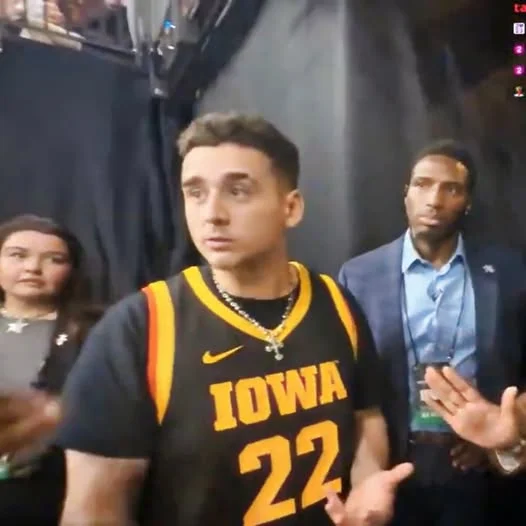
On March 28, Twitch streamers Lacy and Sketch were sitting courtside in Houston, Texas at the Toyota Center for the NCAA Men’s March Madness Elite Eight game between Iowa and Illinois. They had paid somewhere between $5.000-$6,000 for their seats. They were also livestreaming on Twitch to roughly 30,000 total viewers. They were kicked out of the game by Toyota Center security and were told that the NCAA had them removed, filming their removal. Lacy argued he was streaming his personal experience and reactions, not the game but the two were escorted out nonetheless.
Lacy, born Nick Fosco, is a 23-year-old Twitch streamer ranked in the platform’s top 15 in 2026, with an average of over 15,000 concurrent viewers and 2.4 million followers. Sketch is Kylie Cox, known for his “What’s up, brother?” catchphrase. Both are IRL streamers, Lacy is especially known for his live content, and was previously a member of the FaZe Clan collective. Sketch got his start streaming games like Madden. Streaming something like an NCAA game is normal for them.
After he was removed, Lacy continued streaming from outside the arena. He speculated that the NCAA felt threatened because his Twitch audience was larger than the physical attendance in the building. He also showed Instagram DMs from the official NCAA March Madness account that had invited him to the game and suggested they collaborate. None of those messages said anything about being allowed to livestream during the event. Lacy claimed there had been a “miscommunication” about filming and said he had spoken with someone from the broadcast about getting permission to record. Security told him repeatedly that the decision was the NCAA’s. The whole confrontation, from the first conversation to the ejection, lasted about 10 minutes.
The NCAA, like many sports organizations in the US, is very strict with potential violations of broadcasting rights. CBS and Turner pay over a billion dollars a year for exclusive rights to the tournament. A creator with a camera two rows behind the baseline, with tens of thousands of live viewers is, from a legal standpoint, a competing broadcast. Even if Lacy was pointing the camera at his own face, the game was visible and audible and he was streaming live to the public on Twitch.
Lacy told his audience and arena security that he had been to other multiple March Madness games earlier in the tournament and had streamed from them without problem, but this was before the Elite Eight. The March Madness trip was already going badly before the ejection. Earlier in the tournament, Lacy showed up to a game thinking he had been given free courtside seats, but ended up having tickets for the top rows of the arena, watching the game from what he described as the nosebleeds. He also told the Houston Chronicle that he lost $10,000 betting on Iowa to beat Illinois in the Elite Eight game he was ejected from, on top of a $5,000 loss from betting on a Sweet 16 game at the same arena earlier in the week. The tournament cost him over $20,000 in total between tickets, bets, and general expenses.
The incident raises a question that is going to keep coming up as IRL streaming grows. Lacy was supposedly invited to March Madness by the NCAA’s own social media team. But an invitation to attend is not the same as permission to broadcast, and nobody on Lacy’s side appears to have confirmed where that line was before they sat down and hit go live. For someone whose entire career depends on streaming from wherever he is, that seems like a conversation worth having before you spend $6,000 on seats.


Sports
USA Fencing Bets on Creators Two Years From LA 2028
A sport that cannot outspend anyone is building a fan base one sub-100,000-follower creator at a time. The payoff is a live Pier 17 showdown next month.


A national governing body that admits it cannot outspend anyone is trying to outmaneuver everyone, one sub-100,000-follower creator at a time.
USA Fencing has spent nine months building one of the most aggressive creator strategies in Olympic sport, and the numbers moved. Digiday reported that since the program launched in December 2025, the body’s average monthly impressions are up 36.9%, reaching 4.75 million a month, a figure CEO Phil Andrews attributed to the push.
That is the whole thesis for underfunded Olympic sports staring down the 2028 Los Angeles Games. Fencing does not have a paid-promo war chest. It has creators, and it started courting them more than two years before the flame is lit. The recruiting floor is what makes the model copyable: some of the creators the body is hiring have fewer than 100,000 followers.
One of them is Star Wars stunt coordinator Nick Gillard.
The Star Wars Overlap USA Fencing Is Chasing
Gillard choreographed the lightsaber duels across the prequel films, and USA Fencing is leaning into the overlap. The body will appear at New York Comic Con with a saber and lightsaber masterclass featuring Gillard and two actors who have played Jedi Knights, whom Andrews declined to name. The bet is that a Star Wars audience is a fencing audience that has not been asked yet.
The payoff event comes first. Next month the USA Fencing Creator Showdown runs at Pier 17 on New York’s waterfront, pairing Olympians against creators known for fitness, dancing, and comedy who together hold more than 300 million followers across Instagram, YouTube, and TikTok. USA Fencing has confirmed the dates as September 21 through 23 at the Seaport, with creators on Instagram, TikTok, and YouTube pairing up with elite fencers.
The Impression Target Keeps Climbing
Andrews has already raised his own bar. “Our initial target was 60 million impressions, we’re now reasonably expecting to go over 100 million,” he said, a projection that would nearly double the original goal for a single event.
The logic behind the spend sits in the data USA Fencing is chasing. A recent report from the Acceleration Community of Companies found that 49% of Gen Z sports fans became interested in a new sport or athlete through fan-created content, a channel that costs a small non-profit far less than a broadcast buy.
The Athletes Doubling as the Content Engine
Fencing is also using its own athletes as the content engine. USA Fencing was the only summer-sport governing body to send athletes to the 2026 Winter Olympics in Milano Cortina, where one of its Olympians fenced gymnast and NBC correspondent Laurie Hernandez, who Andrews said now counts as a creator in most respects with over a million followers.
The married Olympians Lee Kiefer and Gerek Meinhardt are part of the same play. They hold more than 100,000 followers combined on Instagram and 1.2 million likes on their joint TikTok account, an audience that travels with them from competition to feed.
Andrews frames the whole effort in blunt terms against his peers. “I think we’ve probably done more than anybody,” he said of the body’s creator work relative to other national governing bodies.
The Comic Con masterclass follows in October. The saber meets the lightsaber, and the door USA Fencing has propped open runs straight to Los Angeles in 2028.

Sports
ESPN Names Fourth Creator Class for Super Bowl Season
A flag football world champion, a former NFL lineman, and a data-native analyst headline ESPN’s fourth Creator Network class, embedded for a full season on the road to the network’s first Super Bowl telecast.
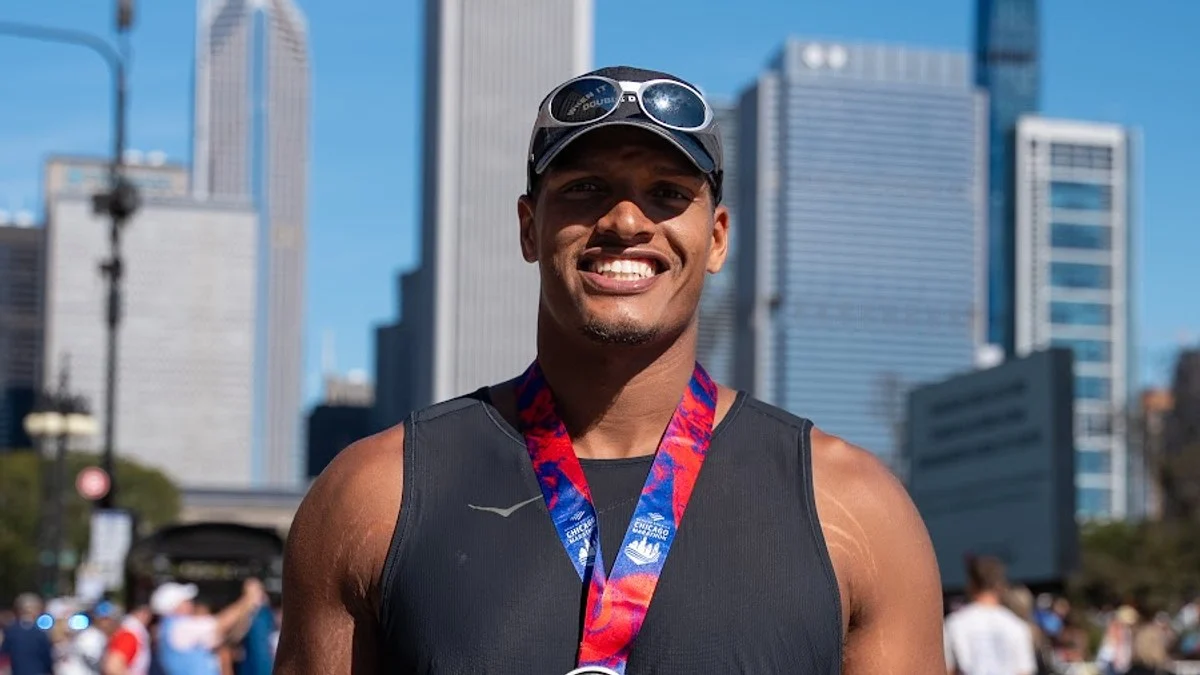
Diana Flores captains a world champion flag football team. Now she has a season-long pass inside ESPN, and a place on the road to a Super Bowl broadcast that has never existed.
ESPN announced the fourth class of its Creator Network on August 4, five independent digital creators who will produce social-first content across the full 2026 NFL season. The group includes Flores, Chase Murman, Isaac Rochell, Simone Scott, and Leah Cammarano. The season builds toward Super Bowl LXI on February 14, 2027, at SoFi Stadium in Los Angeles, the first Super Bowl ESPN and ABC will ever televise.
The move is a legacy sports rights-holder routing its biggest broadcast through independent creators instead of only traditional promotion. ESPN frames the class as part of its yearlong “Year of the Super Bowl” initiative, built to give fans behind-the-scenes access through the football season. The creators will visit ESPN headquarters, work marquee college football and NFL events, and get inside Super Bowl week in Los Angeles.
The Most Sports-Diverse Roster Yet
This is the most sports-diverse class the program has fielded.
Flores is the captain and quarterback of Mexico’s World Champion National Flag Football Team and a bilingual creator on TikTok and Instagram, helping grow the sport ahead of its Olympic debut at the 2028 Los Angeles Games. Rochell is a former NFL defensive lineman, including a run with the Los Angeles Chargers, who now makes content about sports, fatherhood, and life beyond football on TikTok, Instagram, and YouTube. Murman founded The QB Plug, which ESPN calls one of social media’s fastest-growing football brands, posting quarterback storytelling on TikTok, Instagram, and YouTube.
Cammarano brings the data lane. She is a sports analytics creator and former Carolina Panthers Football Analytics intern who works to make advanced football numbers readable, active on TikTok. Scott is a sports host and reporter who covers football, basketball, and more on TikTok and Instagram.
Why ESPN Keeps Coming Back to the Model
The Creator Network launched in September 2022 with 10 emerging creators. The 2024 class ran an all-female roster of 12 sponsored by adidas and generated more than 400 million cross-platform views, by ESPN’s count. The 2025 class narrowed to five creators with a combined following above 6 million. The program has moved from experiment to standing operation, with the same five-creator shape carrying into a fourth year.
Kaitee Daley, ESPN’s senior vice president for digital, social and streaming content, tied the class to the stakes of the broadcast itself.
“Partnering with creators who have built passionate communities through their distinctive voices and storytelling styles will help bring fans closer to the people, culture and highlights that will define the road to ESPN’s first Super Bowl,” Daley said in the announcement.
A Broadcast Two Decades in the Making
Super Bowl LXI marks ESPN’s first-ever telecast of the game and ABC’s first since Super Bowl XL in February 2006, roughly two decades after Monday Night Football moved from ABC to ESPN. That history is the pressure behind the hire. The network is staffing its highest-stakes broadcast with voices built for the feeds where much of the audience already lives.
The class starts its work as the 2026 NFL season opens. Its finish line is fixed: SoFi Stadium, February 14, 2027, the night ESPN carries a Super Bowl for the first time.
Sports
Jake Paul’s MVP Merges With PFL to Form Combat Giant
A YouTuber turned promoter now co-owns a nearly 400-fighter combat sports company, and he plans to fight inside it. The MVP-PFL merger closes a loop no one in the fight business has drawn before.
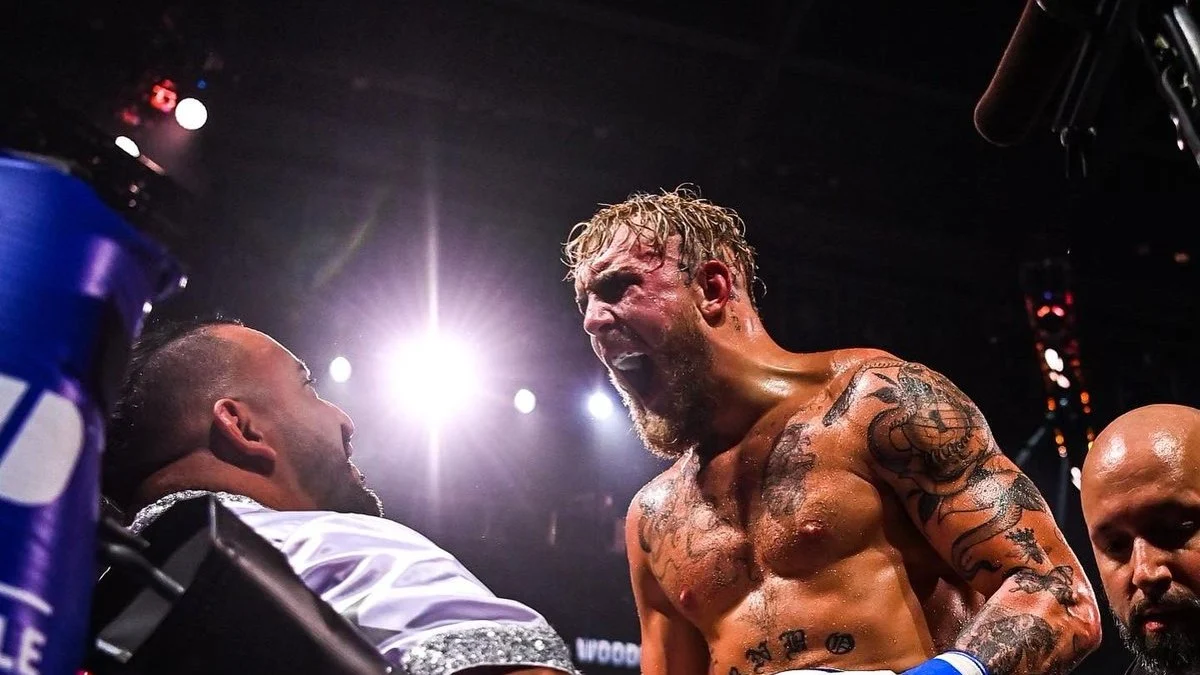
Jake Paul walked into the fight business selling views. On Thursday he walked out of it a co-owner of one of the largest combat sports companies on the planet.
Paul’s Most Valuable Promotions merged with the Professional Fighters League on July 30, forming a combined boxing and MMA company of nearly 400 athletes under the MVP banner, the two sides said in a joint press release. The PFL brand will phase out and migrate to MVP MMA, with full integration set for the start of 2027.
The arc is the story. Paul, who built his audience on YouTube, co-founded MVP in 2021, turned that reach into a promotion, and has now engineered a full combat sports conglomerate rather than a sponsorship. It is the clearest proof in sports that creator leverage can reshape legacy infrastructure, not just rent space on it.
The Ownership Table and the Distribution It Controls
John Martin, the PFL chief executive, becomes CEO and a board member of the combined business. Paul and co-founder Nakisa Bidarian stay on as co-founders and board members, with Bidarian continuing to run MVP’s boxing operation and live events.
The scale arrives with distribution attached. The new company keeps relationships with Netflix, ESPN and Sky Sports, and inherits PFL’s network of 34 broadcast and streaming partners reaching fans in more than 170 countries, per the release. That footprint is the asset a standalone creator promotion cannot buy overnight.
The merger is backed by existing PFL shareholders 885 Capital and affiliated entities of Knighthead Capital Management, who commit new capital as founding investors. The two sides said the combined company launches with the strongest balance sheet in its history.
PFL brings the roster. Founded in 2018, the league acquired Bellator MMA in late 2023 and sits as the No. 2 global MMA company behind the UFC, with fighters including Dakota Ditcheva, Usman Nurmagomedov, AJ McKee, Johnny Eblen and Cris Cyborg, according to Yahoo Sports. The combined company plans aggressive compensation offers and wants athletes crossing between boxing and MMA.
Paul Becomes the Product and the Owner at Once
Then Paul confirmed the part with no clear precedent. He plans to fight inside the company he co-owns.
“We started MVP to disrupt a broken model. We wanted to give fighters fair pay and a bigger, modernized stage to become global superstars. Joining forces with PFL accelerates that vision by a decade. I look forward to putting my entire promotional muscle into our new company, returning to the boxing ring and making my MVP MMA debut,” Paul said in the release.
He set a timeline on ESPN’s SportsCenter. “I’ve been trying to make [my MMA debut] happen for a long time. It’s really just down to negotiations behind the scenes. I’m going to come back, hopefully, this year into boxing and then looking to do MMA in 2027,” Paul told ESPN.
That closes the loop. Paul is at once the draw, the promoter and the rights holder, a structure combat sports has not seen from a single figure.
Martin framed the deal in terms of what the pieces add up to. “This merger brings scale in operations, in distribution and media rights, in sponsorship, in fighter development and in fan engagement,” he said.
The business is already running. The combined company has five premium boxing and MMA events scheduled for August, and PFL alone will produce 24 events across 11 countries in 2026, roughly 150 hours of live content. That volume feeds the rights conversations Martin now controls.
One open piece hangs over the money. PFL’s domestic broadcast deal with ESPN expires at the end of 2026, and a new distribution agreement is expected before year-end.
The rebrand runs into early 2027. Paul’s MMA debut is scheduled to follow it, inside the company that will carry his name.