Entertainment
Kai Cenat Breaks 8 Months of Silence With a Pineapple
Kai Cenat hasn’t streamed in eight months. A Kool-Aid pineapple video with Fanum and a reopened Streamer University say that’s about to end.

The most-followed creator on Twitch has not gone live in over eight months. No stream since Mafiathon 3 ended on September 30, no timeline on a return. So when Kai Cenat posted a short to his KaiCenatLive YouTube channel this week, fans treated it like a transmission from orbit.
The transmission was a pineapple soaked in Kool-Aid.
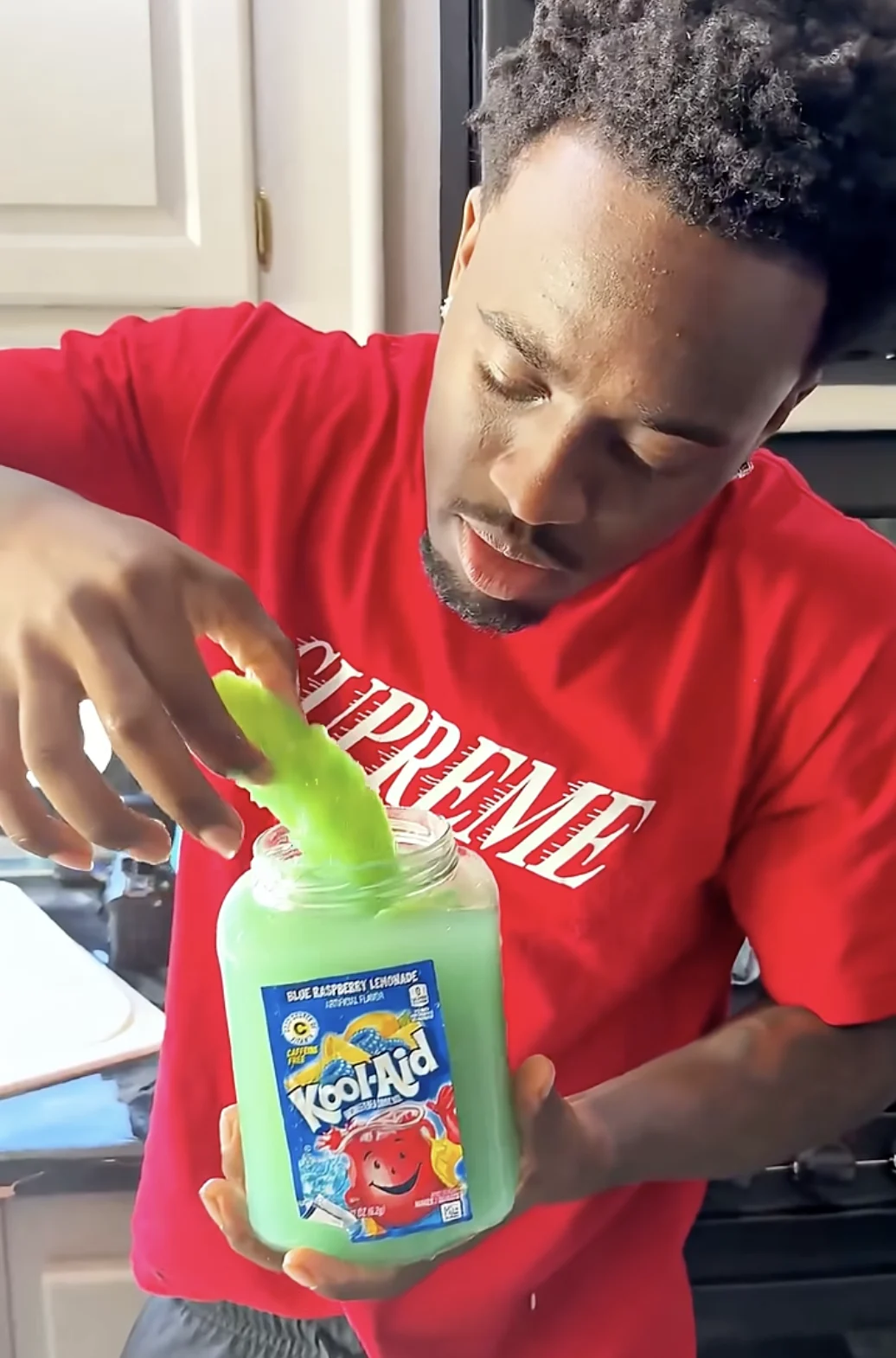
The clip shows Cenat and fellow AMP member Fanum trying the Kool-Aid pineapple jar. The food trend that has run across TikTok, Instagram Reels, and X since mid-April, and it is circulating far beyond what a snack video earns on its own. That is the point. After eight months of silence, nothing Kai Cenat posts is just a snack video. Every upload gets read as a signal, and this one arrived the same week AMP’s Streamer University site was updated.
Eight Months of Static
The timeline matters to why a fruit clip became an event. Kai’s last broadcast was Mafiathon 3, the September subathon that pulled guests like Kim Kardashian, Mariah Carey, and LeBron James into the stream. He has not gone live on Twitch since. In January came the video titled “I Quit,” which sent fans spiraling before revealing itself as a soft launch for Vivet, the fashion brand he developed after a working trip to Italy. Cenat has said the break was also about his health, telling fans he stepped back to deal with self-doubt and impostor syndrome after years of nonstop broadcasting.
The audience never left. It just changed posture, from watching to waiting.
And the waiting has been fed. In April, Cenat posted a two-word Instagram Story from his secret account: “Mafia reunion,” which fans immediately read as a fourth Mafiathon. Then, days before the pineapple clip, he held a Twitter Q&A and answered the only question that matters with three words: he will return “when it’s time.” He told fans he feels better than ever, that streaming needs more inspiration, and that the silence will make sense once he is back in front of a camera.
Read in that sequence, the pineapple jar is not a one-off. It is the third signal in three months, and the most visible one yet.
The Trend That Drew Kai Cenat Back Out
The Kool-Aid pineapple has real street-food roots. Yahoo’s trend coverage credits Instagram user Silly Willie, who sells his “Pineapple Dreamz” jars from his car, with popularizing the format starting in mid-April: pineapple spears soaked in Kool-Aid powder, sugar, and juice until the fruit turns neon and intensely sweet. A separate clip of a young man exclaiming “Dat bih gah” after tasting one launched the trend’s second, larger wave in late May.
It is a format built, almost accidentally, for one thing: a genuine, unguarded reaction. Which happens to be the exact thing Cenat’s entire career is built on. He did not pick a trend at random for his resurfacing. He picked the one that runs on his core competency.
Streamer University Is Warming Up
The short did not arrive in isolation. On June 1, AMP posted a six-second video on X announcing that Streamer University is returning and searching for new students. The official site, streameruniversity.com, now carries a single message: “Streamer University 2026. Searching for new students. Applications open soon. Stay tuned.”
The first edition is why that pledge moves markets. The four day event helped streamers like India Love, ExtraEmily and Tylil shine even brighter. Over one million people applied for 120 spots at the inaugural event, hosted at the University of Akron. During Mafiathon 3 Cenat announced the 2026 edition would be “crazier.” That promise now has a live application portal behind it.
Streamer University is not a brand integration or a platform deal. Kai Cenat is the institution, the curriculum, and the draw at once, creator-built infrastructure at a scale streaming has rarely produced from a single person. A reaction clip and a reactivated website landing in the same week is what that infrastructure looks like when it starts warming up.
No return date is confirmed. No application window is open. But after eight months, the signals are no longer ambiguous, and they are getting closer together. The website is waiting. So is everyone else.



Entertainment
Alex Warren Runs His Album Rollout Through TikTok
Alex Warren released a live edition of WILDCHILD just 72 hours after the studio album, splitting two platform exclusives between Apple Music and TikTok. Inside a creator-native rollout that treats platform relationships as release infrastructure.
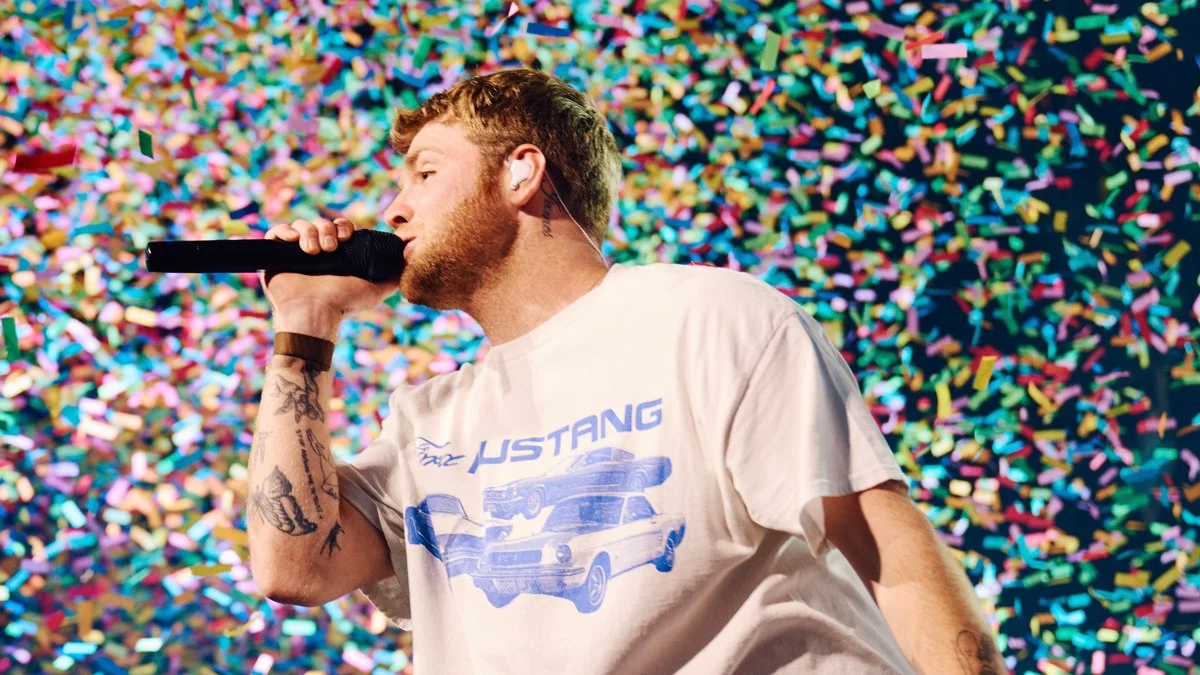
Alex Warren spent Thursday night doing two things at once. He played his first arena show in Australia, and he handed the broadcast rights to the app that made him. The Sydney concert did not air on a network or a music channel. It ran on TikTok LIVE, where Warren counts more than 21 million followers.
Then came the record. On August 31, Warren released WILDCHILD (Live on the Road) through Atlantic Records, an expanded edition of the studio album he had put out only three days earlier. The new version keeps all 13 original tracks and adds four live recordings captured on his Finding Family on the Road Tour: Passenger, Same Stars, Fine Place to Die, and Fever Dream. The Apple Music edition carries an exclusive live performance video of Fever Dream and a photo booklet shot on tour.
The interesting part is not that a live edition exists. It is the clock. A 72-hour window between a studio album and its live companion is fast, and the speed is the strategy. Warren built his audience on a platform first and reached for major-label distribution second, so his rollout treats his own platform relationships as release infrastructure, not marketing garnish.
Two Exclusives, Two Different Jobs
Consider how the two exclusives split the work. Apple Music got the Fever Dream video. TikTok got the arena.
That division tells you what each platform is buying. Apple gets a premium visual to anchor its edition of the record. TikTok gets a live event that reinforces the story it likes to tell about itself, that it helped make Warren in the first place.
The numbers behind that claim are real. Warren’s breakout single Ordinary topped the Billboard Hot 100 for 10 weeks in 2025, and the same track has soundtracked more than 18.6 million creations on TikTok, according to figures the platform published. His current single Fever Dream had already driven more than 388,000 creations at the album launch. For a Grammy Best New Artist nominee, that is a distribution channel a label cannot buy outright.
Warren framed the Sydney stream around that history. “TikTok has played a pivotal role in helping me connect and share my music all around the world. I can’t wait to bring this live performance directly to fans and share my new album WILDCHILD with you all,” he said in a statement published by TikTok ahead of the show.
The App Ran the Whole Campaign, Not Just the Stream
The concert was one piece. Alongside the August 28 broadcast, TikTok launched an in-app experience that turned promotion into a task list. Fans could post a video using Emerald Eyes, comment, save the track to a streaming service, or share the campaign, and completing the tasks unlocked an exclusive video from Warren.
Earlier in the month, Warren had already hosted a one-night talk-show-style TikTok LIVE premiere co-branded with iHeartRadio, where he debuted the RESCUER music video with guests Mila Kunis, Freya Skye, and a surprise from Joe Jonas.
Stack those events and a pattern appears. The premiere, the in-app tasks, the arena stream, and the compressed live edition all route the same album through the same platform relationship over a single month.
What the Live Tracks Keep Selling
The Finding Family on the Road Tour that produced those live tracks is Warren’s first arena run, spanning North America, Europe, Asia, and Oceania between April and September. The live edition lets the tour keep selling the record after the studio version has already dropped.
Warren has nine more Australian shows to play before the tour closes on September 12. The recordings from those rooms already have a place to land.
Entertainment
Rabbit Hole Sends 36 Creators to Disney+ and Hulu
Pocket.watch’s Rabbit Hole puts 36 creators in one premium series, then parks 240 spinoff episodes behind it on Hulu. The structure, not the star count, is the story.
Thirty-six creators walk into one variety series, and behind them Hulu quietly stacks 240 more episodes so nobody who clicks in has a reason to click out. That is the shape of Rabbit Hole, the pocket.watch series that premiered July 13 on Disney+ and Hulu. Topper Guild, the YouTube prankster with the largest following in the cast, leads it.
The 10-episode, half-hour series debuted on Disney+ and Hulu in the US and on Disney+ in select international markets on July 13. Disney and pocket.watch call it the largest ensemble of digital stars ever assembled for a premium series. The cast reaches a combined 675 million followers, more than the roster carried at greenlight, when the same show counted 421.8 million.
That headline number is the easy part. The real story sits in the release strategy around it, and it says a great deal about where creator IP is heading.
Pocket.watch did not just book a marquee show. It built a supply chain. Eight cast members already have individual series streaming on Hulu, with more launching around the premiere, and the full universe spans 240 half-hour episodes. The tentpole draws the crowd. The back catalog keeps them there.
The Ensemble Is the Product
The follower total works because no single channel could stage the collisions the show is built on. A viewer who watches Topper Guild’s pranks has never seen him next to ZHC’s art challenges or Collins Key’s magic. The cast also includes Zhong, Jesser, Josh Peck, Sofie Dossi, Mackenzie Turner, Papa Jake, Matthew Beem, and ExtraEmily.
Individual reach anchors the pitch. Topper Guild brings 127.9 million followers, Zhong 100 million, and ZHC 76.1 million, figures pocket.watch listed creator by creator in its announcement. Those are the three largest in a lineup where most names would headline a show on their own.
Disney frames the deal as a milestone for its platforms, not a favor to the creators. Lauren Tempest, Head of Content Planning and Partnerships, DTC at The Walt Disney Company, said the series gives subscribers “access to 36 of the most followed creators for teens, all in one series.”
Why the Spinoffs Matter More Than the Premiere
The math on retention is the point. One premium series can win a launch weekend. A launch weekend does not hold a subscription.
That is the gap 240 episodes are built to close. Pocket.watch CEO Chris M. Williams described the model as a premium entry point that opens into hundreds of episodes of the same talent, connecting appointment viewing with ongoing discovery. It reads less like a show order and more like a studio franchise assembled from fanbases that already exist.
The comparison is traditional television, run backward. Legacy studios build a hit, then spin off characters audiences met on screen. Pocket.watch starts with creators who arrived with millions of fans, then routes that attention through Disney’s paywall and keeps it circulating across the spinoff slate.
The scale grew as the deal did. When pocket.watch first greenlit the show in October 2025, as Deadline reported, the cast commanded 421.8 million combined followers and Hulu was the sole US home. By launch the roster had expanded to 36 creators and 675 million followers, with Disney+ added for the US and international markets.
Rabbit Hole is the clearest test yet of whether free-platform audiences follow their favorites behind a subscription wall. All 10 episodes are streaming now. The 240 waiting on Hulu will decide whether they stay.
Entertainment
Dudamel Streams LA Phil Farewell on His Own YouTube
Gustavo Dudamel is ending 17 years at the LA Phil on his own YouTube channel, not a broadcast network, turning a farewell into a live Venezuela fundraiser and a bet on classical as prestige streaming.
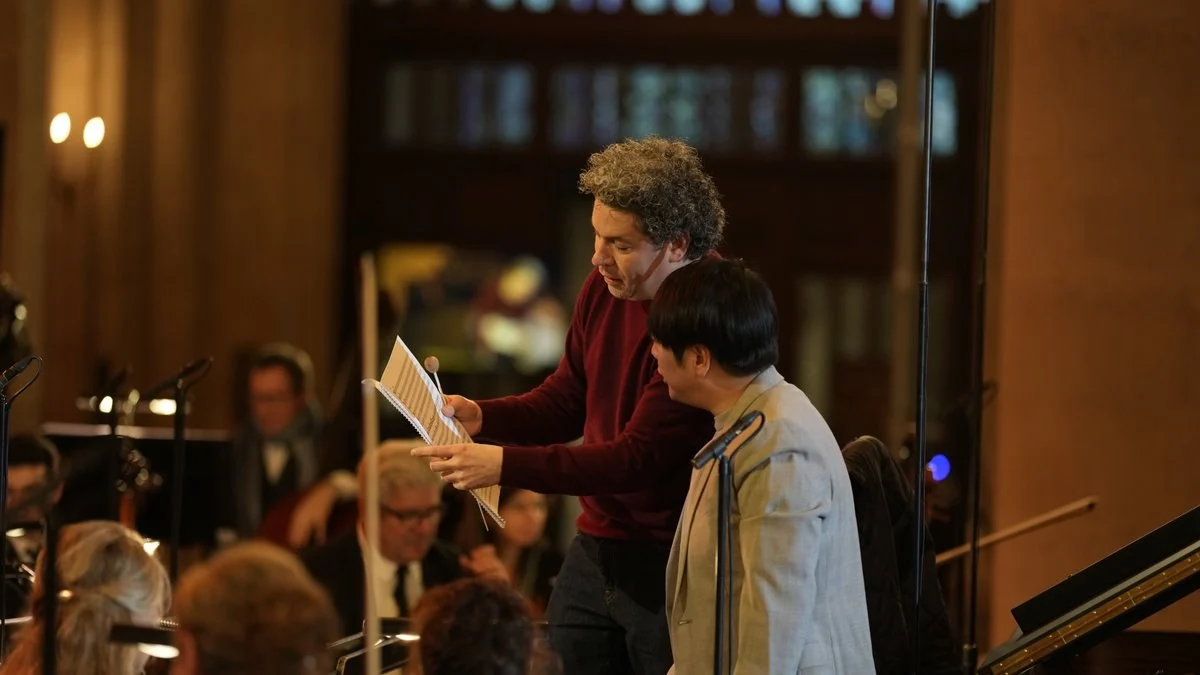
The maestro who turned a symphony orchestra into a stadium act is spending his last night as its leader routing the whole thing through a donate button. Gustavo Dudamel closes 17 years as Music and Artistic Director of the Los Angeles Philharmonic on Sunday, August 23, with a Hollywood Bowl concert streaming worldwide on his personal YouTube channel.
The show is called A Concert for Venezuela, and every dollar it raises goes toward earthquake relief. Donations split between the United Nations Development Programme relief fund and the El Sistema CAF Development Bank of Latin America and the Caribbean Fund, which supports El Sistema students, staff, families, and facilities hit by the June 24 disaster.
Here is the part the creator economy should sit with. Dudamel did not send his farewell to the LA Phil’s institutional channel or a legacy broadcaster. He sent it to his own YouTube page, with a platform-native donate button doing the fundraising in real time. A prestige classical figure is treating the platform as his independent broadcast network, and YouTube is treating classical as a category worth owning.
The concert was not always this. When the LA Phil first announced its 2026 Bowl lineup in February, the finale carried the title “Celebrating Gustavo at the Bowl: A Musical Legacy.” Then two earthquakes struck northern Venezuela on June 24, 39 seconds apart, and Dudamel rebuilt the night around his home country. The tribute became a benefit.
“Venezuela will always be my home, and every moment, my thoughts are with the families whose lives have been forever changed by this tragedy. The suffering is immense, but so is the strength and resilience of our people,” Dudamel said in the statement announcing the change.
Who Shares the Bowl Stage
The bill reaches well past the orchestra pit. Dudamel leads the Los Angeles Philharmonic and members of YOLA, the Youth Orchestra Los Angeles, alongside guests including Beck, GIVĒON, Carlos Vives, and Natalia Lafourcade. Venezuelan artists Lasso, Eduardo Betancourt, Jorge Glem, and Nella appear too, with the program built around Venezuelan composers.
That cross-genre gathering is the entire pitch. A single YouTube stream carrying an R&B singer, a Colombian pop star, and a youth orchestra under one conductor is the kind of event a broadcast network would have gatekept a decade ago. Now it lives on one man’s channel, free to anyone with a screen.
The institution put money down as well. LA Phil President and CEO Kim Noltemy announced a $50,000 charitable donation toward Venezuela relief alongside the concert, a figure that sets a floor before a single viewer clicks the button.
“In moments of profound need, our responsibility as an institution extends beyond the stage,” Noltemy said.
Where the Maestro Goes Next
The exit has a destination. Dudamel leaves Los Angeles to become music director of the New York Philharmonic, a move the orchestra announced in February 2023 on a five-year contract for the 2026-27 season.
So the farewell is also a handoff, and the choice of venue for it says something. A conductor whose LA tenure included the Super Bowl and Coachella is ending it not on a stage owned by a network, but on infrastructure he controls, pointed at a cause rather than a curtain call.
“This concert at the Hollywood Bowl is an invitation to stand together and transform our compassion into action,” Dudamel said.
The full concert stays on his YouTube channel after the broadcast ends, donate button attached. The tribute became a benefit, and the benefit does not clock out when the lights come up.