
Entertainment
LaRussell Shocks With New Challenge


On Wednesday December 31st, Bay Area artist, LaRussell, announced his groundbreaking challenge to sell 100,000 album copies in 30 days, fully independent.
The challenge builds on another one of his ground breaking initiatives, his pay-what-you-want pricing, offer-based ticketing, and community-backed merch sales. He’s recently announced on his Instagram that he sold 1000 pre-sale copies within 24 hours of the announcement, along with one supporter paying $5000 for the album and several others paying $1000.
This revolutionary sales method was largely influenced by the late Hip-Hop Legend, Nipsey Hussle, and his mixtape “Mailbox Money”. Nipsey sold each physical tape for $1000 each and sold 60 copies attracting the support of hiphop giants like Jay-Z. Digital copies sold for $12 each and made $50,000 from both Itunes & Spotify. The iconic mixtape release challenged traditional ideas of artist value, scale, and independence.
The Marathon Has Continued
This week, the Bay Area rapper and entrepreneur announced an ambitious new goal to sell 100,000 albums in 30 days during the month of January. The announcement wasn’t framed as a flex or a gamble, but a statement to the music industry that what independent artist have the potential to achieve today is limitless.
The Announcement
LaRussell shared the campaign across his social platforms, including a video announcement posted to X, where he spoke candidly about the intention behind the goal.
“I’m setting a goal for myself to sell 100,000 albums,” he said. “Even if you got to buy an album for a dollar, two dollars, whatever — please help me hit this goal. I just want to show the world that this is possible independently and at home within our own region and our own people.”
Rather than positioning the album as a fixed-price product, LaRussell emphasized accessibility and participation, calling on supporters to contribute at whatever level they could.
“I’m really out to prove something to the rest of the world and the industry,” he added. “And I need my home team behind me.”
The announcement immediately sparked conversation among fans and independent artists alike, many pointing out that the campaign reflects the evolution of systems LaRussell has already been building.
Primary source: LaRussell’s announcement on X
Why It Matters
Selling 100,000 albums in a month is a rare feat even for major-label artists and almost unheard of for independent rappers in today’s streaming-driven landscape. LaRussell for several years has been showing the world that the modern way artists exist in “the music business” can be one of self empowerment & ownership.
In a recent appearance on the Money Talks with Jesse podcast, LaRussell broke down the thinking behind his pay-what-you-want approach to music, merch, and live shows.
“I started off Proud to Pay like Nip,” LaRussell explained. “I was thinking of how I could do the $100 album Nip did, but in a way that worked for broke [people] — because all I knew was broke [people].”
Instead of setting premium prices, LaRussell removed them altogether, allowing fans to make offers while maintaining backend thresholds that protect his value.
“If somebody offers $5 for a hoodie, I don’t have to accept it,” he said. “But if it meets the threshold, it’ll automatically accept it. That way I still have some say in what I feel like I’m worth.”
That same philosophy extends to his live shows. Through WhatsTBA — a ticketing platform he co-founded. LaRussell personally reviews offers for performances, deciding which to accept or reject based on context, demand, and community alignment.
“Artists aren’t just going to leave their home without money,” he said. “At a certain level, you get a guarantee. Or you do splits. Or you do a flat and take care of everything else.”
The model isn’t theoretical. According to LaRussell, merchandise alone generated approximately $170,000–$180,000 in the third quarter of 2025, with hoodies and limited-edition race car jackets driving the bulk of sales. Importantly, he noted that removing suggested prices actually increased support.
“When you say ‘make an offer’ and give people nothing but their mind to decide what it’s worth, it changes the process,” he said. “You’re not just buying a hoodie. You’re supporting young Black men building something different.”
What’s Next
LaRussell’s January challenge will test whether community-backed economics can scale to numbers traditionally reserved for major-label releases. For those who are pro community and pro ownership, this is your moment to support a vanguard of the independent movement.
He also addressed why more artists haven’t adopted similar grassroots strategies.
“Embarrassment. Ego. Shame,” LaRussell said. “The internet made it uncool to start small. But everybody starts somewhere.”
Whether LaRussell hits 100,000 albums or not, the campaign stands as a real-time case study in independent infrastructure — one built long before the announcement, and now being tested on the biggest stage yet.
January won’t just measure sales. It’ll measure belief.


Former Beast Industries employee Lorrayne Mavromatis, who worked at MrBeast’s (Jimmy Donaldson) entertainment company from 2022 to 2025, filed a civil lawsuit in US federal court in North Carolina, headquarters of Beast Industries. In her lawsuit Mavromatis is seeking damages from the organization for alleged sexual harassment, gender-discrimination, workplace violations and wrongful termination. Mavromatis says she was fired after returning from maternity leave. She also alleges that she was demoted before being fired. Beast Industries has denied the claims of the lawsuit, calling them “categorically false”.
This is not Beast Industries’ first controversy with former employees and associates, as the organization (and MrBeast himself) previously cut ties with an original cast member after she was accused of grooming a minor (an investigation by an independent law firm later found no evidence of misconduct, according to the New York Times). MrBeast has also been accused of fostering a hostile work environment, going as far back as 2018, according to multiple reports. In two separate instances, two former video editors accused him of having a toxic workplace. Additionally, five former contestants on MrBeast and Amazon Prime’s reality competition show Beast Games sued, alleging a variety of different forms of mistreatment, including sexual harassment. That lawsuit is still ongoing.
In Mavromatis’ lawsuit, she alleges a pattern of discriminatory culture at Beast Industries. Mavromatis spoke with Vulture about her experience at the company and her lawsuit. Beast Industries denies the claims of the lawsuit. A representative from Beast Industries told BBC Newsbeat that the claims by Mavromatis were “categorically false” and described the lawsuit as a “clout-chasing complaint”. Donaldson himself has declined to comment on the lawsuit at present.
Mavromatis, an influencer, said that she moved to Greenville, North Carolina with her husband, and was hired as Head of Instagram at Beast Industries. In her first year, she was promoted twice, making her the only woman executive in the company. According to Vulture, the allegations of a toxic environment date back to the company’s original employee handbook, and also being “excluded from otherwise all-male meetings, demeaned in front of colleagues, harassed”, in addition to what Mavromatis claims were retaliations (including being demoted and then fired) for complaints about such behavior. According to Fast Company, a Beast Industries representative said that it has messages, documents, and witness testimony contradicting her claims
In the lawsuit, Mavromatis charges that sexual harassment of female employees was “both condoned and/or perpetuated by their supervisors”, citing personal examples including claims that Beast Industries then-CEO, James Warren (also MrBeast’s cousin), told her that she was “a beautiful woman and her appearance had a certain sexual effect on Jimmy”, and also makes multiple claims about “strange” behavior by Donaldson himself, and additional inappropriate behavior by Warren in one-on-one meetings.
In 2023, because of allegations of a producer making “unwelcome comments about their appearance and close touching”, Mavromatis complained to Donaldson’s mother, then-head of Human Resources Sue Parisher. According to the lawsuit, a company-commissioned investigation found the claims ‘unsubstantiated,’ which Mavromatis disputes.
The lawsuit alleges that afterwards, Mavromatis was demoted to social media manager for merchandise at Beast Industries. In 2025, after finding out she was pregnant, Mavromatis also claims that her employment rights were violated when she asked for maternity leave, a claim that Beast Industries denies. The company responded with her signature on an employee handbook that they said included parental-leave policies. Additionally, Mavromatis says that her mother filmed her joining a work call from her hospital bed while she was in labor, and that she was informally working again just three weeks after giving birth, including a difficult trip to her home country, Brazil. Beast Industries says that Mavromatis “volunteered” for the work trip. Finally, she also claimed that she was fired just three weeks after fully returning to work, and alleges mental health issues including depression and some suicidal thoughts.
Mavromatis told Vulture that fans of MrBeast “are only seeing what Jimmy wants to be shown, and that’s just this amazing philanthropic guy that cares about people and just has this big heart. But the people that are there helping him be who he is today, working countless hours in the back, they’re not taken care of.” This is one of multiple allegations of a hostile work environment and inappropriate acts by staff and cast members working with MrBeast. It is also another all-too common claim related to misconduct and mistreatment in the “creator economy”.
Beast Industries, in addition to denying her claims, told the BBC that the company “had ‘extensive’ evidence including messages, documents and witness testimony that ‘unequivocally refutes’ Mavromantis’ claims.’ A representative later added: “We will not submit to opportunistic lawyers looking to manufacture a payday from us.” According to Deadline, lawyers for Beast Industries are seeking to have the lawsuit dismissed.

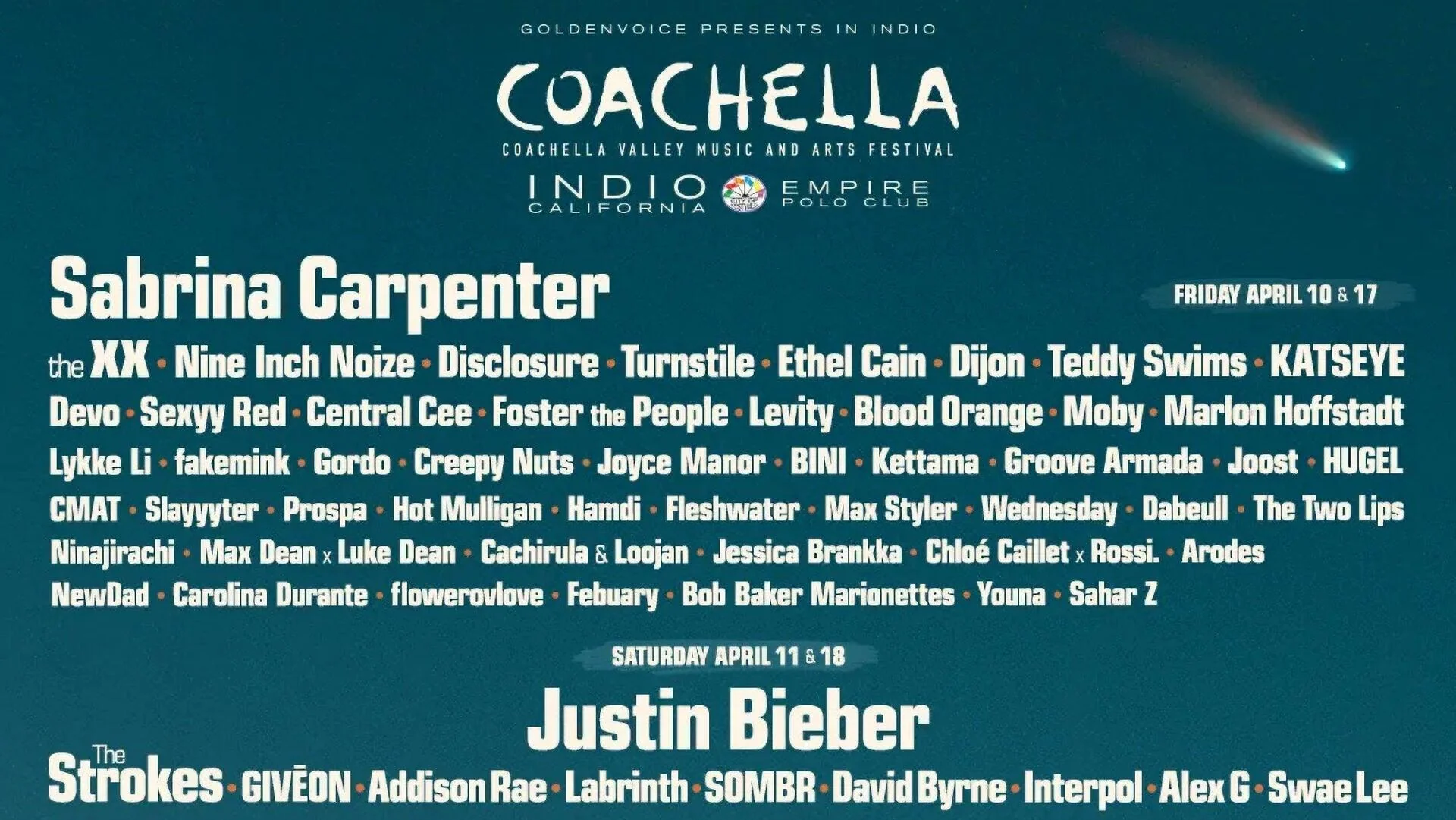
Dutch influencer Joann van den Herik went viral this week after she called Coachella the “influencer Olympics” on TikTok, describing her experience of the festival as one less about the music and more about creators fighting to get the best angles while staring at their phones. She is not wrong. One week into the 25th anniversary edition of Coachella and it’s clear that the creator economy ran the whole thing. Here’s what happened and what to expect this weekend.
The most significant creator moment of the weekend belonged to Addison Rae, who played the main Coachella Stage on Saturday evening in what was her first full-length solo set at the festival. Rae, who started as a TikTok creator before pivoting to music, performed ahead of headliner Justin Bieber and delivered what she called “The Fame and Glory Show,” a reworked version of her recent tour. The set opened with “Diet Pepsi” and built toward a standout “Aquamarine” performance alongside Maddie Ziegler. Rae took a moment to address years of skepticism about her transition from social media to pop music, telling the crowd that her supporters should know she loves them, and insulting her detractors. She returns for weekend two on April 18.
One of Coachella’s most significant events from the first week of 2026 was Justin Bieber’s contentious, YouTube-themed performance. With a laptop, a microphone, and the occasional guitarist, Bieber spent part of his set projecting his own videos onto a big screen and singing along-side them. Bieber’s stripped-down show was him having fun with his own viral moments and concerns for his well-being after some publicized antics, tour cancellations and health concerns. Leaked footage of rehearsals for Bieber’s performance caused resold ticket prices for Coachella to spike, with prices peaking at $4,000 for tickets that originally cost $650, as Bieber is scheduled to perform again this Saturday.
Meanwhile, high profile Twitch streamer Lacy (Nick Fosco) brought his camera to Coachella over the weekend. The 23-year-old, who is ranked among Twitch’s top 15 streamers in 2026, has been on a collision course with live event restrictions for weeks. In late March, Lacy and fellow streamer Sketch were ejected from a courtside seat at the NCAA March Madness Elite Eight game between Iowa and Illinois after security caught them livestreaming the game, which violates the NCAA’s broadcast rights agreements. The tension between streamers who want to broadcast everything and rights holders who have paid billions for exclusivity is becoming one of the defining conflicts in live entertainment. At Coachella, where YouTube holds the official livestream rights across seven stages, that tension is even more pronounced. Creators attending the festival can post clips and vlogs, but live broadcasting of performances runs into legal territory fast, and the festival is known for being stringent with limiting unofficial live-streamed and clipped videos.
Off the stage, the influencer economy was operating at full capacity. Content creator Sam Mintesnot documented her attempt to get into the festival without a ticket, posting across her platforms in hopes of scoring a brand invitation. It worked. YouTube invited her two days before the festival started. That kind of hustle is now a recognized pathway into Coachella for creators who do not have the budget for passes that start at $820 for a single day on resale. In another example, Sydney Morgan, a creator known for special effects makeup, bought her own ticket and traveled to Indio with a group of fellow creators, renting an Airbnb selected specifically for how it would look on camera and built a filming itinerary around the group’s content schedules. They arrived a full day before the music started so they could shoot.
YouTube leaned hard into the creator angle this year. The platform’s “Watch With” feature returned, letting creators provide live commentary and reactions alongside the official Coachella livestream from their own channels. The company also hosted creators at its Backstage Studio on the festival grounds, where influencers like Alix Earle were photographed. Earle, who launched her skin care brand Reale Actives just weeks before the festival, attended multiple brand events and posted outfit content that went viral almost immediately.
The brand activation circuit surrounding Coachella has become its own festival, with brands like Kourtney Kardashian Barker’s Poosh, Neutrogena, TikTok Shop and many other marketplaces and companies hosting events. Reports also surfaced of brands rescinding influencer invitations at the last minute, and multiple creators said their Airbnb bookings were canceled by hosts looking to rebook at higher prices during festival weekend.
Weekend two begins April 17, with the same lineup running a second time. Addison Rae will perform again. The creators will return with fresh outfits and new content plans. And somewhere in the crowd, someone will be livestreaming something they probably should not be.
Snapchat rolled out the yellow carpet for their inaugural award show, the Snappys? The event was hosted at the company’s headquarters in Santa Monica, California. For the Snappys, the Snapchat building was converted into a theatre and event space, hosting top content creators invited to the event and nominated for awards. The Snappys were streamed live last night on the Snapchat app. So who took home awards and what bumps in the road happened at the event?
Matt Friend, a comedian known for his impressions, hosted the awards show. Friend has performed at previous Snapchat events and has an active following on the platform. In his monologue, Friend made jokes poking fun at the recent abundance of award shows in his monologue (TikTok had their first award show in December) and at content recycled between social media platforms.
Kehlani was scheduled to perform but did not attend, cancelling for personal reasons. Some top influencers did attend the event including nominees like David Dobrik, Dixie D’Amelio, JoJo Siwa and Harry Jowsey, but turnout was lower than expected. Roughly half of all Snappy winners did not even attend the event. Lifetime Achievement winner DJ Khaled accepted his achievement award virtually, also announcing Kehlani’s scrapped performance. Additionally, some social media users reported issues trying to watch the show live on the app.
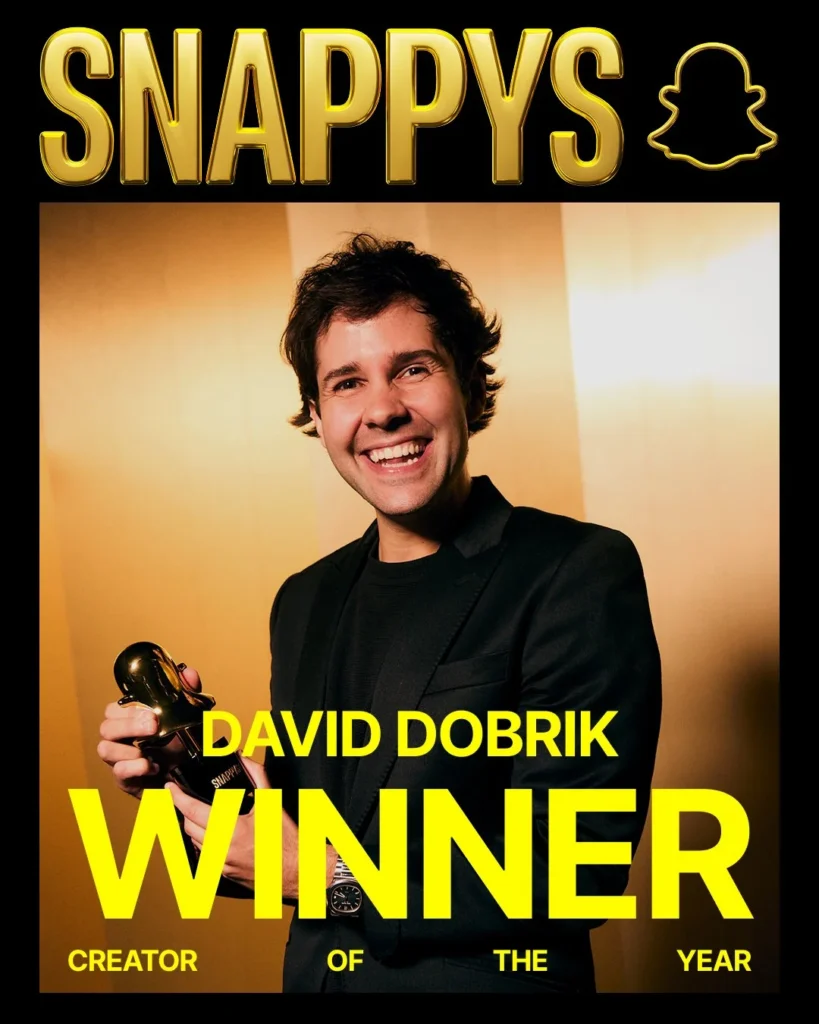
Despite the setbacks, the award show was still a relative success, with Dobrik, Kylie Jenner and former NBA player Dwight Howard winning awards. Dobrik dedicated his win to Snapchat Head of Content Partnerships Jim Shepherd. Shepherd was quoted in Snapchat’s press release for the award show toting the platform’s commitment to creators. During the event, it was announced that paid creator subscriptions would be available to all Snap users. Winners took home a golden statue of the company’s ghost logo à la the Oscars.
2026 Snappys Winners
Best Use of Creative Tools – Zaina Sesay
Best Storyteller – Rachel Levin
Spotlight MVP – AdamW
Top Lens Creator – Mohamad el Asmar
Community Builder – Cheyenne Davis
One To Watch – Ella Moncrief
Off-Platform Buzz – Nic Vans
Comeback Star- Kylie Jenner
Breakout Creator – Ashton Hall
Lifetime Achievement – DJ Khaled
Creator of the Year – David Dobrik
Top Beauty Creator – Leilani Green
Top Lifestyle Creator – Ari Fletcher
Top Athlete Creator – Dwight Howard
Top Music Creator – Leon Thomas
Top Food Creator – Jack Mancuso
Top Fashion Creator – Ashley Graham
Top Comedy Creator – LaLa Milan
Top On-Camera Correspondent – Lauren Ashley Beck
Top Gamer Creator – Dimucc
Top Family Creator – Justus and Kayla Tucker
Top Fitness Creator – Katie Austin