Money
The Economics of Sean Reifel Trading His Badge For The Villa
A rookie Bethlehem cop grosses about $5,800 a month. A fresh Islander’s documented floor is $20,000.

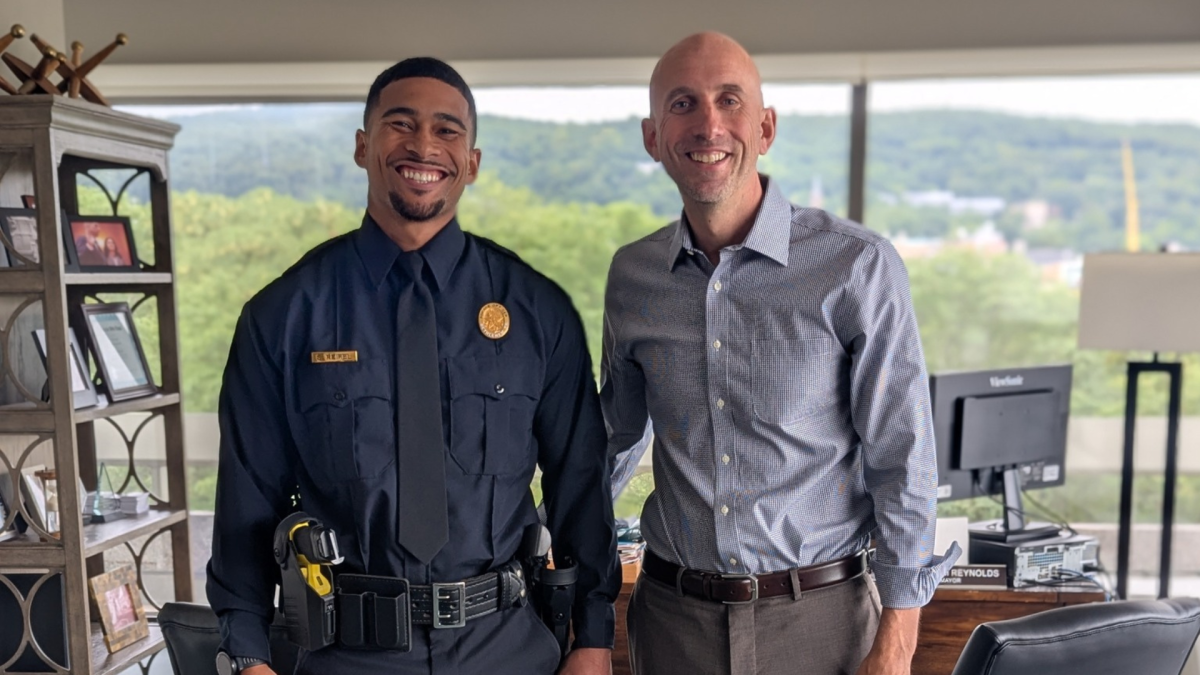
“I’m not a model, not an actor, I’m a police officer actually,” Sean Reifel says in Peacock’s cast trailer for Love Island USA Season 8, delivering the line while walking on his hands.
By the time the trailer aired, the second half of that sentence was no longer true.
Reifel, 29, resigned from the Bethlehem, Pennsylvania police department on May 20 to enter the villa, nine months after Mayor J. William Reynolds personally swore him in. There are photos of the two of them from August 18, smiling and shaking hands. There will not be a sequel. Reynolds went public before the June 2 premiere, telling local outlet WHTM the city spent thousands of taxpayer dollars putting Reifel through the police academy, that the vacancy cannot be filled until next year, and that he never thought he would see reality TV “win out over being a police officer.”
Police Chief Michelle Kott was more conflicted than the mayor. She acknowledged the department now faces 16 officer vacancies and called Reifel “a great officer, but I’m disappointed,” while also wishing him well. And the department’s own policy is what made the decision absolute: Complex reported that Bethlehem prohibits active officers from appearing on reality television, no leave of absence available. Resign or stay home.
The city’s side of the ledger is real. Here is the other side.
What the villa actually pays
Peacock does not disclose what Love Island USA contestants earn during filming, and no tier-one outlet has verified a figure. It barely matters. The stipend was never the product. The product is a national audience assembled for you, in real time, by a streaming hit, at zero cost to the contestant. A creator grinding from zero spends years trying to manufacture that. An Islander with camera presence acquires it in six weeks, and exits with a follower base that brands can immediately price.
The franchise just produced a clean proof of concept. Nicolas Vansteenberghe, known as Nic Vans, finished Season 7 as runner-up in summer 2025. On March 31, less than a year out of the villa, he won the Off-Platform Buzz award at Snapchat’s inaugural Snappys, the category that measures a creator’s reach beyond the app, at an event whose guest list included David Dobrik, Dixie D’Amelio, and JoJo Siwa. A platform handing a major award to a reality alum twelve months after his season finale is not a fluke. It is the track Reifel just bought a ticket on.
The money on that track is documented. Kennedy Meehan, founder of Azure Agency, whose roster includes several Love Island alumni, told Business Insider in September 2024 that “some of our girls” earn $20,000 to $30,000 in a single month from roughly five sponsored videos straight out of the villa, and called that the lower end. Viral Nation talent agent Toni Rose Goulden, in the same report, said the first two to three weeks after exit are the entire game: attention peaks, then it recedes, and execution inside that window separates a career from a cameo.
The math, stated plainly
Bethlehem starts its patrol officers at $69,870 a year. That is the 2026 rate published on the department’s own recruitment page. It works out to roughly $5,800 a month before taxes.
Set the agency floor against it. One low-end post-villa month of $20,000 to $30,000 equals three and a half to five months of rookie pay. Put another way, a single month of brand deals at that rate recovers 29 to 43 percent of Reifel’s entire former annual salary. At the same pace, a newly released Islander clears a first-year officer’s full year in under three months of sponsored posts.
One honest caveat belongs in the math. Meehan was describing her female clients, and nobody has published equivalent figures for the franchise’s men, who have generally converted villa fame into smaller followings. Reifel’s rates may open lower than the floor. But the floor is the right reference point, because he is not arriving as an anonymous face.
@seanathan96 10 rounds 9 thrusters 35 double unders @CrossFit workout.
The bet, priced honestly
Reifel is not a hard case to market. Two episodes in, he is already a storyline: a single father to a 2-year-old, introduced to viewers with the hometown nickname “Officer Sexy Pants,” carrying the only backstory this season that comes with a public feud attached. His family has already pushed back publicly on the mayor and the department, which means the story is generating coverage while he is still in Fiji and unable to participate in it. For a future talent agent, that is pre-sold name recognition. The show is doing the audience-building, and the controversy is doing the marketing.
None of this makes Bethlehem’s complaint wrong. The recruiting crisis is real, and the city’s outlay was likely larger than the mayor’s phrasing suggests: Bethlehem pays recruits full salary and benefits through the roughly 22-week academy, which puts the all-in cost of nine months of Officer Reifel well into five figures by our math, even after state training reimbursements. The badge track had real numbers of its own, too: $92,768 at top step after three and a half years, and a 50 percent pension after twenty.
But that is the point. Reynolds is pricing the badge, and Reifel is pricing the window. One of them is accounting for a police department. The other is accounting for the rest of his life.
The window opens the day he exits the villa. He will have about three weeks to prove the mayor wrong.


Money
Indian Artist Royalties on Spotify Rose 29% in 2025
Spotify’s India Loud & Clear report shows artist royalties up 29% in 2025, driven by independent regional-language creators. More than 40% of that money now comes from listeners outside India.

Royalties earned by Indian artists on Spotify rose 29% year over year in 2025, according to the India edition of the platform’s Loud & Clear report, published September 2. Every major Indian language contributed to the increase.
The growth ran fastest where the catalogs are smallest. Telugu royalties climbed over 120%. Marathi rose nearly 50%, Bengali nearly 40%, Malayalam over 30%, Hindi close to 30%, and Tamil 20%, all per the report.
Read that as a creator-economy story before a music-industry one. The people driving this surge are independent, regional-language artists who now reach paying listeners without a label or a broadcaster deciding first. Spotify launched in India in 2019. Six years later, cultural specificity is the asset.
The distribution mechanics matter here. Streaming royalties pay out from a shared pool based on a track’s share of total plays, so a Haryanvi or Malayalam song that would never clear radio can still convert niche demand into recurring income. The report puts more than 40% of all royalties earned by Indian artists in 2025 as coming from listeners outside India.
That is the export line, and it is the one worth watching.
The Money Reaches Deeper Than the Charts
The gains are not stacking only at the top. Spotify said the number of Indian artists earning more than INR 10 million a year grew 21% year over year. The number clearing INR 50 million has more than doubled since 2023, per the report.
The 29% figure also outpaces Spotify’s global royalty growth of more than 10% for the same period, Music Ally reported. India is growing at nearly triple the platform’s overall rate.
Volume backs the payouts. Listeners streamed Indian artists nearly 335 billion times in 2025, more than 20 billion hours of music, per the report. Fans pressed play on an Indian artist they had never heard before 12.8 billion times, up 14% over 2024, Music Ally reported.
Discovery is what feeds a long tail of small earners rather than a handful of stars.
Independent Releases Now Set the Ceiling
The old gatekeeper was the film soundtrack. That is shifting. I-Pop, popular Indian music released outside Bollywood soundtracks, took half of Spotify’s 2025 year-end top 10 in India, and 90% of tracks on the Top 50 India chart came from Indian artists, per the report.
Aditya Rikhari’s track “Sahiba” held No. 1 on Spotify in India for more than 11 consecutive weeks, per the report. On Spotify’s 2025 Global Impact List, 11 of the top 15 most exported Indian songs came from artists outside a film soundtrack.
Rikhari framed the shift in plain terms. “Streaming changed the scale of what was possible for me as an independent artist,” he said in the report.
Spotify is spending to keep the pipeline full. The company expanded its RADAR artist-development program to Malayalam in 2025, following earlier rollouts for Punjabi and Tamil. Dhruvank Vaidya, Head of Music and Podcast at Spotify India, cast the platform’s role as plumbing rather than kingmaking.
“The audience was always there; what Spotify built was the infrastructure to surface it, monetize it, and ensure artists earned from it,” he said in the report.
Haryanvi shows what that plumbing does. Streams grew nearly sevenfold from February 2023 to February 2026, and close to 100 Haryanvi acts now rank among Spotify India’s top 5,000 artists, per the report.
The next data point to watch is that 40% export share. If it keeps climbing, the growth story stops being about India’s listeners and starts being about India’s balance of trade in music.
Money
Sticki Rolls Built a Billion-View Toy Brand, No Ads
A wearable-sticker toy brand cleared a billion YouTube views and reached 60-plus countries without buying a single traditional toy ad. Now it is testing whether a screen-native fandom converts on a store shelf.
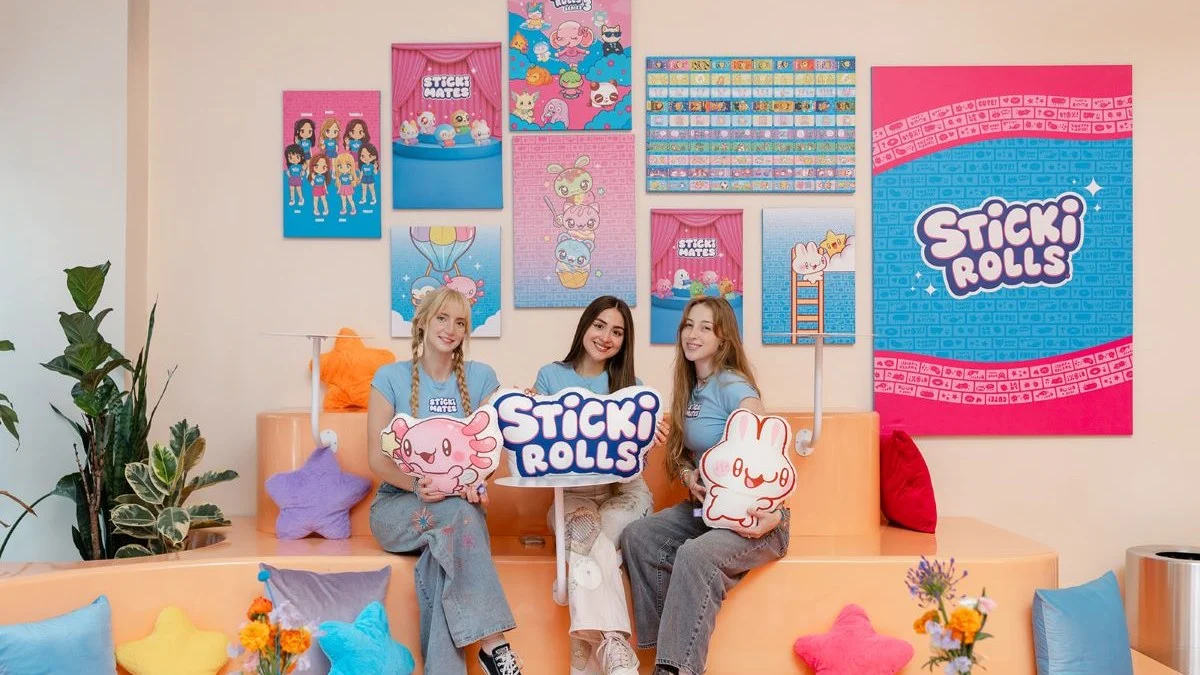
Sticki Rolls, the wearable-sticker toy brand co-founded by Josh Loerzel and Lev Nelson in 2023, has cleared more than one billion YouTube views since its 2024 launch without spending on traditional toy advertising, according to a strategy feature from Modern Retail. The brand’s own channel now sits at nearly 1.9 million subscribers.
That is the whole business, run backward.
Most toy brands buy attention, then chase distribution. Sticki Rolls built the attention first, through creator unboxings and trading-haul videos, and treated retail as the second act. For the next wave of product brands aimed at Gen Alpha, the sequence is the point: the audience became the marketing budget, and the marketing budget was never spent.
The mechanics matter here. Jazwares, the manufacturing partner, licenses and distributes the brand, meaning Sky Castle Toys owns the concept and Jazwares carries the factory and shelf risk. Sky Castle Toys and Jazwares announced a multi-year partnership covering North America and Europe in December 2024, months after the product debuted at VidCon.
The retail footprint arrived on that content foundation. Sticki Rolls first sold through specialty toy stores and Amazon, then entered Target, and in late 2025 expanded into Walmart, its biggest retailer to date. It is now available in more than 60 countries.
The distribution reads as conventional. The demand engine underneath it does not.
Earlier this month the brand ran its first New York pop-up at Chillhouse, a SoHo nail studio, on August 7 and 8. The two-day event welcomed nearly 1,000 guests and gave out more than 500 complimentary sticker manicures. Google Trends showed searches for Sticki Rolls up 50 percent against the prior week and 130 percent against the prior month, per Modern Retail.
The pop-up doubled as a product preview. Guests got an early look at Sticki Mates, a collectible bag-charm format that extends the brand past its signature sticker bracelets.
The people who drive the videos showed up in person too. Anna Altamirano and Erin Degan, the Kawaii artists behind the original Sticki Rolls collection, appeared as brand ambassadors, a role the company distinguishes from its founders. Their own YouTube channel has 775,000 subscribers.
Michelle Wong, senior vice president of global marketing at Jazwares, framed the analog product as the draw. “It’s young girls’ form of self-expression and an extension of how they connect and meet other girls,” she said.
Wong tied the in-person events back to the numbers on the screen. “We believe by combining the digital and in-real-life experiences, we’re deepening that brand love and emotional connections with the fans,” she said.
The bet worth watching is the conversion. A billion views is reach; a Walmart endcap is a purchase. The next test is whether the brand’s Series 3 and Sticki Mates lines carry the pop-up spike into repeat sales across those 60-plus markets.
Money
Creators Get Real C-Suite Titles at Four Brands
Blenders handed Jordan Howlett a Chief Content Officer title with actual authority over product and creative. Four brands are now testing whether an executive seat is the creator economy’s next paycheck.
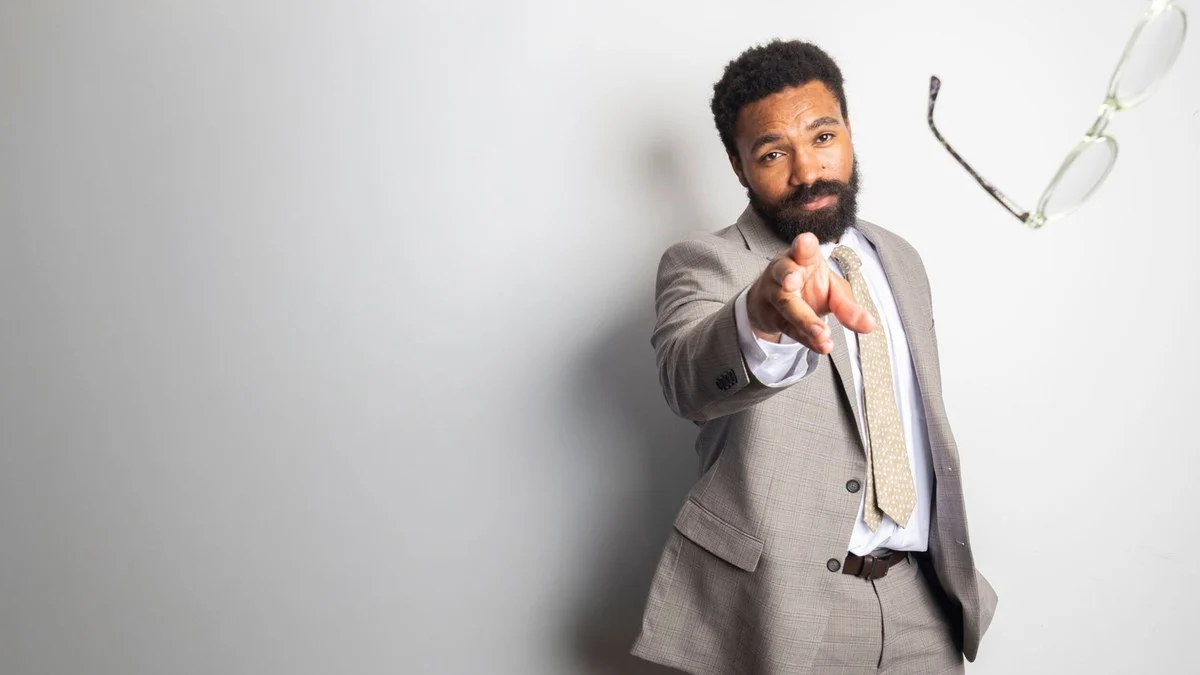
Blenders Eyewear made Jordan Howlett, the creator known to 50 million followers as Jordan the Stallion, its first-ever Chief Content Officer on July 23, the first executive title the San Diego brand has built for a creator.
The title is not a nameplate. Blenders said Howlett works directly with its marketing, creative, and product teams, overseeing creative development, campaign ideation, product storytelling, and social-first programming. He is in the room where product decisions get made, not fronting the ad after they are made.
That distinction is the whole story for the creator economy. For a decade, a creator’s ceiling was a brand deal: a fee, a term, a post. An operating title moves a creator from renting out an audience to helping run the business that borrows it, which is a different kind of leverage and a different long-term trajectory.
Howlett is not the only one. A Digiday analysis published August 21 gathered four of these appointments into a single trend and named it: the creator ambassador is becoming a creator executive.
In the spring, creator and comedian Jack Shane was made chief creative officer of German candy company Katjes, brought on to grow it in the United States. Soft-drink brand Cool Sips named reality-TV star and creator Whitney Leavitt its chief creative and brand officer. Cherub, an investment platform connecting creators with startups, named entrepreneur Nadya Okamoto its chief creator officer earlier this summer to help source deals.
Each title claims real input rather than a signature and a paycheck.
The Difference Between a Title and a Seat
The old version of this had a name and a reputation. Gemma Collins called herself creative director at Canva. Dhar Mann was the NFL’s chief kindness officer. Olivia Nell became ASOS’s “out of office” director. Those were vanity titles, marketing costumes worn for a launch, and Digiday drew the line between them and the new roles that carry strategic input.
The mechanics matter here, because the word “executive” is doing heavy lifting. A vanity title is a fee dressed up. An operating title comes with standing authority over decisions that outlast any one campaign, and sometimes with equity that ties the creator’s upside to the company’s. The first pays once. The second compounds.
Not every appointment clears that bar, and one of the four named openly does not. Okamoto told Marketing Brew her Cherub role is advisory, not operational, the clearest stress-test of the genuine-authority thesis. A title can signal a real seat or paper over a partnership, and the label alone does not tell you which.
Lily Comba, founder and CEO of influencer agency Superbloom, put the skeptic’s case plainly in the Digiday piece. Some of these appointments, she said, are a partnership with a fancier title, announced alongside a product launch and then quiet after.
What the Brands Are Actually Buying
Blenders CEO Jack Gray framed the logic as ownership, not rental. “You see a lot of creative director roles, but you don’t really see very many content roles, and that was by design,” Gray told Digiday, explaining that he did not want to rent a customer or rent culture.
The economics behind the title stayed private. Blenders confirmed the partnership is multi-year and its biggest to date, and it confirmed Howlett is a partner of the brand, not a full employee. It did not disclose financial terms.
That structure is the tell. A partner with an executive title and undisclosed terms sits somewhere between a vendor and an owner, and where exactly is the number no one is releasing yet.
What Digiday identifies as the macro shift is a budget reclassification: CMOs and now CEOs treating creator spend as strategic capital rather than ad spend. When the money moves from the marketing line to the strategy line, the person attached to it moves too.
Blenders said Howlett’s first major video exceeded all internal KPIs. The next number to watch is the one that decides whether these titles become a category: whether a creator with a real seat outperforms a creator with a fee, on a spreadsheet the finance team keeps.