
Money
Breaking Down the Numbers Behind Kai Cenat’s Mafiathon 2

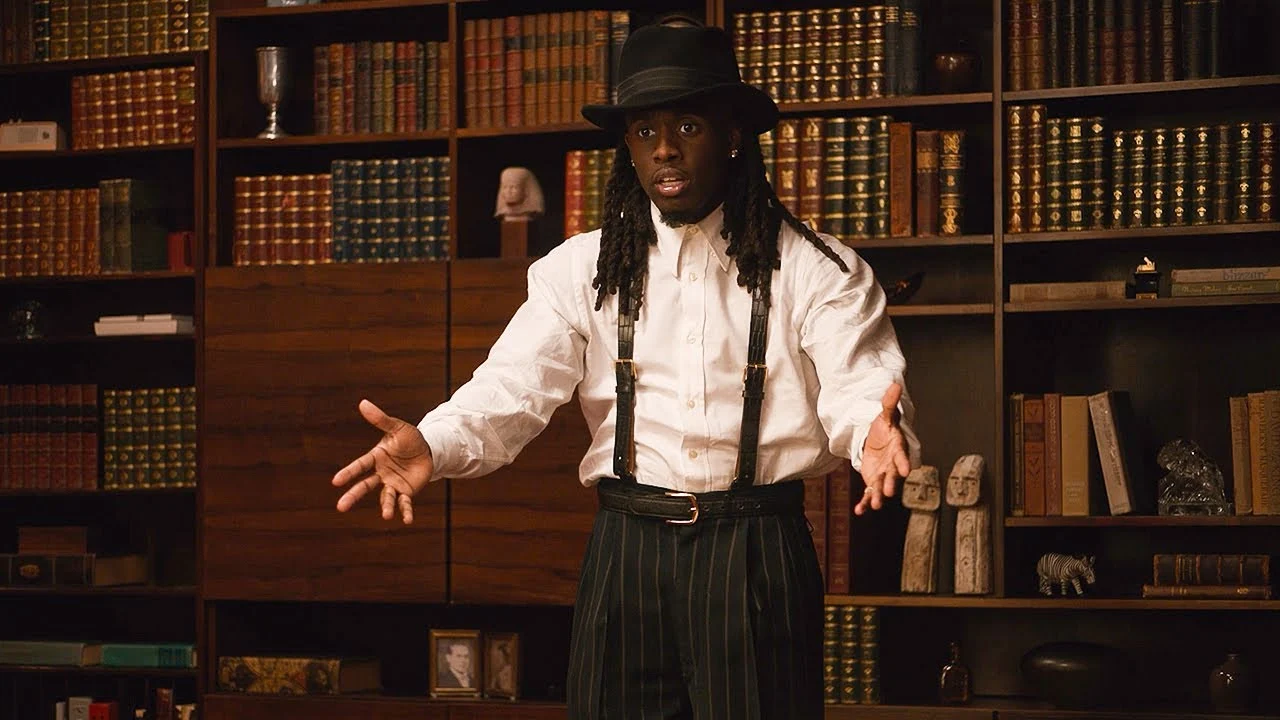
In November 2024, Twitch streamer Kai Cenat launched one of the most ambitious livestream projects in the platform’s history. “Mafiathon 2” was a subathon that ran continuously for an entire month, the whole of November. With a trailer loosely inspired by the Sopranos and featuring Kim Kardashian, the month of streaming was quite the spectacle. Cenat streamed around the clock, encouraging users to subscribe to his channel, promising that twenty percent of revenues would go towards a pledge to build a school in Lagos, Nigeria. The results shattered previous benchmarks on Twitch for subscriptions, viewership, and engagement, giving the livestreaming industry a rare and measurable case study in audience intensity.
Cenat’s total subscriber count at the end of the stream was over 725,000, according to the BBC. This more than doubled the previous record of roughly 326,252 subscribers set by VTuber Ironmouse during her own marathon event earlier in 2024. To sustain a subathon, each new subscription typically adds more time to a countdown clock that would otherwise run down and end the broadcast, creating an incentive to subscribe. Cenat kept the broadcast going for the full 30 days of November, and the subathon format was at the heart of that extended schedule.
A closer look at the numbers reveals the scale of the event. According to data mentioned by Time Magazine in their profile of Cenat for their 2025 Top 100 Creators list, the stream accumulated tens of millions of unique viewers over its run, with estimates as high as 50 million. According to Time, revenue from the subscriptions alone was calculated at “more than $3.6 million” for Cenat after accounting for typical platform fees and regional pricing. Concurrent viewership numbers were equally staggering, with peaks consistently in the hundreds of thousands. On one notable day in the marathon, peak viewership approached 643,000 concurrent viewers, placing the broadcast among the most watched on Twitch in 2024.
Audience engagement was not limited to subscriptions and raw viewership numbers. Mafiathon 2 also generated a massive amount of total watch time on Twitch. According to analytics from tracking platform Dexerto, Cenat’s marathon accounted for a large share of total hours watched on Twitch for November 2024. One report indicated that the stream alone was responsible for over 80 million hours watched, more than five percent of all hours streamed on Twitch that month.
Twitch typically takes a revenue share of around 30 percent for subscriptions. With an estimated 728,000 subscribers paying at least the base subscription rate, and after Twitch’s cut, Cenat had estimated earnings of around $3.6 million from sub revenue alone. This excludes additional income from donations, ad revenue, and higher tier subscriptions, all of which would add to the total earnings.
The involvement of celebrities also amplified viewership. During the marathon Cenat hosted guests such as Snoop Dogg, Lil Uzi Vert, and Serena Williams, among others. These appearances created breakpoints in the schedule that attracted even more attention from both his existing community and outside viewers. In addition to raw metrics, the impact of Mafiathon 2 on Twitch’s narrative for 2024 was significant. The streamer was highlighted in Twitch’s own year end reviews, and Cenat’s channel was named among top performers on the platform. These mentions reflect the numerical dominance of the broadcast in a year that saw many other high profile events and livestreams across gaming and entertainment categories.
Overall, the numbers behind Mafiathon 2 make it one of the most noteworthy experiments in livestreaming history. It set new subscription standards, pushed viewership into previously unseen territory, and provided a measurable example of what sustained viewer engagement can look like in live broadcast environments. The scale of the marathon, the retention of audience attention, and the monetary results together illustrate a new benchmark for content creators on Twitch and similar platforms.


Money
Sticki Rolls Built a Billion-View Toy Brand, No Ads
A wearable-sticker toy brand cleared a billion YouTube views and reached 60-plus countries without buying a single traditional toy ad. Now it is testing whether a screen-native fandom converts on a store shelf.

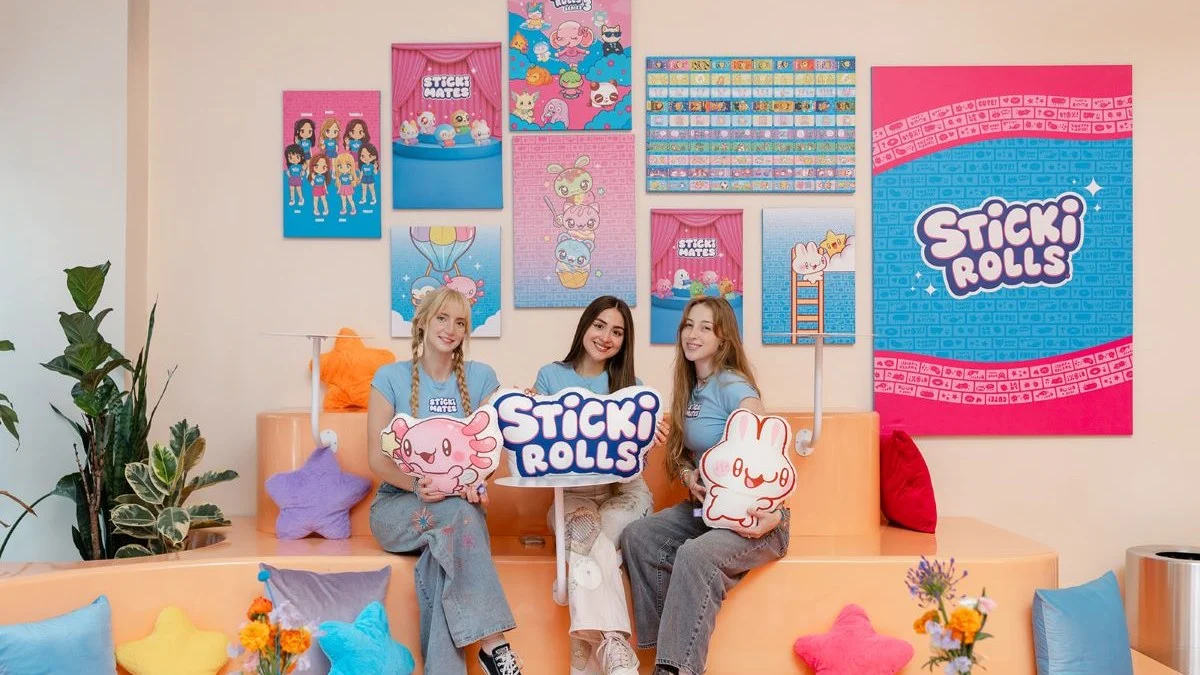
Sticki Rolls, the wearable-sticker toy brand co-founded by Josh Loerzel and Lev Nelson in 2023, has cleared more than one billion YouTube views since its 2024 launch without spending on traditional toy advertising, according to a strategy feature from Modern Retail. The brand’s own channel now sits at nearly 1.9 million subscribers.
That is the whole business, run backward.
Most toy brands buy attention, then chase distribution. Sticki Rolls built the attention first, through creator unboxings and trading-haul videos, and treated retail as the second act. For the next wave of product brands aimed at Gen Alpha, the sequence is the point: the audience became the marketing budget, and the marketing budget was never spent.
The mechanics matter here. Jazwares, the manufacturing partner, licenses and distributes the brand, meaning Sky Castle Toys owns the concept and Jazwares carries the factory and shelf risk. Sky Castle Toys and Jazwares announced a multi-year partnership covering North America and Europe in December 2024, months after the product debuted at VidCon.
The retail footprint arrived on that content foundation. Sticki Rolls first sold through specialty toy stores and Amazon, then entered Target, and in late 2025 expanded into Walmart, its biggest retailer to date. It is now available in more than 60 countries.
The distribution reads as conventional. The demand engine underneath it does not.
Earlier this month the brand ran its first New York pop-up at Chillhouse, a SoHo nail studio, on August 7 and 8. The two-day event welcomed nearly 1,000 guests and gave out more than 500 complimentary sticker manicures. Google Trends showed searches for Sticki Rolls up 50 percent against the prior week and 130 percent against the prior month, per Modern Retail.
The pop-up doubled as a product preview. Guests got an early look at Sticki Mates, a collectible bag-charm format that extends the brand past its signature sticker bracelets.
The people who drive the videos showed up in person too. Anna Altamirano and Erin Degan, the Kawaii artists behind the original Sticki Rolls collection, appeared as brand ambassadors, a role the company distinguishes from its founders. Their own YouTube channel has 775,000 subscribers.
Michelle Wong, senior vice president of global marketing at Jazwares, framed the analog product as the draw. “It’s young girls’ form of self-expression and an extension of how they connect and meet other girls,” she said.
Wong tied the in-person events back to the numbers on the screen. “We believe by combining the digital and in-real-life experiences, we’re deepening that brand love and emotional connections with the fans,” she said.
The bet worth watching is the conversion. A billion views is reach; a Walmart endcap is a purchase. The next test is whether the brand’s Series 3 and Sticki Mates lines carry the pop-up spike into repeat sales across those 60-plus markets.

Money
Creators Get Real C-Suite Titles at Four Brands
Blenders handed Jordan Howlett a Chief Content Officer title with actual authority over product and creative. Four brands are now testing whether an executive seat is the creator economy’s next paycheck.
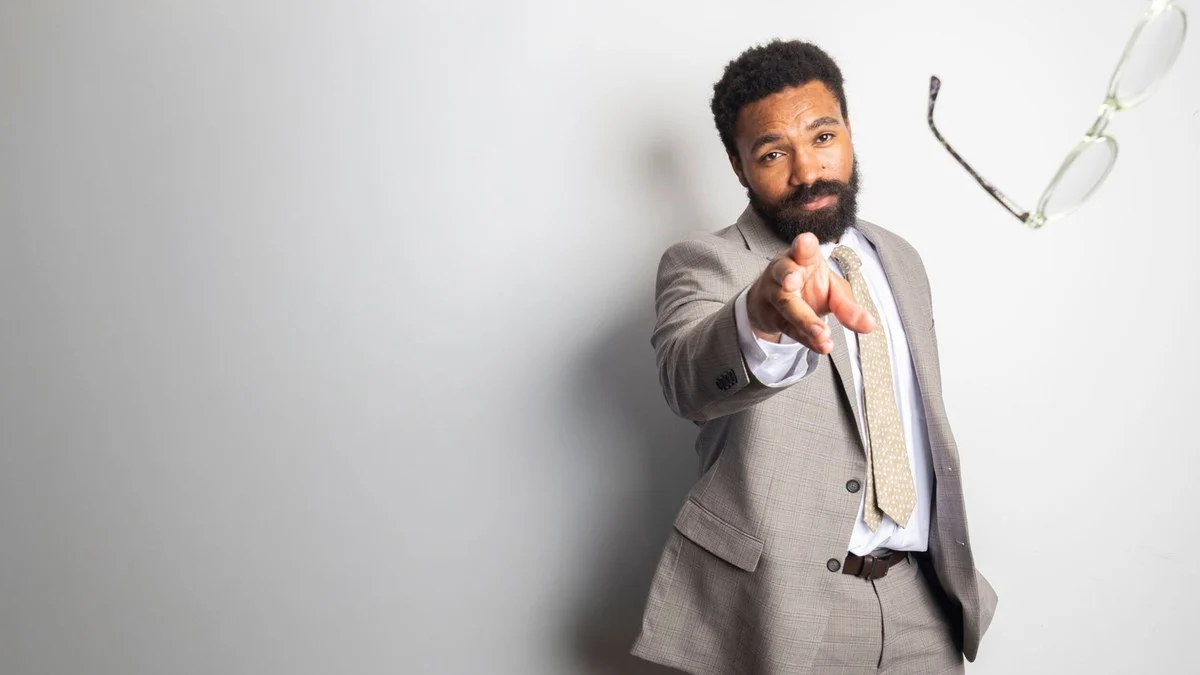
Blenders Eyewear made Jordan Howlett, the creator known to 50 million followers as Jordan the Stallion, its first-ever Chief Content Officer on July 23, the first executive title the San Diego brand has built for a creator.
The title is not a nameplate. Blenders said Howlett works directly with its marketing, creative, and product teams, overseeing creative development, campaign ideation, product storytelling, and social-first programming. He is in the room where product decisions get made, not fronting the ad after they are made.
That distinction is the whole story for the creator economy. For a decade, a creator’s ceiling was a brand deal: a fee, a term, a post. An operating title moves a creator from renting out an audience to helping run the business that borrows it, which is a different kind of leverage and a different long-term trajectory.
Howlett is not the only one. A Digiday analysis published August 21 gathered four of these appointments into a single trend and named it: the creator ambassador is becoming a creator executive.
In the spring, creator and comedian Jack Shane was made chief creative officer of German candy company Katjes, brought on to grow it in the United States. Soft-drink brand Cool Sips named reality-TV star and creator Whitney Leavitt its chief creative and brand officer. Cherub, an investment platform connecting creators with startups, named entrepreneur Nadya Okamoto its chief creator officer earlier this summer to help source deals.
Each title claims real input rather than a signature and a paycheck.
The Difference Between a Title and a Seat
The old version of this had a name and a reputation. Gemma Collins called herself creative director at Canva. Dhar Mann was the NFL’s chief kindness officer. Olivia Nell became ASOS’s “out of office” director. Those were vanity titles, marketing costumes worn for a launch, and Digiday drew the line between them and the new roles that carry strategic input.
The mechanics matter here, because the word “executive” is doing heavy lifting. A vanity title is a fee dressed up. An operating title comes with standing authority over decisions that outlast any one campaign, and sometimes with equity that ties the creator’s upside to the company’s. The first pays once. The second compounds.
Not every appointment clears that bar, and one of the four named openly does not. Okamoto told Marketing Brew her Cherub role is advisory, not operational, the clearest stress-test of the genuine-authority thesis. A title can signal a real seat or paper over a partnership, and the label alone does not tell you which.
Lily Comba, founder and CEO of influencer agency Superbloom, put the skeptic’s case plainly in the Digiday piece. Some of these appointments, she said, are a partnership with a fancier title, announced alongside a product launch and then quiet after.
What the Brands Are Actually Buying
Blenders CEO Jack Gray framed the logic as ownership, not rental. “You see a lot of creative director roles, but you don’t really see very many content roles, and that was by design,” Gray told Digiday, explaining that he did not want to rent a customer or rent culture.
The economics behind the title stayed private. Blenders confirmed the partnership is multi-year and its biggest to date, and it confirmed Howlett is a partner of the brand, not a full employee. It did not disclose financial terms.
That structure is the tell. A partner with an executive title and undisclosed terms sits somewhere between a vendor and an owner, and where exactly is the number no one is releasing yet.
What Digiday identifies as the macro shift is a budget reclassification: CMOs and now CEOs treating creator spend as strategic capital rather than ad spend. When the money moves from the marketing line to the strategy line, the person attached to it moves too.
Blenders said Howlett’s first major video exceeded all internal KPIs. The next number to watch is the one that decides whether these titles become a category: whether a creator with a real seat outperforms a creator with a fee, on a spreadsheet the finance team keeps.
Money
Creator Pay Tracks Reach Not Engagement, Study Finds
A 5,095-creator survey from CreatorIQ and Influencers.club shows brands rank follower count last on paper. The paychecks say otherwise, and mid-tier creators absorb the gap.

Two-thirds of creators earn less than $10,000 a year from content, according to CreatorIQ and Influencers.club, and the metric that predicts who clears more is the one brands claim to weigh least.
The two firms released The State of Creators 2026 on Tuesday, a survey of 5,095 creators across 100 regions and CreatorIQ‘s largest to date. Fieldwork ran from May 29 to June 29, 2026. The margin of error is plus or minus 1.4 percentage points.
Here is the finding that governs the money. Brands ranked creator fit, content performance, and working with a diverse group of creators as their top partnership criteria, and placed follower count last among eight factors. Yet follower and subscriber counts showed the strongest statistical relationship with creator income across Instagram, YouTube, and TikTok.
That gap is the story for anyone trying to monetize on the numbers the industry told them to build. A creator who invested in a loyal, high-engagement audience is competing in a market that still prices reach. Instagram follower count had the strongest link to annual income of any single metric measured, at a Spearman rank correlation of 0.40. A correlation of 0.40 is a moderate, real relationship, not a lock, but it beat every engagement measure the study tracked.
Who Absorbs The Gap
The pay-versus-values disconnect lands hardest on mid-tier and nano creators. They cannot out-scale a macro creator, so a market that rewards scale prices out the audience trust they were told to cultivate. For 62% of respondents, content creation is not the primary source of income.
Only 4% of surveyed creators earned more than $100,000 a year from content, per Net Influencer. The report puts respondents earning above $250,000 in a different business entirely, and recommends brands tailor partnership models to a creator’s stage rather than run one playbook across the board.
The market response is already visible. Half of creators have launched or plan to launch a brand of their own, a sign they increasingly see themselves as business owners seeking income that outlasts a single campaign. That is self-insurance against a sponsorship system that undervalues their engagement strengths.
Where The Top Earners Sell
Platform choice sorts by earnings. Among creators making more than $250,000 a year, 60% named Instagram as their primary platform for branded content, against 30% for TikTok. TikTok still led overall as the top platform for branded content published, at 52%.
The split reflects a maturing calculation. Higher earners drift toward platforms offering steadier long-term partnership opportunities, while volume lives elsewhere.
Jen Cho, CreatorIQ’s chief customer officer, framed the cost of the disconnect in the announcement.
“Brands have spent years saying that authenticity, relevance, and community trust are what make creators valuable. But the economics of the industry still disproportionately reward scale, like larger followings. That disconnect risks pushing creators toward the very behaviors audiences distrust, more commercial content and less creative freedom.”
The tension shows up in the work itself. Across all creators, 42% reported friction between what audiences want and what brands ask for, rising to 53% among creators with 500,000 or more Instagram followers.
The report reads that friction as the industry’s next pricing problem. If pay keeps tracking reach while brands keep publicly buying trust, the creators building the trust will keep leaving the campaign model for their own product lines.