Money
Creators Get Real C-Suite Titles at Four Brands
Blenders handed Jordan Howlett a Chief Content Officer title with actual authority over product and creative. Four brands are now testing whether an executive seat is the creator economy’s next paycheck.

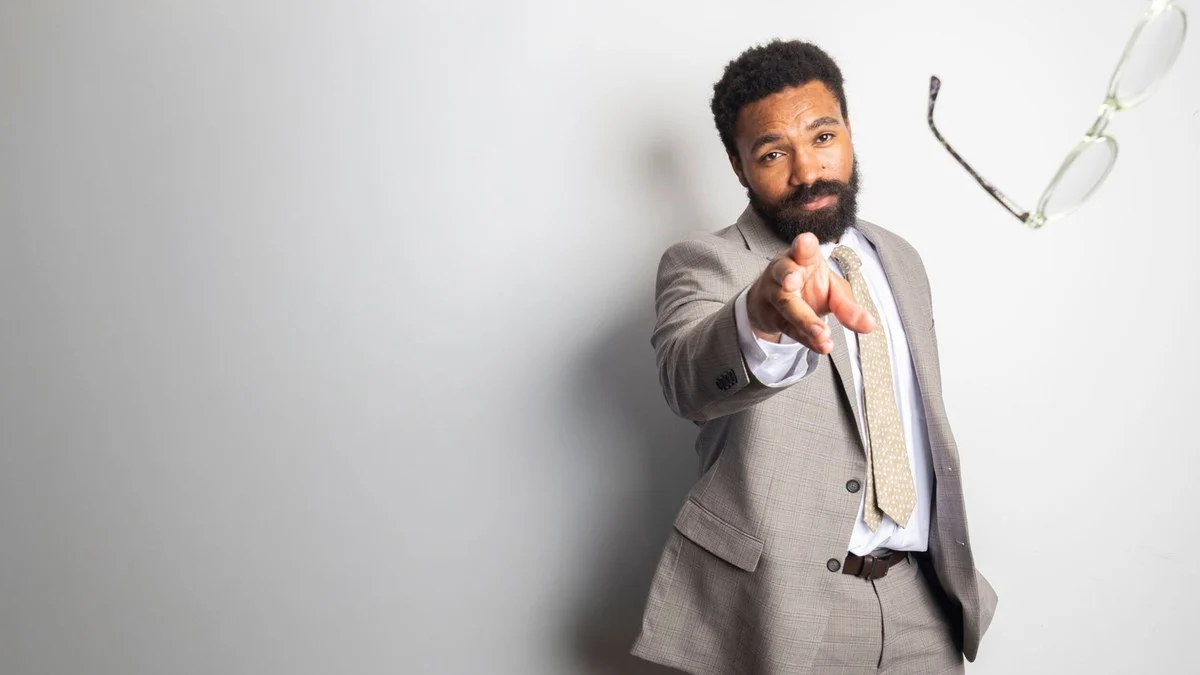
Blenders Eyewear made Jordan Howlett, the creator known to 50 million followers as Jordan the Stallion, its first-ever Chief Content Officer on July 23, the first executive title the San Diego brand has built for a creator.
The title is not a nameplate. Blenders said Howlett works directly with its marketing, creative, and product teams, overseeing creative development, campaign ideation, product storytelling, and social-first programming. He is in the room where product decisions get made, not fronting the ad after they are made.
That distinction is the whole story for the creator economy. For a decade, a creator’s ceiling was a brand deal: a fee, a term, a post. An operating title moves a creator from renting out an audience to helping run the business that borrows it, which is a different kind of leverage and a different long-term trajectory.
Howlett is not the only one. A Digiday analysis published August 21 gathered four of these appointments into a single trend and named it: the creator ambassador is becoming a creator executive.
In the spring, creator and comedian Jack Shane was made chief creative officer of German candy company Katjes, brought on to grow it in the United States. Soft-drink brand Cool Sips named reality-TV star and creator Whitney Leavitt its chief creative and brand officer. Cherub, an investment platform connecting creators with startups, named entrepreneur Nadya Okamoto its chief creator officer earlier this summer to help source deals.
Each title claims real input rather than a signature and a paycheck.
The Difference Between a Title and a Seat
The old version of this had a name and a reputation. Gemma Collins called herself creative director at Canva. Dhar Mann was the NFL’s chief kindness officer. Olivia Nell became ASOS’s “out of office” director. Those were vanity titles, marketing costumes worn for a launch, and Digiday drew the line between them and the new roles that carry strategic input.
The mechanics matter here, because the word “executive” is doing heavy lifting. A vanity title is a fee dressed up. An operating title comes with standing authority over decisions that outlast any one campaign, and sometimes with equity that ties the creator’s upside to the company’s. The first pays once. The second compounds.
Not every appointment clears that bar, and one of the four named openly does not. Okamoto told Marketing Brew her Cherub role is advisory, not operational, the clearest stress-test of the genuine-authority thesis. A title can signal a real seat or paper over a partnership, and the label alone does not tell you which.
Lily Comba, founder and CEO of influencer agency Superbloom, put the skeptic’s case plainly in the Digiday piece. Some of these appointments, she said, are a partnership with a fancier title, announced alongside a product launch and then quiet after.
What the Brands Are Actually Buying
Blenders CEO Jack Gray framed the logic as ownership, not rental. “You see a lot of creative director roles, but you don’t really see very many content roles, and that was by design,” Gray told Digiday, explaining that he did not want to rent a customer or rent culture.
The economics behind the title stayed private. Blenders confirmed the partnership is multi-year and its biggest to date, and it confirmed Howlett is a partner of the brand, not a full employee. It did not disclose financial terms.
That structure is the tell. A partner with an executive title and undisclosed terms sits somewhere between a vendor and an owner, and where exactly is the number no one is releasing yet.
What Digiday identifies as the macro shift is a budget reclassification: CMOs and now CEOs treating creator spend as strategic capital rather than ad spend. When the money moves from the marketing line to the strategy line, the person attached to it moves too.
Blenders said Howlett’s first major video exceeded all internal KPIs. The next number to watch is the one that decides whether these titles become a category: whether a creator with a real seat outperforms a creator with a fee, on a spreadsheet the finance team keeps.






Money
Creator Pay Tracks Reach Not Engagement, Study Finds
A 5,095-creator survey from CreatorIQ and Influencers.club shows brands rank follower count last on paper. The paychecks say otherwise, and mid-tier creators absorb the gap.

Two-thirds of creators earn less than $10,000 a year from content, according to CreatorIQ and Influencers.club, and the metric that predicts who clears more is the one brands claim to weigh least.
The two firms released The State of Creators 2026 on Tuesday, a survey of 5,095 creators across 100 regions and CreatorIQ‘s largest to date. Fieldwork ran from May 29 to June 29, 2026. The margin of error is plus or minus 1.4 percentage points.
Here is the finding that governs the money. Brands ranked creator fit, content performance, and working with a diverse group of creators as their top partnership criteria, and placed follower count last among eight factors. Yet follower and subscriber counts showed the strongest statistical relationship with creator income across Instagram, YouTube, and TikTok.
That gap is the story for anyone trying to monetize on the numbers the industry told them to build. A creator who invested in a loyal, high-engagement audience is competing in a market that still prices reach. Instagram follower count had the strongest link to annual income of any single metric measured, at a Spearman rank correlation of 0.40. A correlation of 0.40 is a moderate, real relationship, not a lock, but it beat every engagement measure the study tracked.
Who Absorbs The Gap
The pay-versus-values disconnect lands hardest on mid-tier and nano creators. They cannot out-scale a macro creator, so a market that rewards scale prices out the audience trust they were told to cultivate. For 62% of respondents, content creation is not the primary source of income.
Only 4% of surveyed creators earned more than $100,000 a year from content, per Net Influencer. The report puts respondents earning above $250,000 in a different business entirely, and recommends brands tailor partnership models to a creator’s stage rather than run one playbook across the board.
The market response is already visible. Half of creators have launched or plan to launch a brand of their own, a sign they increasingly see themselves as business owners seeking income that outlasts a single campaign. That is self-insurance against a sponsorship system that undervalues their engagement strengths.
Where The Top Earners Sell
Platform choice sorts by earnings. Among creators making more than $250,000 a year, 60% named Instagram as their primary platform for branded content, against 30% for TikTok. TikTok still led overall as the top platform for branded content published, at 52%.
The split reflects a maturing calculation. Higher earners drift toward platforms offering steadier long-term partnership opportunities, while volume lives elsewhere.
Jen Cho, CreatorIQ’s chief customer officer, framed the cost of the disconnect in the announcement.
“Brands have spent years saying that authenticity, relevance, and community trust are what make creators valuable. But the economics of the industry still disproportionately reward scale, like larger followings. That disconnect risks pushing creators toward the very behaviors audiences distrust, more commercial content and less creative freedom.”
The tension shows up in the work itself. Across all creators, 42% reported friction between what audiences want and what brands ask for, rising to 53% among creators with 500,000 or more Instagram followers.
The report reads that friction as the industry’s next pricing problem. If pay keeps tracking reach while brands keep publicly buying trust, the creators building the trust will keep leaving the campaign model for their own product lines.
Money
MyyShop Pays TikTok Creators Per View, No Commission
MyyShop’s new ‘Paid for Every View’ model pays TikTok creators $4 to $12 per 1,000 verified views, moving the payout trigger off sales conversion and onto reach.
MyyShop, an AI-driven creator marketing platform backed by DHgate Group, will pay TikTok creators roughly $4 to $12 per 1,000 verified views under a model it launched August 12, the company said in its announcement. Payment turns on views, not sales.
The product is called Paid for Every View. MyyShop said it lets approved creators earn from eligible views on approved TikTok videos under set campaign rates, budgets, and payout limits. The company framed the design as a way to reduce reliance on sales conversion as the sole measure of creator value.
That structure is the story for the creator economy. Most TikTok creator-commerce pay runs on conversion: affiliate commissions tied to completed sales, or fixed sponsorship fees negotiated per post. MyyShop is moving the payout trigger up the funnel, to verified views, and pricing it against a brand’s campaign budget rather than a platform ad pool.
The Range Comes With a Ceiling
The range comes with a condition worth reading closely. MyyShop said the $4 to $12 figure depends on the brand’s budget for an individual campaign. It is not a platform floor, and the company did not describe it as a guaranteed rate every creator receives.
The mechanics tighten the promise further. MyyShop said each campaign carries a defined budget, a deadline, a maximum payout per video, and a limit on creator submissions, and that it closes automatically when the validity period ends. Only eligible views on approved videos during the active window count.
The company was direct about the ceiling. “This is not a promise of unlimited income or unconditional payment for every raw view,” MyyShop said in the release. A spokesperson framed the rationale this way: “Creators should be able to understand how their work creates value and how that value translates into earnings.”
Creators reach the feature through a section MyyShop calls Opportunities, where they can review available CPM commercial orders before deciding whether to join. The company said creators pay zero platform commission and keep all eligible campaign earnings.
CPM here means cost per thousand views, the same unit that prices display and podcast advertising. Anchoring creator pay to that unit imports a familiar advertising metric into a channel that has mostly resisted it, where brands have paid for outcomes rather than reach.
What DHgate Brings to the Table
MyyShop is not new. DHgate Group unveiled it in June 2022 as a social-commerce SaaS platform, positioned as the decentralized half of what founder and chief executive Diane Wang called a dual-engine strategy alongside DHgate.com. Paid for Every View sits inside a wider MyyShop ecosystem that already includes brand deals, affiliate promotion, video production, and livestream commerce, per MarTech Series.
The backing figure MyyShop leaned on is DHgate Group’s scale. The company said the group brings more than 20 years of cross-border e-commerce experience and over $700 million in cumulative GMV, a number that measures goods sold through the platform, not profit.
The launch lands against a market MyyShop pegged at roughly $250 billion, citing creator-side friction like long campaign cycles and delayed payments as the problem it aims to solve. Every figure here traces to MyyShop’s own announcement. No independent analyst or creator has yet tested the payout against real campaigns.
The next number that matters is the first campaign’s published rate card, and how close a real payout lands to the $12 ceiling.
Money
Forbes 2026: Podcasting’s $638M Ceiling Moves
Forbes’ 2026 podcaster ranking puts the top 20 at $638 million. An AI acquisition set the ceiling, and a reality-TV duo set a floor.
Forbes put a $638 million price tag on podcasting’s top tier this week, its estimate of what the 20 highest-paid hosts earned between June 2025 and June 2026. Joe Rogan led at $82 million, driven largely by his Spotify deal. The full ranking, compiled by Matt Craig, published on the Forbes site on July 30.
Two entries at opposite ends of the list explain how that money now gets made. At No. 2 sit John Coogan and Jordi Hays of TBPN, at an estimated $70 million. At No. 20 sit Hannah Berner and Paige DeSorbo of Giggly Squad, at an estimated $18 million.
Read together, they mark a shift in what a podcast is worth and to whom. The ceiling here was not set by an advertiser or a platform. It was set by an AI lab writing an acquisition check, a different kind of buyer with a different reason to pay.
Start with the number that jumps. Forbes estimates Coogan and Hays netted close to $70 million, and it attributes most of that to a single event: OpenAI’s purchase of their 11-person company. The show launched in October 2024. The deal closed roughly a year and a half later.
An AI Lab Set the Earnings Ceiling
OpenAI acquired TBPN in April 2026 for an estimated $150 million in cash and stock, its first purchase of a media company. Forbes notes the show grew from about $5 million in advertising in its first year to a projected $30 million in its second. Rockwater analyst Chris Erwin called the deal an acqui-hire.
That is the mechanic worth understanding. In an acqui-hire, the buyer pays for the team and its position more than for current revenue. The cash flow is secondary to the asset the company can become.
Hays framed the sale as a bet on the buyer. “While we’ve been critical of the industry at times, after getting to know Sam and the OpenAI team, what stood out most was their openness to feedback and commitment to getting this right,” he wrote in a statement when the deal was announced.
Reality TV Now Has an Earnings Benchmark
The Giggly Squad entry works differently and matters for a different reason. Berner and DeSorbo met on Bravo’s Summer House. Their $18 million debut is the clearest public figure yet for what reality-TV fame converts to as podcast revenue.
That number is a benchmark, not a one-off. It gives every reality alum with a microphone a price to point at when a deal comes up. Forbes reports Giggly Squad is eyeing a large new deal in fall 2026.
Forbes counts minimum guarantees, revenue sharing, platform fees, and live events paid to talent or their companies, before taxes and fees. It excludes TV, endorsements, investments, and YouTube-only shows. So these are podcast earnings narrowly defined, which makes the $18 million floor more striking, not less.
The rest of the list fills in the middle. Ashley Flowers and Steven Bartlett both placed among the 20. Their presence rounds out a cohort where true-crime and business formats now sit beside comedy and reality talk.
The collective figure tells the market story. A $638 million top 20, anchored by an acquisition rather than an ad deal, signals that podcasts have become assets a strategic buyer will purchase outright.
Giggly Squad’s next contract is already in motion for the fall. The floor its $18 million set is the number that deal will be measured against.