News
ExtraEmily’s Twitch Driving Ban and Reversal Split Streamers
A viral near-crash got ExtraEmily suspended, then reinstated within a day. Now Asmongold and other top streamers want Twitch to ban in-car streams for good.

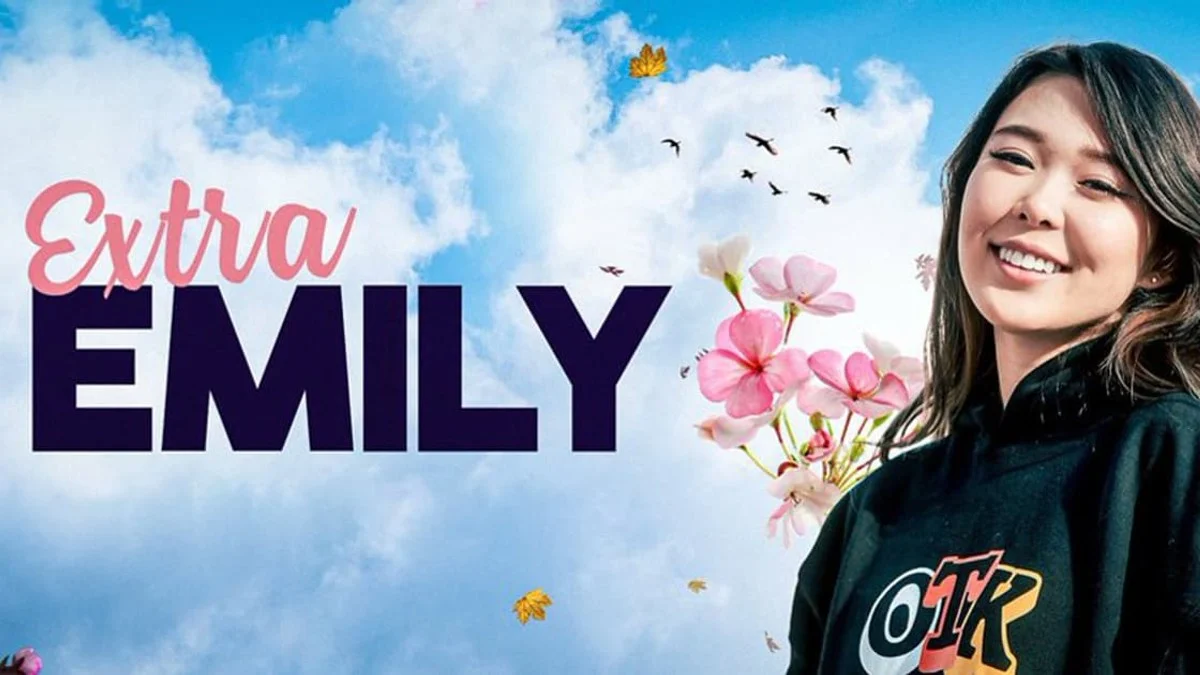
A Mazda SUV honked, and that horn is the only reason ExtraEmily’s June 28 livestream did not end in a wreck.
Twitch suspended the IRL streamer, whose real name is Emily Xuechun Zhang, on June 30 after a clip of the near-collision went viral. The company reversed the ban roughly 24 hours later, according to Dexerto. She has about 978,000 followers on the platform.
The whipsaw exposed a gap Twitch’s IRL boom has been widening for years. The platform wrote rules against distracted driving but never barred streaming from a moving car outright, and its punishment here landed lighter than the offense. In-car broadcasting is a cheap, high-engagement format that the safety framework has not caught up to, and the exposure runs to viewers, the platform, and the streamer alike.
The near-miss came roughly one hour and 25 minutes into the June 28 broadcast, as Zhang made a left turn while appearing to look at her phone. The other driver’s horn alerted her. Neither vehicle was damaged.
“That was my bad,” she said on stream.
Zhang later explained she had been driving with her Tesla’s Autopilot on but disabled it shortly before the incident. Her channel then displayed a message citing a Community Guidelines violation, and she confirmed on Discord the suspension was for distracted driving.
The streamers pushing for a hard line
Twitch’s own rules already name the conduct. Its Self-Destructive Behavior policy states that dangerous or distracted driving that removes a streamer’s eyes from the road “is never acceptable on Twitch,” and reading chat behind the wheel is specifically prohibited.
What the rules do not do is bar in-car streaming outright, and the reversal convinced several top creators that the middle ground has failed. Zack “Asmongold” Hoyt posted his call for a full prohibition on X on June 30. “Ngl they need to just ban streaming and driving entirely. Want to stream yourself going somewhere? Get an Uber or have someone else drive. At best it is a neutral effect, at worst, it causes accidents and kills people. Pretty easy logical decision.”
Jesse Cox framed the risk as an existential one for the company, as reported by Tubefilter. “Every single person who streams and drives should be perma banned. Cars are dangerous machines and if someone dies, the lawsuit against Twitch will kill the site.”
DansGaming argued the rule used to be stricter. “I’m so confused, driving and streaming used to always be an instant ban because it’s so dangerous. When did this change?! Drivers are terrible and dangerous enough when they aren’t streaming. This should never be encouraged or allowed on Twitch.”
Why a blanket ban is harder than it sounds
An outright prohibition runs into the platform’s own economy. Tubefilter notes an entire Twitch category is dedicated to trucking, where a ban would strip working drivers of income, and that the high-stakes pull of streaming culture already nudges creators toward reckless driving.
For Zhang, the suspension marked her third driving-related ban. The first came in October 2023 for reading chat behind the wheel. The second came in April 2025 after she appeared to run a red light while looking at her phone on a livestream.
Zhang returned to air and addressed the incident, pledging to minimize in-car broadcasts and turn chat off when driving. “I want to learn from my mistake and do better in the future, so from now on I’m going to try to minimize the amount of driving I do on stream. And if I do drive on stream, I’m going to have the chat off. I just want to do better and not make the same mistake again and again. I do feel really bad. I’m learning from it, and I want to just do better.”
Twitch has not said whether it will codify a hard rule against streaming while driving. The category that made the clip possible is still live, and so is the trucking channel that any ban would have to reckon with.


News
TikTok Adds Voice Comments, Polls and Photo Carousels
TikTok is turning its comment section into a voice, poll and photo surface, and the 1.7 billion daily comments it targets are a creator monetization signal, not a cosmetic tweak.
TikTok announced four new comment-section features Thursday, adding 60-second voice comments, creator-run polls, photo carousels and Live Photo replies across its platform.
The company detailed the rollout in a Newsroom post titled “Say More in the Comments.” TikTok said more than 1.7 billion comments are shared on the platform every day, the scale this overhaul targets.
For creators, the change is a business signal, not a cosmetic one. A comment section built for voice, votes and images is a comment section built for dwell time. Longer sessions and deeper interaction feed the engagement metrics that shape reach and ad-impression duration, the numbers that underwrite creator monetization.
Voice Comments are the headline feature. Users tap a microphone icon in the comment box and record a message up to 60 seconds long. Once posted, anyone can tap to listen.
That feature is rolling out globally over the next month, and it is restricted to accounts belonging to users 18 and older. TikTok is expanding a community tool and managing regulatory exposure at the same time.
Moderation runs underneath it. A TikTok spokesperson told TechCrunch that voice comments are subject to the same Community Guidelines as other content on the platform. The company said it uses human and automated detection, including speech-to-text transcription, to catch violations.
Comment Polls are live globally now. Creators can add a poll when commenting on their own video, choose up to five options, and set a voting timeframe. TikTok said results track in the comment section in real time.
The photo tools round out the bundle. Photo Carousel Comments let users add up to nine images in a single comment, up from one at a time, and roll out globally over the next month. Live Photo Comments, live globally now, let users upload a Live Photo that plays a brief burst of motion before the still image appears.
The design borrows from messaging apps, a lineage TikTok did not hide. In its announcement, TikTok framed the comment section as the place “where jokes get funnier, reactions get bigger, and total strangers connect in real time.”
Voice Comments and Photo Carousel Comments are expected to finish their global rollout around October 3, roughly a month after the announcement.
News
Twitch Adds Clips to DJ Program, Ending Blackout
Twitch just reopened cross-platform discovery for its DJ Program, ending a two-year ban on clips and dangling a badge that expires September 15.

Twitch reversed a two-year content blackout for its DJ Program on September 1, letting DJ creators clip mid-set moments and share them to social platforms for the first time since the program launched in 2024.
The change is automatic. Twitch said clipping is now available to DJ Program creators, editors, and mods the moment they go live, with no opt-in step required. Clips can be made during or after a stream and posted straight to a creator’s socials.
For DJ streamers, the reversal reopens a growth channel that has been closed since the category went live. When the program launched, DJs who signed on had VODs, clips, highlights, and video uploads disabled on their channels, a contractual condition tied to the licensing deals behind the catalog. That left DJ creators with no shareable content and no way to feed TikTok, Instagram Reels, or X, the platforms where new listeners actually find them.
The old trade was steep. Twitch built the DJ Program on a first-of-its-kind partnership with Universal Music Group, Warner Music Group, Sony Music, and independent labels represented by Merlin, and the rights terms barred any recorded content. Discovery lived inside the DJ category and nowhere else.
Now the clips carry the parts that make a set travel. Twitch said clips capture a creator’s voice, crowd reactions, Chat hype, and any other non-music audio from the set, so the energy comes through even without the music itself.
The catalog effect matters here. Twitch cited more than 15,000 DJs building and monetizing communities on the platform when it announced the program in 2024, a number that had more than quadrupled since early 2020. Every one of them has been invisible off-platform until this week.
Twitch is pushing early adoption with a deadline. The company is offering a limited-time “Clipped That” chat badge to creators who download and share a clip to social by September 15.
The badge callout in Twitch’s announcement reads: “Unlock the limited-time Clipped That badge by downloading and sharing an epic mid-set moment from your stream to social by 9/15.”
The two-week window closes September 15.
News
Only 16% of YouTube Users Also Use Netflix, Data Shows
New Apptopia panel data lands as Netflix signs YouTube talent by the dozen. The catch: only 1 in 6 YouTube users also has Netflix, and the gap is widening.
Only about 16% of YouTube users also use Netflix, while about 92% of Netflix users also use YouTube, new consumer panel data showed Friday.
The figures come from Apptopia’s US consumer device panel, analyzed by Tubefilter on the day of publication. Apptopia’s Adam Blacker put it plainly in his bylined post: “In August, about 92% of Netflix users were also users of YouTube while only about 16% of YouTube users were also users of Netflix.”
The gap matters because Netflix has spent 2026 signing YouTube talent whose channels collectively hold more than 500 million subscribers, The Wrap reported. The 16% funnel means those creators reach a structurally smaller Netflix audience than their YouTube base. Netflix borrows the creators. It does not borrow their viewers.
The overlap was more balanced at the start of the year. Apptopia data shows the drop-off began in January, when Netflix started hosting original podcasts. Short-form arrivals since then have made the decline sharper.
Podcasts are not the only pressure. Netflix users increasingly cross over to microdrama apps like PineDrama and DramaBox throughout 2026. That is a second competitive front YouTube does not face in the same zero-sum way, because YouTube already hosts every one of these formats under one roof.
Netflix is paying several million dollars a year for co-exclusive rights that let creators upload to both YouTube and Netflix at once. The jury is still out on how much those deals boost Netflix’s engagement.
For a creator weighing a Netflix check, the panel data reframes the pitch. A deal built to add reach can instead strand a creator between two audiences that barely overlap, growing neither. Netflix is paying to license audiences that already live on YouTube, and the 16% number is a measure of how few of them follow.