News
Bills Would Force Creators to Label Paid Political Posts
Sen. Adam Schiff’s PAID Act and a California fine bill would treat paid creator political content like a TV spot, with disclosure duties creators never had before.

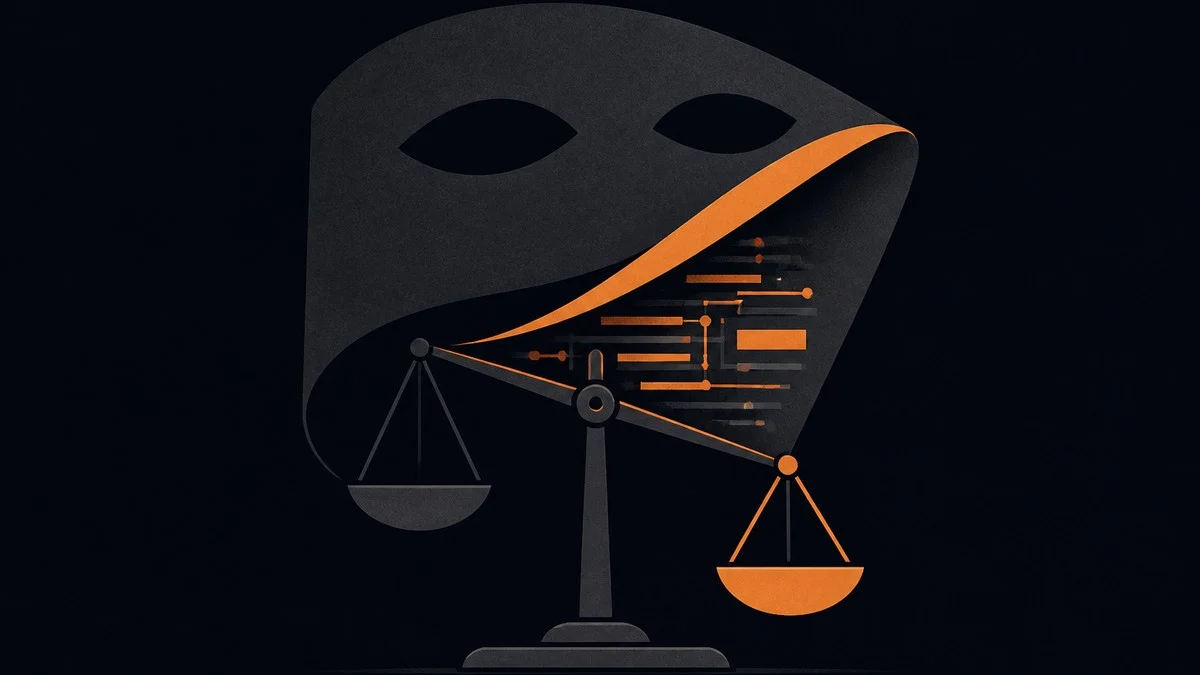
Get paid to post about a candidate, and soon you may have to say so on the post itself. Sen. Adam Schiff introduced the Promoting Authenticity with Influencer Disclaimer (PAID) Act on July 28, a bill that would require creators paid by a political committee or candidate to carry a clear disclaimer that they were paid.
Rep. Mark Takano leads a companion version in the House. The bill would amend the Federal Election Campaign Act to cover a form of political speech the law never anticipated: the sponsored post.
The gap FTC #ad rules leave open
For creators, this is a new compliance regime, not a tweak to an old one. Anyone who has posted a brand deal knows the FTC #ad routine, but the FTC has no jurisdiction over political advertisements. That carve-out is the whole reason these bills exist. A creator paid to sell a protein powder has a federal disclosure duty. A creator paid to sell a candidate, until now, has had none at the federal level.
The PAID Act would close that gap. It would formalize in law changes the Federal Election Commission has tried to make for more than a decade without the statutory clarity to enact them, Schiff said.
“An influencer can reach far more than a billboard or even a broadcast ad in 2026, but people deserve the same understanding of who is behind that post and if they are paid for it,” Schiff said.
California adds the enforcement teeth
California is moving faster, and with teeth. The state passed a disclosure law in 2023, but enforcing it means going to court for an order, a process that can drag on for months. A new bill from Assemblymember Marc Berman would let the state’s Fair Political Practices Commission skip the court entirely and fine violators directly, up to $5,000 per violation, Fortune reported.
The fine cuts both ways. It applies to the creator and to the political committee that hired them, which reshapes how campaigns write contracts. A campaign that once treated disclosure as the creator’s problem now shares the liability for every undisclosed post.
“Voters should have a right to know whether or not campaigns are paying for the messaging that they’re seeing,” Berman said.
California and Texas are the only two states with rules requiring creators to disclose political payments. Texas passed its version in 2024, and New York is weighing a similar requirement.
Why a primary scandal put creators on the radar
The push traces to California’s 2026 gubernatorial primary. Billionaire Tom Steyer’s campaign paid creators for endorsements, some of them allegedly not disclosed, and the state’s campaign watchdog opened investigations into several. Steyer later ended his campaign and endorsed Xavier Becerra.
Takano tied the bill directly to the way creators earn. “Senator Schiff and I introduced the PAID Act because current campaign disclosure laws have not kept up with this new creator economy, and voters deserve to know who is financing their feeds before they vote,” he said.
Citizens for Responsibility and Ethics in Washington, Common Cause, End Citizens United, and Public Citizen back the federal bill. Both measures now wait on their legislatures for a vote.





News
Twitch Streamer Sues Amazon Over AI Training Consent
A Connecticut streamer with about 900 followers just made himself the named plaintiff in a fight over whether every Twitch creator’s face, voice, and chat became free AI fuel.
A Connecticut Twitch streamer sued Amazon and Twitch on Thursday, arguing the companies fed creators’ streams, videos, and chat logs into Amazon’s generative AI without asking first.
Warren Pandiscia filed the class action August 20 in the U.S. District Court for the Northern District of California. Courthouse News Service reported that Pandiscia, a creator with more than 900 followers, claims the companies unlawfully copied millions of videos to build Amazon’s AI models.
The suit turns a platform default into a legal question every streamer now shares. On August 12, Twitch switched on a setting called Training for Generative AI for every account. Content earned once, in ad revenue and subscriptions, was quietly repurposed as unpaid training data for a company Amazon has owned since it bought Twitch in 2014.
Patch Notes Ep48 (Aug 26) — w/ @merrykish and Mike Minton on twitch.tv/twitch.
The plaintiff’s argument is blunt. His 37-page complaint reads: “By design, defendants never obtain, and their systems are incapable of obtaining, the consent of all parties to the communications they capture.”
Pandiscia asserts four causes of action: breach of implied contract, unjust enrichment, breach of express contract, and unfair business practices. He seeks injunctive relief, damages, restitution, and disgorgement of profits.
Twitch confirmed the policy itself. Its @TwitchSupport account posted: “We’ve added a setting that lets you opt out of having your channel content used to train generative AI content models across Amazon.” The toggle covers streams, VODs, clips, stream chats, and channel page text and images.
Eligible content is broad.
The setting shipped on. On the same-day Patch Notes livestream, Chief Product Officer Mike Minton told viewers why. “If this was opt-in, nobody would opt in. That’s honestly the answer,” Minton said.
That line is the case in one sentence. A platform executive stated on the record that consent was structured to avoid the answer creators would give if asked directly. The complaint alleges the design breaks creators’ implied contract with Twitch and California unfair competition law.
The exposure is not new either. The complaint alleges Amazon scraped content as early as 2024, the year Minton, then chief monetization officer, said Twitch content was used for AI development “in a prototyping, not in any kind of production scale, capacity.”
Opting out does not close every door. Twitch’s own FAQ notes that a creator who opts out can still be captured through another streamer’s channel that stays enrolled, so a raid or collab follows the host’s setting, not the guest’s.
The stakes reach past one docket. Pandiscia’s proposed class covers Twitch creators whose content trained Amazon’s models without consent or compensation, which is a definition that could sweep in most of the platform’s active broadcasters.
Representatives for Amazon and Twitch have not responded to press requests for comment.
News
WeHype Embeds in Twitch Dashboard, Debuts EA Battlefield
WeHype just became the first third-party ad marketplace inside Twitch’s Sponsorship Dashboard since StreamElements, and it opens with an EA Battlefield campaign as Affiliates gain brand-deal access worldwide.
An EA campaign for Battlefield is running this week inside Twitch’s Sponsorship Dashboard, the debut activation of a new WeHype integration that opens on the same day Twitch extended brand deals to Affiliates worldwide.
Twitch confirmed the WeHype partnership in an August 20 blog post, directing eligible creators to a new Third Party Campaigns section of the dashboard. WeHype announced the same integration in a Stockholm press release dated August 21.
The mechanics matter to smaller streamers. WeHype opportunities now sit next to Twitch’s own offers in the same interface Affiliates and Partners already use. Creators discover, opt into, and brief a campaign inside Twitch, then finish the activation on WeHype. That removes the manual sponsor hunt that has long kept structured brand deals out of reach for mid-tier and Affiliate channels.
WeHype is the first third-party ad marketplace embedded natively in Twitch since StreamElements.
Twitch first opened that slot in February 2025, calling StreamElements its first partner to show sponsorship offers directly from the dashboard. That arrangement did not hold. StreamElements spent the first half of 2026 dealing with unpaid creator payouts before Razer acquired its assets on July 31, with the former holding company Live Momentum Ltd keeping responsibility for pre-closing debts. WeHype stepped into the slot three weeks later.
The handoff is a plain lesson in platform risk. A creator’s access point to brand money can change hands in a single quarter, and Affiliates carry the exposure when it does.
Twitch built the wider Affiliate rollout on demand it had already measured. The company pointed to two Minecraft campaigns, “Tiny Takeover” and “More Minecraft, More Challenges,” where more than half of participating paid streamers were Affiliates. “Following the Minecraft campaigns, we heard from Affiliates loud and clear: you wanted more opportunities to work with brands directly on Twitch. So we built it,” the company wrote.
WeHype frames the integration as a reach problem solved for game publishers. “For smaller streamers, sponsorship opportunities can make a real difference in turning streaming from a passion into something sustainable,” said Philip Hübner, WeHype’s chief commercial officer and a former Twitch employee.
The company founded in Stockholm in 2016 says it has powered more than 60,000 creator collaborations and managed over $80 million in campaign budgets across 90-plus countries. It began integrating with the Twitch API the year it launched.
Affiliates cannot walk straight into a campaign. To qualify, they must complete the free Creator Sponsorship Certification course on Creator Camp and accept the Sponsorship Portal terms, after which brands apply their own per-campaign criteria. The EA Battlefield campaign is live now for creators who clear those gates.
News
YouTube View Count Split Divides Brands and Creators
YouTube’s August 24 first-frame view count rewards brands with bigger reach numbers while creator educator Joey Gagliardi warns the inflated metric does nothing for earnings.
Brands and creators are reading YouTube’s new public view count in opposite directions, and the split hardened this week ahead of the August 24 rollout. Advertisers want the bigger reach numbers for benchmarking. Creator educators, including Joey Gagliardi, warn the count rewards thumbnail bait while doing nothing for what a creator actually earns on YouTube.
Starting Monday, YouTube counts a public view the moment a video begins to play, from the first frame, with no minimum watch time. The rule applies across long-form videos, Shorts, live streams, and podcasts. YouTube announced the change August 17 in a Community forum post.
Earnings do not move with that number. The old watch-time threshold survives as a separate metric called Engaged Views, relocated to YouTube Studio’s Analytics in Advanced Mode. Engaged Views still governs all creator earnings, Partner Program eligibility, and Shorts revenue pool participation.
That bifurcation lands hardest on mid-tier and monetizing creators. Their rate cards and brand-deal benchmarks are anchored to historical public view counts that are now structurally incomparable to post-August 24 figures. The metric that decides whether they get paid sits one click deeper in Advanced Mode, invisible to the casual brand partner reading a pitch deck.
Gagliardi, director of creator programming and education at G&B Digital Management and the College of Influence, put the risk plainly. “The thing I’d hate for creators to take away from this is, ‘Great, now I need to become twice as viral,'” he told Digiday. “That’s not a strategy.”
His point is that a larger headline number is not a business plan. The public counter measures reach. Engaged Views measures the attention brands are supposedly buying.
The change is not retroactive. Videos published before August 24 keep their existing totals, but any new plays after that date count under the first-frame system. That creates a permanent break in any time-series data spanning the date. September view counts on older videos will not compare cleanly to July counts without a methodology note.
For brands that locked campaign benchmarks before the rollout, the break is the story. Performance clauses tied to raw view targets now reference a baseline the platform has changed underneath them. One strategist quoted by TechTimes advised brands negotiating Q3 and Q4 deals to write watch-time floors or engagement-rate minimums into contracts instead of view counts.
YouTube framed the update as a consistency fix. The platform said it had run multiple view-counting systems across formats and heard that creators wanted the confusion gone.
The two-step transition is now complete. YouTube applied first-frame counting to Shorts on March 31, 2025, aligning with TikTok and Instagram. Monday extends that standard to long-form video and live streams.
The doubled Partner Program entry thresholds YouTube announced August 10 take effect in February 2027. The new view count takes effect Monday.