News
YouTube Launches UK Shopping Affiliate Programme
YouTube’s UK Shopping Affiliate Programme lets Partner Program creators tag products from seven major retailers and earn commission, opening a new revenue line beyond AdSense and brand deals.

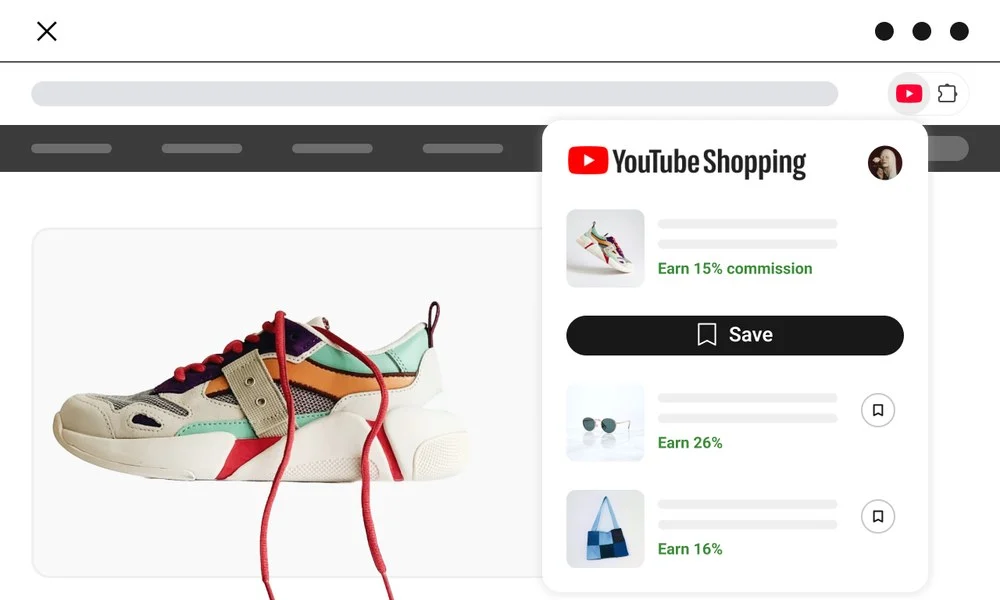
YouTube launched its Shopping Affiliate Programme in the United Kingdom on July 23. Eligible YouTube Partner Program creators can now tag retail products inside videos, Shorts, and livestreams. They earn commission on qualifying purchases.
Seven retailers signed on for the initial rollout. TheIndustry.beauty reported the first partners. They are Marks & Spencer, Boots, Currys, Next, Debenhams, Etsy, and Wayfair. More are expected as the network expands. Affiliate platform Awin manages the UK partner network.
The launch adds a performance-based income line to the UK creator monetisation stack. It sits alongside AdSense and brand deals. This is the first time YouTube has offered native shopping affiliate tools in the UK. That puts YouTube in direct structural competition with TikTok Shop for the loyalty of British shopping creators.
YouTube also lowered the subscriber threshold to join. It fell from 1,000 to 500. The cut opens the commerce layer to a far larger pool of mid-tier and micro creators. Music channels, Official Artist Channels, and channels made for children remain excluded.
The reach numbers behind the pitch are large. YouTube said UK watch time for shopping-related content rose 50% in 2025. Globally, viewers watch an average of 110 million hours of shopping videos each day. Those figures come from the company.
Alison Lomax is YouTube’s Managing Director in the UK. In a statement quoted by 365 Retail, she said the tools give creators “a powerful way to diversify their earnings while engaging with brands and viewers alike.”
The mechanics favour in-video tags over description links. YouTube said product tags placed directly in videos generate up to 50% more clicks. Commission rates and attribution windows are set by each retailer. YouTube does not set them.
Payment runs through AdSense for YouTube. Commission is issued between 60 and 120 days after a purchase. The delay accounts for returns.
The rollout continues over the coming weeks. YouTube is adding AI-assisted auto-tagging of products shown in videos. It is expanding product catalogues. Shopping features for connected TV viewing arrive as part of the same rollout.







News
Dior Opposes Sincerely Jules Beauty Trademark
Dior never fought Sincerely Jules in fashion. The beauty application is a different story, and the TTAB fight tests what creator brands can carry across categories.

Parfums Christian Dior filed a Trademark Trial and Appeal Board opposition this spring. The target is Sincerely Jules, the brand built by influencer Julie Sariñana. Dior wants to block its bid to register the name for cosmetics and fragrances.
The trigger was beauty, and only beauty. The Fashion Law first reported the split. Dior did not oppose the brand’s earlier registrations. Those covered apparel, online retail, publications, jewelry, and handbags. It appears to have left more recent pending applications alone too. Those cover luggage, footwear, and printed materials. Dior moved only when Sincerely Jules sought protection for cosmetics and fragrances.
That is the story for anyone building a creator-founded brand. A trademark cleared in apparel does not automatically travel into prestige beauty. Sariñana’s Instagram account carries 7 million followers. She spent years coexisting with Dior across fashion and lifestyle categories. There was no fight. The category change alone drew the opposition.
Dior filed its opposition in May 2026. It argues that SINCERELY JULES incorporates the JULES fragrance mark in its entirety. It says the application covers goods that overlap with Dior’s existing registration. That overlap, Dior argues, creates a likelihood of confusion. The JULES mark is more than 40 years old.
Sincerely Jules answered on June 23, denying that confusion is likely. The brand argues SINCERELY JULES creates a distinct commercial impression. It says the marketplace is crowded with “Jules”-formative marks. It also argues that years of coexistence without evidence of actual confusion weigh against Dior’s claim.
The application itself reaches deep into beauty. It covers Class 3 goods on an intent-to-use basis. That list includes fragrances, blush, foundation, lipstick, mascara, eye makeup, nail polish, and bronzer.
Sariñana founded the Sincerely Jules blog in 2009. She was pursuing a degree at the Fashion Institute of Design & Merchandising at the time. It grew into a lifestyle business. The portfolio spans apparel, retail services, publications, jewelry, and handbags. Dior left every one of those unchallenged.
The TTAB now faces one central question. How much weight does prior coexistence carry once a brand moves into a new product category? Net Influencer framed the dispute as familiar ground for creator-economy attorneys. Fragrance and cosmetics sit close to Dior’s core commercial territory. There, channel overlap and consumer expectations around the JULES name run tighter.
Merlyne Jean-Louis is a partner at Pierson Ferdinand. She works in its Global Media, Entertainment & Sport group and represents creators. She put the lesson plainly. “It’s really unfortunate if you have to change your trademark or brand name because you didn’t verify that it was good to go in the first place,” she said.
Her second point was shorter. “Make sure that you’re protecting your IP.”
The board’s ruling will carry precedential weight for any creator brand with a scaled name and beauty ambitions. The question is whether coexistence in non-overlapping categories counts as evidence against confusion. Sincerely Jules filed its answer on June 23. The proceeding is now live.
News
Spotify Tops 300M Premium Subs, a Streaming First
Spotify became the first audio service to cross 300 million paying subscribers, and its new Merlin deal shows how that scale will decide where creator money from AI flows next.

Spotify crossed 300 million paid Premium subscribers in Q2 2026, the first audio streaming service ever to reach that line, the company reported Tuesday.
The count grew 9% year over year after Spotify added 7 million net new subscribers in the quarter, one million past its own guidance. Monthly active users hit 777 million, up 12%. Gross margin reached 33.4%, which Spotify called an all-time record.
That scale is the whole story for artists. A subscriber base this large sets the size of the royalty pool every label and independent musician draws from, and it hands Spotify leverage no rival audio platform can match at the negotiating table. The number below the number arrived the same day.
Spotify announced a licensing agreement with Merlin, the trade group for independent labels and distributors, for its upcoming fan-made covers and remixing tool. The deal adds more than 30,000 independent labels to the tool’s network. It covers the independent sector for the first time.
The mechanics matter more than the headline. The tool will launch as a paid Premium add-on, and Spotify says it will create an additional revenue stream for participating artists. Artists opt in. They are credited and compensated when a fan builds something from their work.
That opt-in structure is the creator-economy template hiding inside an earnings report. Spotify is monetizing AI creation alongside streaming royalties, not carving a rate cut out of the existing pool. The Merlin agreement follows a first deal Spotify struck with Universal Music Group in May, and it now sets the credit-and-compensation model for how generative-AI revenue reaches independent artists at scale.
“This agreement with Merlin ensures participating artists are credited and compensated, and that every creation drives listeners back to the original work,” said Charlie Hellman, Spotify’s SVP and Global Head of Music.
Merlin CEO Charlie Lexton framed the choice as the point. “Giving our members’ artists the choice to make their music available as part of this exciting technology, while ensuring the opportunity to participate in an additional revenue stream, is exactly what Merlin is here to do,” he said.
The rest of the quarter fed the same thesis. Operating income was 655 million euros, up 61% year over year. Spotify also expanded its AI product line in Q2, including Personal Podcasts, a desktop assistant called Studio, and conversational search for eligible Premium mobile users.
Concert access moved too. Spotify launched Reserved in the U.S. in June with Live Nation, holding early tickets for an artist’s most dedicated fans, and nearly 100,000 tickets were reserved across multiple tours by August 4.
For Q3, Spotify guides to 305 million Premium subscribers and 788 million MAUs.
News
Disney and TikTok Ink Creator Deal, Videos Hit Disney+
Disney is licensing Marvel, Pixar and Star Wars IP to TikTok creators, and their opt-in videos will stream inside Disney+. It is the first time TikTok content reaches a major subscription streamer.
The Walt Disney Company and TikTok announced a global content-sharing deal Wednesday that will let TikTok creators build short-form videos from Disney, Pixar, Marvel, Star Wars and FX scenes, with opt-in content streaming inside Disney+.
It marks the first time TikTok videos will be distributed on a major subscription streaming service. Disney said qualifying videos from creators who opt in will live on both TikTok and in Verts on Disney+, the platform’s vertical video feed.
For fan creators, the deal converts a gray zone into a paycheck path. Fan edits built on Disney characters have long risked takedown under copyright rules. This agreement licenses that behavior at scale and routes it to a subscription platform, adding a distribution channel that ad revenue and brand deals never offered short-form makers.
TikTok will give creators access to assets tied to hundreds of Disney films and series. The two companies also launched a jointly run Disney Creator Ambassador Program.
Disney describes the program as tiered. The Hollywood Reporter reported the companies will enable what they call best-in-class creators to unlock rewards, increased visibility, exclusive events and career development pathways. Neither company disclosed how selection works or whether ambassadors are paid.
The scale of the fandom already on TikTok anchors the case. According to internal TikTok data cited by Disney, fans shared an average of 6.5 million film and TV posts on the app each day in 2025, and nearly half of surveyed viewers said they later watched a movie or show on a streaming service after discovering it there.
That discovery-to-viewing pipeline is what Disney is buying.
Disney+ counts about 130 million subscribers worldwide, a built-in audience most short-form creators could never reach through the TikTok feed alone. Verts launched on the Disney+ U.S. mobile app in March, carrying Disney and Hulu catalog clips, with creator content flagged then as a future step. This deal delivers that step.
“The best storytellers are fans first,” said Asad Ayaz, Disney’s chief marketing and brand officer, in a statement. “This collaboration creates a new bridge between the stories we tell and the creativity they inspire, giving creators a bigger stage to share what they’ve made, and audiences more to discover on Disney+ every day.”
Dawn Yang, TikTok’s global head of entertainment, framed the arrangement as extending fandom onto the streamer itself. She said the companies are bringing TikTok’s creator expression to Disney+.
Both sides gain. Disney feeds a young audience into a subscription product and builds ties to emerging talent. TikTok wins licensed IP and a streaming showcase for its creators.
Several questions stay open. The companies have not detailed how Disney-asset videos will be monetized, what editorial limits creators face, or how ambassador compensation works.
The deal will pilot in the United States in the coming months, with other markets to follow. Financial terms were not disclosed.