Deals
TikTok and FIFA Partner For 2026 World Cup

FIFA has named TikTok its first-ever Preferred Platform, setting the stage for what could be the most creator-forward global sporting events in history and establishing a relationship that could change the way major events like the World Cup are covered. The partnership, announced this week, runs through the end of 2026 and positions creators as essential to how the tournament will be consumed and shared worldwide. “FIFA’s goal is to share the exhilaration of the FIFA World Cup 2026 with as many fans as possible, and we can’t think of a better way to further that mission during the biggest event in sports history than to have TikTok as the tournament’s Preferred Platform”, said FIFA Secretary General Mattias Grafström, in a press release from TikTok.
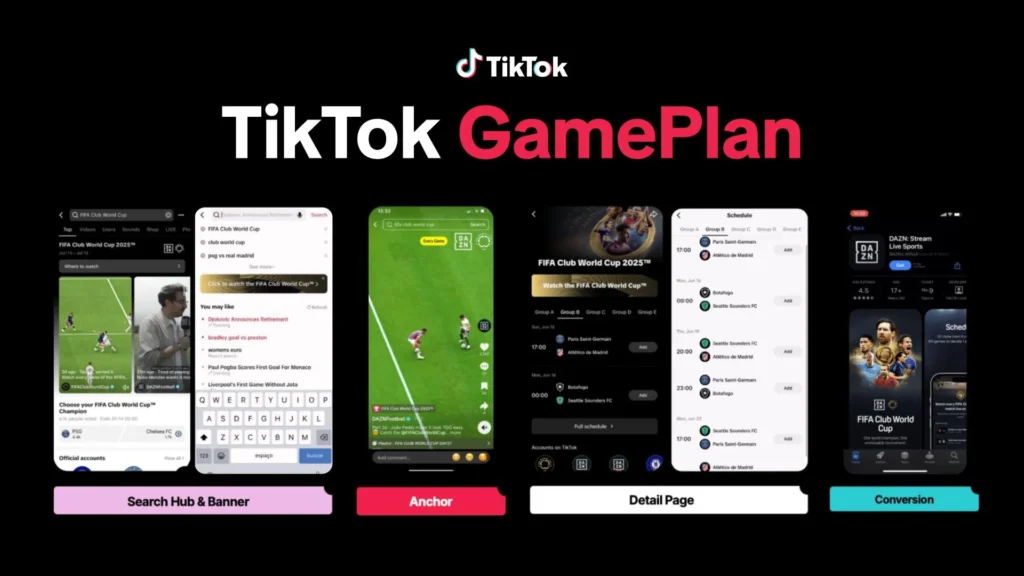
The deal expands on the collaboration between TikTok and FIFA during the 2023 Women’s World Cup and the 2025 Club World Cup, both of which were wildly popular. Under this new agreement, TikTok will host an immersive FIFA World Cup 2026 hub featuring match highlights, ticketing information, custom stickers, filters, and gamification features. The agreement builds off of TikTok’s recently announced GamePlan product. But the most notable aspect of the partnership announcement is the global creator program. According to TikTok, the program will “provide a select group of global TikTok creators with game-changing access to incredible behind-the-scenes moments – such as press conferences and training sessions – and in the process, give fans unique, relatable perspectives on the FIFA World Cup experience”. A broader tier of creators will also gain permission to co-create content using FIFA’s archival footage, a rare opportunity as sports footage is often difficult to license.
“Soccer has experienced explosive global growth on TikTok over the past few years, and as FIFA’s first-ever Preferred Platform we’re excited for fans to experience the FIFA World Cup 2026 beyond the 90 minutes,” said James Stafford, Global Head of Content, TikTok. FIFA Secretary General Mattias Grafström framed the partnership as an evolution in how football is shared. “This is an innovative and creative collaboration that will connect more fans across the globe to the FIFA World Cup in unprecedented ways, bringing them behind the curtain and closer to the action than ever before.”
This deal marks a major shift for content creators and their coverage of sporting events. For years, creators covering professional sports had to clip broadcast footage under fair use, react outside of stadiums and arenas and wait for official footage to be released, potentially risking legal action and takedowns. This deal formalizes a change in process for live event coverage, where creators are granted access and encouraged to cover events and collaborate as part of a media strategy, mirroring how traditional broadcasting networks negotiate rights packages. The only differences are that the “network” is TikTok, and individual creators will benefit more because of the nature of social media.
According to TikTok internal data mentioned in an announcement about GamePlan in late December, fans who watch sports content on TikTok are 42 percent more likely to tune in to live matches. The company has also noted that 59 percent of users find sports content on TikTok more entertaining than the actual games. For FIFA, partnering with TikTok helps expand their audience and also build their revenue. While FIFA fans on TikTok will be able to stream portions of matches live and access special content, broadcasters and brands will be able to monetize content through access to ad revenue. FIFA also benefits from an agreement with TikTok to “implement anti-piracy policies that support and protect FIFA’s intellectual property.”
The 2026 World Cup kicks off in June across North America, with games in the United States, Canada, and Mexico. This is the first time the tournament will be hosted by three countries. With 48 teams competing, the event is already being positioned as the largest in World Cup history. Details on how creators will be selected for the top-tier access program have not been announced, though TikTok’s existing relationships with sports creators and its GamePlan infrastructure suggest the company already has a pipeline in mind. If the largest sporting event on the planet is willing to treat creators as primary content partners, other institutions may follow.





Jack Dorsey, best known as a co-founder of Twitter, Bluesky and Block (formerly Square), has backed the app Divine, an open-source, relaunched version of the influential short-form video social media app Vine. The launch of the new app this past week comes almost 10 years after Vine was shuttered and archived by Twitter, its then-parent company. Divine is being developed by Evan Henshaw-Plath, known online as “Rabble,” and is backed by his non-profit collective “and Other Stuff,” which is financially backed by Dorsey. Notable features of Divine include its archive of previous Vines and a policy designed to prevent AI-generated videos on the platform.
Vine was founded in 2012, acquired by Twitter the same year, and launched in 2013. TikTok is often described as a successor to Vine, with its focus on short videos within a social platform. The same year that Vine was archived and its short-format videos were rolled into Twitter, TikTok’s sister app Douyin was launched. By 2020, Instagram and YouTube had also launched short-form video features (Instagram Reels and YouTube Shorts). Many social media users questioned Twitter’s reasoning for discontinuing and archiving Vine in 2016, including Vine’s founder, Rus Yusupov, according to the Guardian. The relaunch of the app alongside archived content appears to be an attempt by former Twitter employees Dorsey and Rabble to correct that mistake, and to address a desire for more short-form content. Sarah Perez reported for TechCrunch that the Divine app has an archive of many older Vine videos (presently almost 500,000 videos according to the sidebar on the company’s website), and provides an opportunity for beginner and returning users to craft new short clips.
The app launched a beta version in November 2025, inviting some previous Vine users to return to an early version of the app. Initially invite-only, with opportunities for additional invitations, Divine is currently public and free. During the beta, the team rewrote portions of the code and developed features like compilation mode, which autoplays streams of Vines by hashtag.
Several former Vine creators have been involved or expressed support, including Lele Pons, JimmyHere, MightyDuck, and Jack and Jack. Other early Vine stars whose content is in the archive include Liza Koshy, Logan Paul, David Dobrik, Drew Gooden, Thomas Sanders, Danny Gonzalez, Sam and Colby and Hannah Stocking. The archive of old videos drew from work from Archive.org. Original Vine creators retain copyrights and can claim their old accounts, or request that their videos are removed.
Divine is notable for its rejection of AI-generated content, something that Henshaw-Plath excluded intentionally according to a statement made to TechCrunch. Company policy prevents usage of AI by only allowing content to either be filmed in-app or undergo verification and detection processes to filter out generated content. Users can also report AI usage. Previous rumors from Tumblr in 2025 had suggested that the app could be used to train AI content, given some of “and Other Stuff” projects involve AI. An older but currently live staging page for “and Other Stuff” describes Nostr, the open-source protocol used by Divine, as the “best protocol for open source AI development.” Divine’s FAQ page addresses this concern about AI directly. Under “Is Divine going to sell our data or content to AI companies?”, the company states: “No, Divine is not in the business of selling user data or content to AI companies for training. We don’t do it, we won’t do it. We can’t stop AI companies which want to ignore terms of service and people’s copyright from scraping publicly accessible data, just like it’s hard to stop AI companies from scraping publicly available websites.” The app also promises not to sell personal information “in the traditional sense.”
Divine is available for free on the App Store, Google Play Store and Zapstore, a decentralized app store launched by Rabble that also has backing from Dorsey. The app has been endorsed by many former high-profile Vine users. Since the app’s public launch, it has jumped up to the top 20 most-downloaded apps in the U.S. App Store’s Social category and has over 10,000 downloads on the Google Play Store. Divine has no framework for revenue at present. Rabble has suggested a potential for Patreon-style or Pro account (possibly like premium features of X or Instagram) options in the future, and believes that the app could give some control back to creators, leading to potential for monetization from using partners, like brand partnerships.
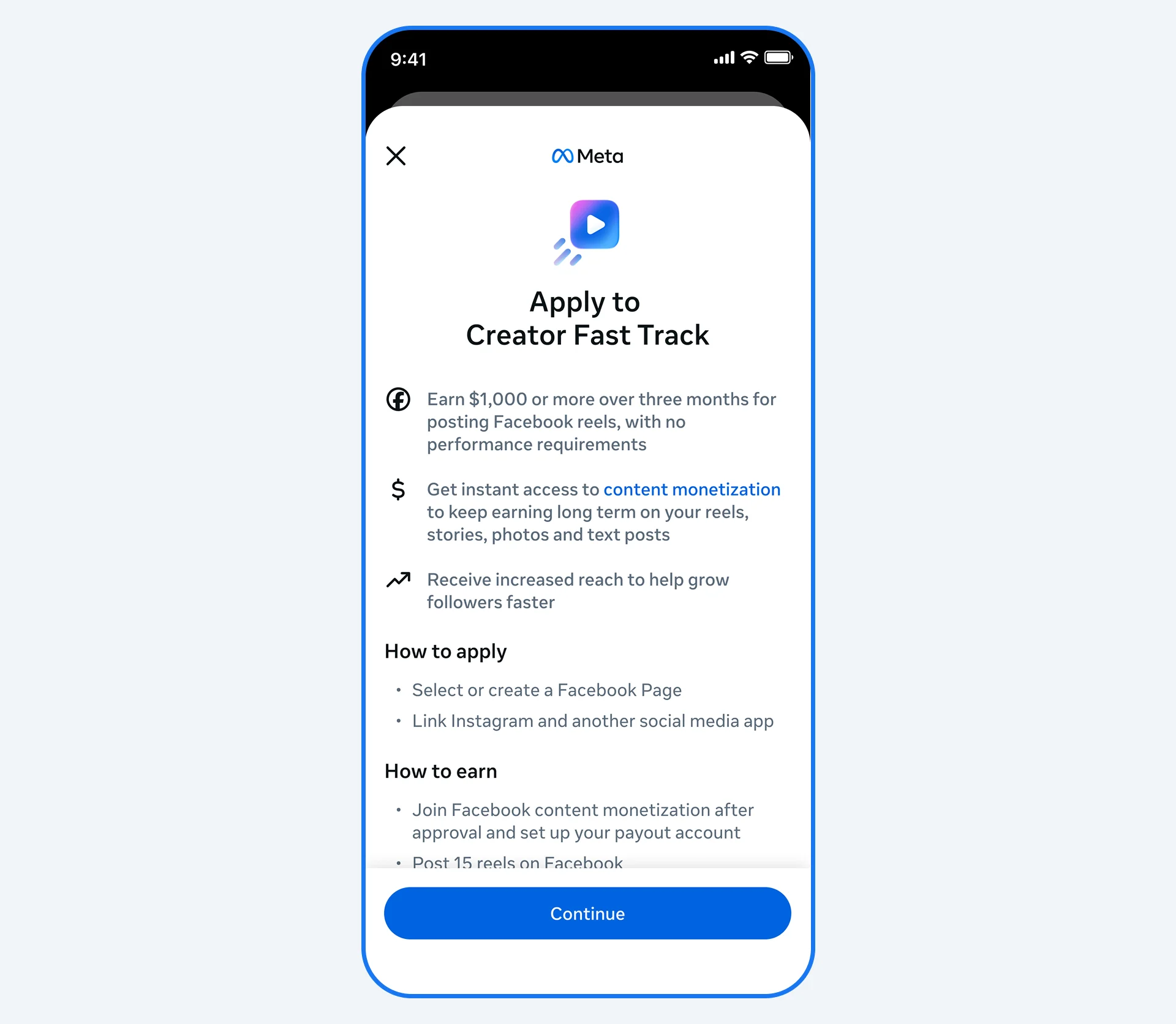
Meta has announced the start of a new invite-only, three-month program for creators on Facebook. The “Creator Fast Track” program is offering eligible content creators with at least 100,000 followers on TikTok, YouTube or Instagram $1,000 a month for three months for posting content on Facebook. According to Meta, the program promises payment up to $3,000 a month for three months for accounts with over one million followers. The program comes just after news of significant layoffs as well as reports of Meta winding down large aspects of its investments in the metaverse. In a press release, Meta said that enrollment in the program also gives accounts access to Facebook’s “Content Monetization Program”, enacted in 2024. The older “Content Monetization Program” allows members the option to make money on their content after the “Fast Track” program ends. Here’s how the new “Creator Fast Track” program works and who is able to apply.
“Creator Fast Track” is invite-only and seems to be limited to accounts with 100,000 followers or more, but creators who are curious about the program can fill out an interest form by navigating to Content monetization in the Monetization tab of the Professional Dashboard on the Facebook mobile app. The program comes with three new metrics for creators to view and understand how they’re getting paid from content. “Qualified Views” tells you the number of views of your content that could be eligible to earn money from. “Earnings Rate” is a simple measurement of your earnings per 1000 views. Finally, “Non-Qualified Views” breaks down why some views don’t qualify for payment. According to Meta, creators can earn from short-form Reels, longer videos as well as photo and text post, but creators have to post at least 15 eligible reels a month to receive payment, on 10 separate days a month. Program members with at least 20,000 followers but less than 100,000 can expect between $100–$450 dollars a month, while those with over 100,000 followers can earn the advertised $1,000 a month and creators with over a million getting $3,000 a month. Program members must have a recent Facebook account (at least 30 days old) and at least 30,000 views on videos in the past two months.
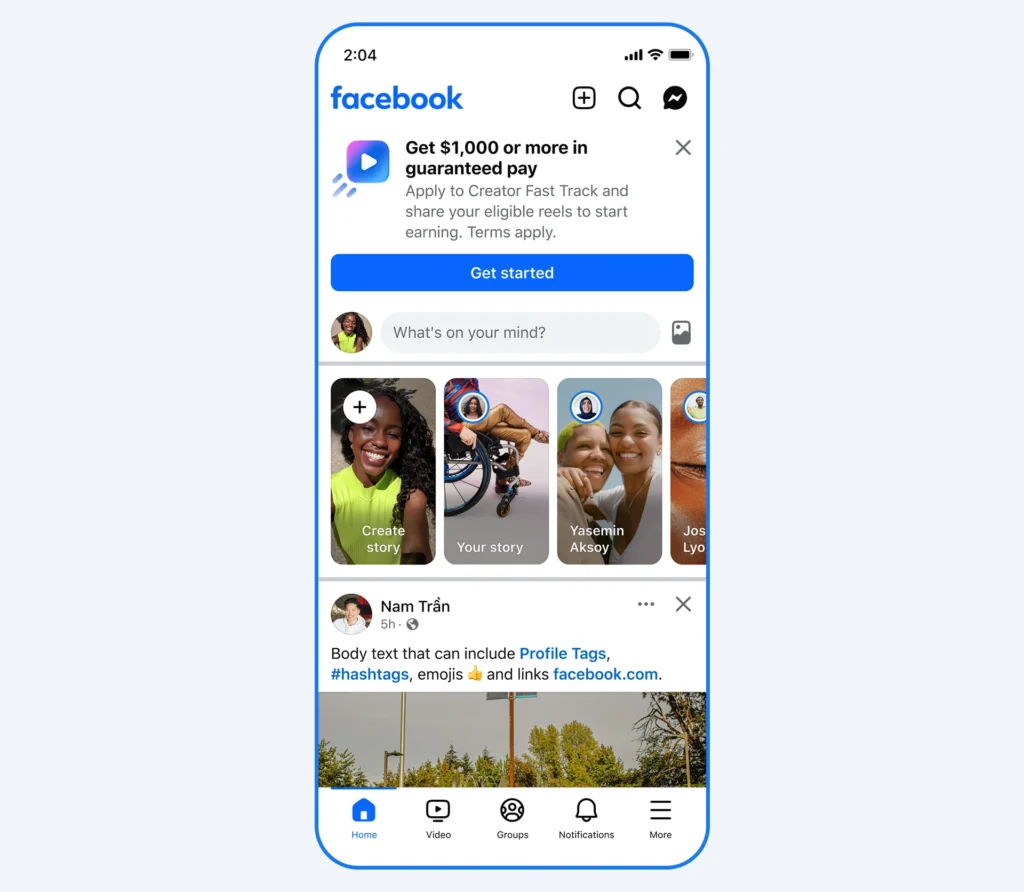
The platform says it wants to reward original content with the “Creator Fast Track” Program. In Meta’s press release, the company touted a “35% increase” in payments to content creators in 2025, totalling nearly $3 billion, the highest annual total the platform has paid to creators ever. Additionally, Meta says that “creators earning more than $10,000 annually on Facebook have grown by over 30%” annually”, although they did not provide a full time-frame. Despite the promised focus on original material, it seems that creators can reuse content posted on other platforms as long as it’s their material, hasn’t been posted on Facebook before, and meets the platform’s community guidelines.
It’s unclear what will happen after the three-month program ends, or how long the promotion will last. The program is a part of Facebook’s bigger push to gain back users lost to other social media platforms. Meta stopped breaking down daily user data by platform in 2024. Overall, social media usage peaked in 2022, and has declined since, likely related to pandemic lockdowns and time spent indoors. Facebook has seen a significant overall decline in usage for years, as newer social media platforms came along, and the app was perceived as dated. Despite this decline, a recent social media analysis by media engagement company Buffer, reported by tech news platform BetaNews, showed a slight increase in users on the platform, alongside other previously declining platforms like X (formerly Twitter). If the program pays off, maybe Facebook will have an even greater resurgence as a social media platform, especially as many content creators already cross-post most of their material.
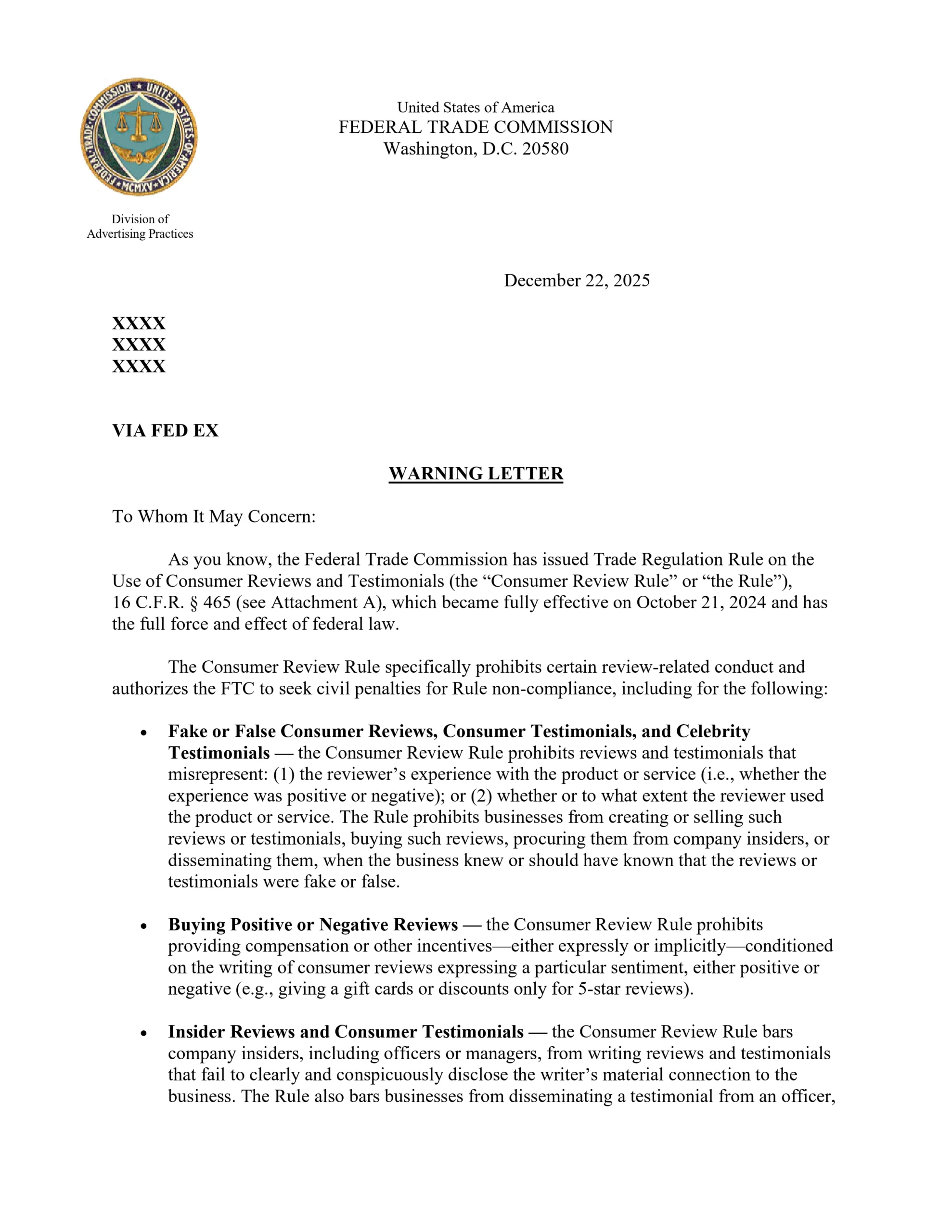
The Federal Trade Commission has set its sights on influencers once again. Starting in December, expanding on their new round of disclosure guidelines from 2023. The guidelines went into effect in 2024 and the FTC has put out a series of letters, press releases and blog posts, attempting to tighten the standard for what has to be disclosed for sponsored social media posts. This comes after years of controversies related to content creators and brand partnerships, cryptocurrency endorsements and unregulated blank on platforms like Instagram and TikTok. So what do these new guidelines mean for influencers in the U.S.?
Federal regulators have sent a clear message to brands and creators: disclosure rules in influencer marketing are not optional. On December 22nd, the FTC announced that it had sent warning letters to 10 companies regarding potential violations related to the agency’s new Consumer Review Rule, related to potentially “fake or false consumer reviews, consumer testimonials, or celebrity testimonials.” Fines could be up to $53,088 per violation. Legal analysis by the law news publication The National Law Review earlier this month emphasized that disclosures in social media remain a central enforcement focus, particularly as content moves fluidly across feeds, stories, and short-form video. Essentially the FTC wants someone to be able to tell if a post is sponsored or an ad when they scroll past it.
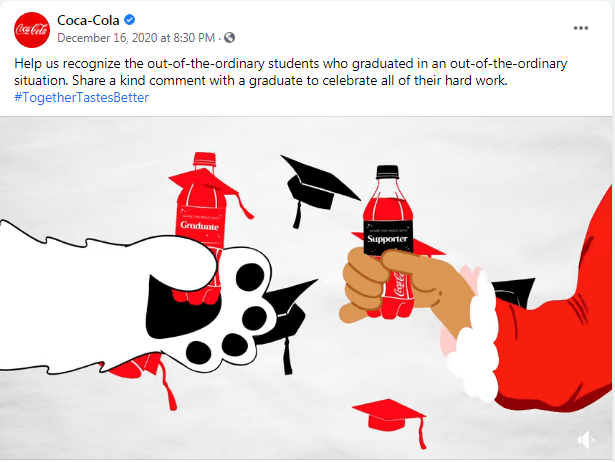
For years, many creators relied on brand tags, brief in-content references or hashtags blended into a long caption to signify a sponsored or partnered post. Regulators are signalling that they are increasingly skeptical of those approaches, especially when those notices are easy to miss and easy to potentially misinterpret. Platforms are also responding, with YouTube, Instagram and TikTok labeling branded or promotional content in the past few years. Additional layers to sponsorship exist as well. An article by daily Legal news outlet JD Supra made clear that disclosure is not limited to obvious ad reads with scripts provided by a brand. A creator who casually praises a product while participating in a broader paid partnership may still need to disclose that relationship. The focus is on context that would matter to viewers, not on how formal the arrangement looks behind the scenes.
The placement of where you disclose that a post has been sponsored is also an issue. With shorts on social media, a disclosure that appears only in the description field can easily go unseen, especially when videos are reposted or embedded elsewhere. Regulators have signaled that disclosures should appear within the content itself in a way that stands out, whether spoken in the video or displayed as readable on-screen text. If viewers are unlikely to see it, it is unlikely to satisfy the standard. A related, recent study on tobacco marketing found that influencers were one of the main groups who failed to disclose business relationships with tobacco companies, noting that “influencer-related posts lacked proper FTC-mandated disclosures of financial relationships”.
Livestreaming adds another layer of complexity. Audiences join and leave at different points, and many viewers skip the opening minutes of a broadcast. A single disclosure at the beginning of a two-hour stream may not reach a significant portion of the audience. Recent guidance suggests that repeating disclosures during the stream, or maintaining a visible on-screen notice, is a more reliable approach. The expectation reflects how live content is actually consumed rather than how it might look on paper.
The practical effect of these developments is easy to understand. For creators, when money, free products, or commissions are involved, being straightforward is a legal requirement, even if the post is styled as a casual recommendation. The current round of warnings suggests regulators are less concerned with punishing technical mistakes and more focused on patterns that make paid influence look organic. If sponsorship is part of the business model, it has to be visible in the content itself.