Money
Kane Parsons’ Backrooms Becomes A24’s Biggest Film Ever
Kane Parsons gave his Backrooms series away for free on YouTube at 16. Ten days into its theatrical run, his A24 debut has $212.6 million worldwide, the studio’s all-time record, and a sequel question already swirling.

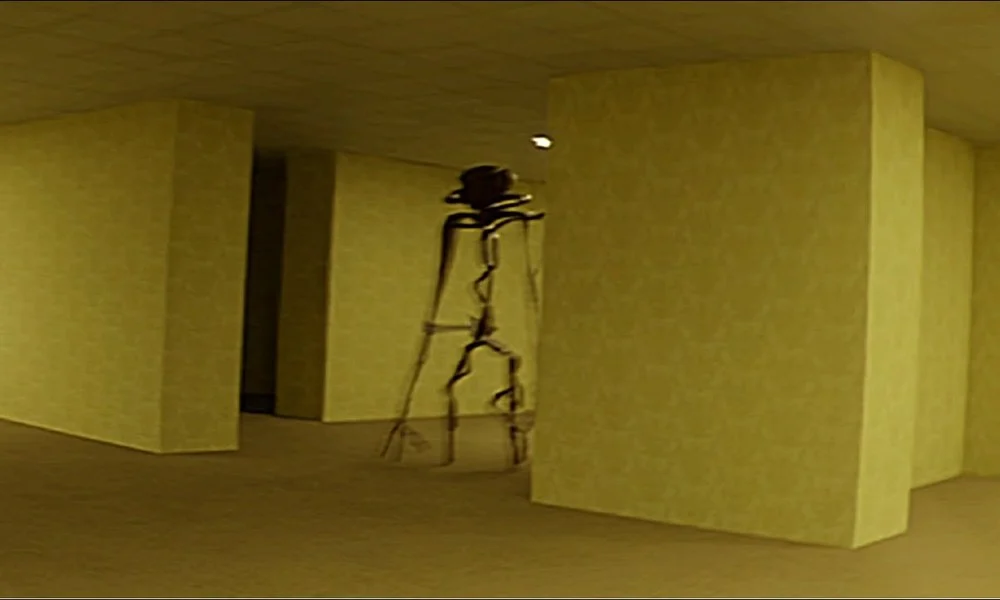
Kane Parsons posted the first Backrooms video to YouTube for free when he was 16. It was a found-footage horror short set in an endless maze of empty rooms. The A24 movie it became has now outgrossed every film the studio has ever released.
Backrooms reached $212.6 million worldwide through Sunday, Deadline reported. That passes the $191.2 million lifetime global gross of Timothée Chalamet’s Marty Supreme. It makes Backrooms A24’s highest-grossing film of all time.
The number is remarkable. The shape of it matters more. The film took 10 days to set the record on a budget under $10 million, co-financed by A24 and Chernin Entertainment. A teenager built its audience years earlier, upload by upload, by giving the series away for free. He kept creative control all the way into the director’s chair. Audience first, theatrical release later. That inversion is the creator economy’s cleanest proof of concept yet.
Ten Days to the Crown
Backrooms opened in late May to $81.4 million domestically and $118 million worldwide. It was the biggest debut weekend in A24’s history. The same weekend made Parsons the youngest filmmaker ever to top the domestic box office.
Parsons is 20.
Before Marty Supreme, the studio’s global record belonged to Everything Everywhere All at Once. That multi-Oscar winner finished its entire theatrical run under $148 million worldwide.
Marty Supreme needed 53 days to claim that crown. Backrooms took it away in 10.
It Started With a Free Upload
The whole franchise traces to a single video. Parsons uploaded “The Backrooms (Found Footage)” on January 7, 2022. It turned an anonymous piece of 2019 internet lore into serialized horror, and studios soon came calling.
Those first studio meetings happened over Zoom, with his parents sitting in. A24 officially boarded the project in 2023. Parsons put the timeline plainly in an interview published in May: “when this first started gaining traction and when I first met with them, I was 16.”
The finished film pairs the self-taught director with established machinery. Oscar nominees Chiwetel Ejiofor and Renate Reinsve star. Blumhouse-Atomic Monster, 21 Laps and Phobos produced alongside the financiers.
Parsons is not an isolated case, either. Backrooms arrives in the same season as Obsession, another studio horror hit from a YouTube-native filmmaker, Curry Barker. Together the two films sketch a shift in where Hollywood now finds both its talent and its stories.
A Sequel Report and a Denial
What comes next is the only contested part of the story. On Friday, two days before the global record fell, the same outlet reported a follow-up was already taking shape: “Sources tell us that Parsons is looking for a screenwriting collaborator to work on the sequel with. That’s the state that the Backrooms sequel is in right now.” His contract for more Backrooms resides with A24, the report added. No greenlight and no casting are attached.
Parsons disputed that framing on Monday. “I’m not sure where that got out; that seems more like a hallucination based off of a notion that I am very open to continuing this project. There’s no meaningful movement on that currently, though,” he said in comments published by The Hollywood Reporter. However the sequel question resolves, the franchise’s front door has not moved.
The first episode is still on YouTube, still free, exactly where a 16-year-old left it.






Money
Forbes 2026: Podcasting’s $638M Ceiling Moves
Forbes’ 2026 podcaster ranking puts the top 20 at $638 million. An AI acquisition set the ceiling, and a reality-TV duo set a floor.

Forbes put a $638 million price tag on podcasting’s top tier this week, its estimate of what the 20 highest-paid hosts earned between June 2025 and June 2026. Joe Rogan led at $82 million, driven largely by his Spotify deal. The full ranking, compiled by Matt Craig, published on the Forbes site on July 30.
Two entries at opposite ends of the list explain how that money now gets made. At No. 2 sit John Coogan and Jordi Hays of TBPN, at an estimated $70 million. At No. 20 sit Hannah Berner and Paige DeSorbo of Giggly Squad, at an estimated $18 million.
Read together, they mark a shift in what a podcast is worth and to whom. The ceiling here was not set by an advertiser or a platform. It was set by an AI lab writing an acquisition check, a different kind of buyer with a different reason to pay.
Start with the number that jumps. Forbes estimates Coogan and Hays netted close to $70 million, and it attributes most of that to a single event: OpenAI’s purchase of their 11-person company. The show launched in October 2024. The deal closed roughly a year and a half later.
An AI Lab Set the Earnings Ceiling
OpenAI acquired TBPN in April 2026 for an estimated $150 million in cash and stock, its first purchase of a media company. Forbes notes the show grew from about $5 million in advertising in its first year to a projected $30 million in its second. Rockwater analyst Chris Erwin called the deal an acqui-hire.
That is the mechanic worth understanding. In an acqui-hire, the buyer pays for the team and its position more than for current revenue. The cash flow is secondary to the asset the company can become.
Hays framed the sale as a bet on the buyer. “While we’ve been critical of the industry at times, after getting to know Sam and the OpenAI team, what stood out most was their openness to feedback and commitment to getting this right,” he wrote in a statement when the deal was announced.
Reality TV Now Has an Earnings Benchmark
The Giggly Squad entry works differently and matters for a different reason. Berner and DeSorbo met on Bravo’s Summer House. Their $18 million debut is the clearest public figure yet for what reality-TV fame converts to as podcast revenue.
That number is a benchmark, not a one-off. It gives every reality alum with a microphone a price to point at when a deal comes up. Forbes reports Giggly Squad is eyeing a large new deal in fall 2026.
Forbes counts minimum guarantees, revenue sharing, platform fees, and live events paid to talent or their companies, before taxes and fees. It excludes TV, endorsements, investments, and YouTube-only shows. So these are podcast earnings narrowly defined, which makes the $18 million floor more striking, not less.
The rest of the list fills in the middle. Ashley Flowers and Steven Bartlett both placed among the 20. Their presence rounds out a cohort where true-crime and business formats now sit beside comedy and reality talk.
The collective figure tells the market story. A $638 million top 20, anchored by an acquisition rather than an ad deal, signals that podcasts have become assets a strategic buyer will purchase outright.
Giggly Squad’s next contract is already in motion for the fall. The floor its $18 million set is the number that deal will be measured against.

Money
Ashley Flowers Tops Podcasting’s Women at $42 Million
Forbes just crowned the Crime Junkie founder podcasting’s highest-paid woman, a title long pinned on Alex Cooper. The number rests on a $150 million Tubi deal and a network Flowers still controls.
Ashley Flowers earned an estimated $42 million from her podcast work over the past year, ranking fourth on Forbes‘ Highest-Paid Podcasters of 2026, published Thursday. That places the Crime Junkie co-host and Audiochuck founder above every other woman in the medium.
The figure retires a persistent misconception. The title had long been pinned on Alex Cooper, who ranked eighth at $32 million for Call Her Daddy. Flowers cleared her by $10 million, and she did it without a major platform on her cap table.
That distinction is the whole story for the creator economy. Cooper’s number runs through a SiriusXM deal. Flowers built and still controls Audiochuck, the Indianapolis network she founded in 2017 and grew across audio, and that ownership is what put her ahead of platform-signed talent.
The earnings sit on top of a distribution deal. Audiochuck signed a $150 million agreement last October with two Fox subsidiaries, Tubi for video distribution and Red Seat Ventures for ad sales, Forbes reported. Flowers keeps the shows; the partners pay to distribute them and sell the advertising against them.
That structure is the mechanic worth understanding. Podcasters generally retain the intellectual property in their shows, so a network licenses distribution and ad rights rather than buying the content outright. The creator collects a guarantee plus a share, and keeps the asset.
The deal’s terms trace the next frontier. Fox and Audiochuck announced the pact on October 30, 2025, and it covers Crime Junkie, The Deck, So Supernatural, Dark Downeast, Park Predators, and more. It also builds a Crime Junkie FAST channel across Tubi and Fox One, pushing an audio network into free ad-supported streaming video.
Video is where the money compounds. Forbes tied the majority of Flowers’ revenue to Crime Junkie as her flagship, with the new FAST channel set to run several Audiochuck shows on YouTube at once. The company’s shows stay on Spotify, Apple Podcasts, and YouTube.
Flowers framed the deal as a proof point for independents. She said it “represents the next evolution of what independent media can achieve.”
The network’s scale explains why Fox paid. Audiochuck has grown past 20 weekly and seasonal shows and draws more than 10 million monthly listeners, the company said at the announcement. Before the Tubi pact, Audiochuck ran its distribution through SiriusXM under a deal first signed in 2021.
The Tubi channel is the next milestone to watch. Its build-out determines whether an independently owned audio network can turn free streaming video into the earnings line that platform contracts have long delivered.
Money
Creator Budgets Jumped 171%, CreatorIQ Data Shows
Influencer budgets grew 171% in a year, CreatorIQ found, and most of that money came out of TV. For mid-tier creators, that reallocation is the real signal.
Average annual influencer marketing budgets grew 171% year over year, per CreatorIQ‘s 2025-2026 State of Creator Marketing Report, the headline figure at Creator Economy Live East, the Clarion Events summit that filled the New York Marriott Marquis on July 29.
Read the number closely and the story sharpens. Nearly two-thirds of that increase was not new marketing money. It was reallocated from traditional paid and digital advertising, mostly television and display, the same report found.
For independent and mid-tier creators, that distinction is the opportunity. A budget line that grows by pulling from TV is a budget line that has moved into media planning, where deals get bigger, longer, and harder to cancel. Creator partnerships now compete for dollars that used to buy commercials.
The Money Left TV And Found Creators
CreatorIQ’s report puts hard figures behind the shift. Enterprises now invest an average of $5.6 million to $8.1 million a year in creators, with industry leaders averaging $7.8 million. Those are media-budget numbers, not experiment-line numbers.
The mechanics matter here. When spend migrates from paid media into creator programs, it arrives with paid media’s expectations: measurement, return on investment, and renewal cycles. That favors creators who can show performance data over creators who sell reach alone.
The company also found 71% of organizations reported budget increases. A rising line item across most of the market signals a category that has stopped proving itself and started scaling.
Chris Harrington, the company’s chief executive, framed the maturity plainly.
“Creator marketing is no longer a side tactic,” Harrington said. “It’s become the growth engine where content, community, and commerce converge.”
Who Was In The Room
The attendee list read like a media-buying floor. The event drew more than 500 brands, including The Walt Disney Company, Estee Lauder, American Express, L’Oreal, and the NFL, the event organizer said. Those are companies with nine-figure marketing budgets and boardrooms that scrutinize every line.
Clarion Events built the program around dealmaking. The summit featured more than 50 speakers, 15-plus sessions, and more than 100 pre-arranged brand-to-creator meetings across nine content tracks running in parallel. The pre-arranged meetings are the tell: brands came to sign creators, not to browse.
Clarion is the world’s largest privately owned event organizer, founded in 1947, with a portfolio of more than 125 events. That scale of operator does not build a two-day summit around a category it considers a fad.
The Half-Trillion Figure Needs A Caveat
The event’s own copy pushed a bigger projection. “Influencer marketing budgets are up 171% year over year, and the industry is projected to be worth $500 billion by 2030,” the Creator Economy Live East page states.
That $500 billion figure appears only in the organizer’s marketing language, with no independent source behind it. The widely cited projection from Goldman Sachs puts the creator economy at $480 billion by 2027, a different number over a different horizon. The two are not interchangeable, and the surge in CreatorIQ’s report stands on its own without the larger claim.
For creators weighing whether to chase brand deals or platform payouts, the reallocation is the durable signal. Money moving out of television does not tend to move back.
CreatorIQ publishes its report annually. The next edition will show whether 171% was a one-year repricing or the start of a longer climb.